How safe is Gorilla Trekking? Gorilla trekking activity is one of the most scaring safaris/tours…
Gorilla Culture: Do Gorilla Groups Have Different Habits?
Gorilla Culture: Do Gorilla Groups Have Different Habits?
Overview
For many years, scientists believed culture existed only in human societies. Modern wildlife research has changed that understanding completely. Gorillas, especially mountain gorillas and lowland gorillas, demonstrate learned social behaviors that differ from one family group to another. These differences reveal what researchers now describe as gorilla culture behavior, a fascinating subject that continues to reshape how people understand primates in the wild.
Every gorilla group develops its own social rhythm. Some families behave calmly and tolerate neighboring groups, while others remain highly protective and territorial. Certain gorilla groups spend more time playing, grooming, or communicating through vocal sounds and gestures. Young gorillas learn these habits by observing older members of the family, particularly mothers and dominant silverbacks. Over time, these learned traditions become part of the group’s identity.
Understanding gorilla culture behavior adds an entirely new dimension to gorilla trekking safaris in Uganda, Rwanda, and Congo. Visitors no longer see gorillas simply as wildlife species moving through the forest. Instead, they witness intelligent communities with traditions, emotional connections, social learning, and unique family dynamics that continue across generations.
What Is Gorilla Culture?
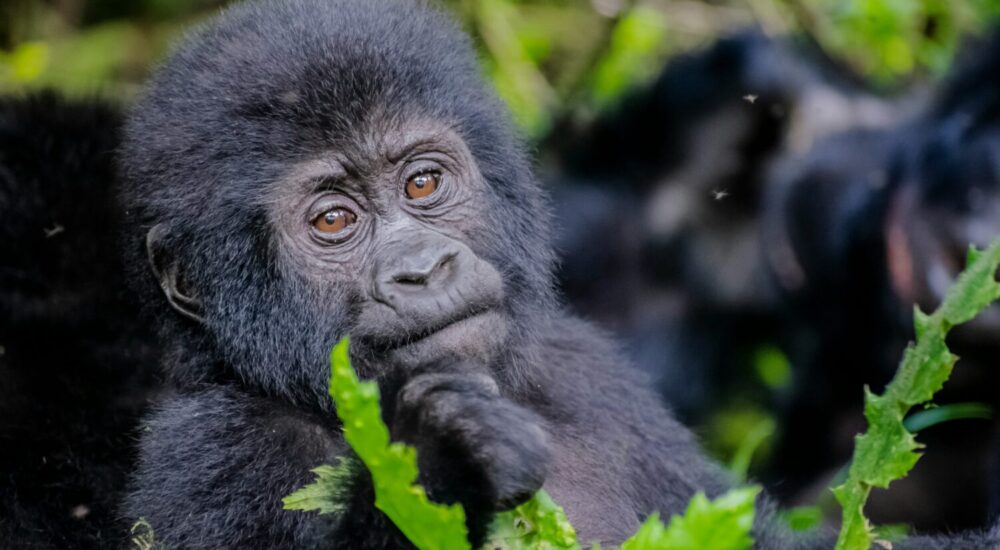
Culture refers to behaviors passed socially from one individual to another rather than inherited genetically. In gorillas, culture develops through observation, imitation, and long-term social interaction within the family group. Infant gorillas spend years learning from mothers, siblings, and silverbacks. During this period, they absorb behaviors that influence feeding, communication, nesting, and social interaction.
Researchers studying gorilla culture behavior have discovered that neighboring gorilla groups living within similar habitats often behave differently. These differences cannot always be explained by food availability or environmental conditions alone. Instead, they point toward learned traditions shared within specific groups.
This discovery has transformed the scientific understanding of gorillas. They no longer appear as creatures acting purely on instinct. Gorillas demonstrate social intelligence, adaptability, emotional awareness, and community learning patterns that resemble early forms of culture.
How Gorilla Families Develop Unique Habits
Every gorilla family revolves around a dominant silverback who guides the group’s movement, protects members from danger, and maintains social order. The personality of the silverback strongly influences the behavior of the entire family. Calm silverbacks often lead relaxed and socially stable groups, while more aggressive silverbacks may create stricter and more defensive family dynamics.
Young gorillas closely observe how the silverback reacts to threats, neighboring gorilla families, and even human visitors during habituation and trekking experiences. Over time, juveniles adopt similar behavioral patterns. This process helps explain how gorilla culture behavior develops and continues across generations.
Female gorillas also play a major role in shaping family traditions. Mothers teach infants feeding techniques, nesting habits, and communication signals through daily interaction. In some groups, mothers encourage more playful social interaction among juveniles, while in others they maintain stronger protective control over young gorillas.
These small but consistent differences eventually create distinct identities within gorilla communities.
Feeding Traditions Among Gorilla Groups
One of the clearest examples of gorilla culture behavior appears in feeding habits. Gorillas across Africa consume vegetation, fruits, stems, shoots, bark, and leaves, but not every group approaches feeding in the same way.
Researchers have observed neighboring gorilla groups selecting different preferred foods even when the same plants exist throughout their shared habitat. Some gorilla families spend longer periods feeding in bamboo zones, while others rely more heavily on herbs and forest vegetation. Western lowland gorillas often demonstrate unique fruit-handling techniques and foraging patterns that differ from nearby groups.
Young gorillas learn feeding behavior by watching older family members. As they mature, they continue practicing the methods and preferences observed during infancy. This process creates long-lasting group traditions linked directly to social learning rather than instinct alone.
During gorilla trekking experiences in Bwindi Impenetrable National Park or Volcanoes National Park, experienced guides often notice feeding behaviors that differ from one habituated family to another.
Nest Building and Sleeping Patterns
Gorillas build fresh nests every evening for sleeping. While nest construction may appear simple, researchers have documented important variations between gorilla groups. These differences provide another strong example of gorilla culture behavior.
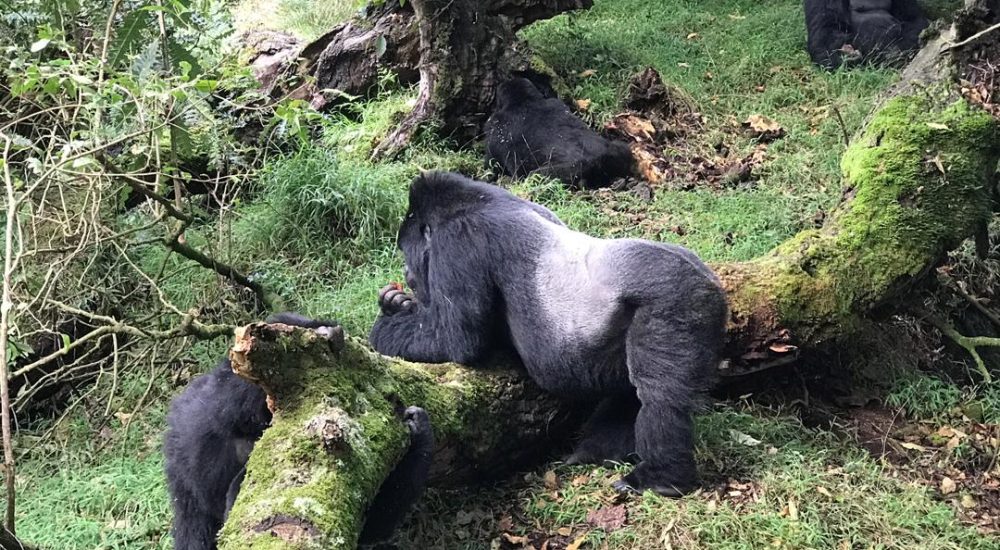
Some gorilla families prefer sleeping on the ground, especially among mountain gorillas living in colder high-altitude forests. Other groups regularly build elevated tree nests, particularly in areas with warmer temperatures or increased insect activity. Researchers also observe variations in nest materials, nest spacing, and sleeping arrangements within families.
Juvenile gorillas learn nest-building techniques gradually by copying adults. Young gorillas often spend years improving their nesting abilities before mastering efficient construction methods. The repeated transfer of these habits across generations strengthens the cultural identity of each gorilla family.
Communication Differences Between Gorilla Families
Gorillas communicate constantly through vocalizations, body posture, facial expressions, chest beating, and physical interaction. Interestingly, communication styles vary significantly between groups.
Some gorilla families display frequent chest beating and highly visible dominance displays. Others rely more on soft vocal communication and physical closeness to maintain group cohesion. Researchers studying gorilla culture behavior have noticed that certain families engage in more playful social exchanges, while others remain quieter and more structured.
Silverbacks often establish the overall tone of communication within the family. Younger gorillas imitate these interaction patterns, creating communication traditions unique to their group.
Travelers who participate in multiple gorilla trekking experiences often notice these differences firsthand. One gorilla family may appear highly curious toward visitors, while another remains more cautious and reserved despite living within the same forest ecosystem.
Gorilla Habituation and Learned Human Tolerance
Habituation refers to the process through which wild gorillas gradually become comfortable around human observers. This careful conservation practice allows researchers and tourists to spend limited time near gorilla families without causing major stress.
The habituation process itself demonstrates remarkable gorilla culture behavior. Younger gorillas learn how to respond to humans by observing the reactions of silverbacks and adult females. If older gorillas remain calm during encounters with trackers and tourists, juveniles often adopt similar attitudes.
Over time, entire gorilla groups develop collective responses to human presence. Some habituated families become relaxed and highly tolerant, while others maintain greater distance and caution. These behavioral adaptations continue evolving through ongoing social learning within the group.
This explains why every gorilla trekking experience feels different even within the same national park.
Differences Between Mountain and Lowland Gorilla Social Culture
Mountain gorillas living in Uganda, Rwanda, and eastern Congo inhabit cooler forests with dense vegetation and stable family territories. These gorillas often display strong social cohesion and spend long periods interacting closely with family members. Grooming, infant care, and juvenile play remain highly visible within mountain gorilla groups.
Western lowland gorillas inhabit Central African rainforests where fruit availability changes seasonally. Their feeding strategies and movement patterns often differ significantly from mountain gorillas. Researchers studying lowland gorillas have documented more dispersed feeding behavior and greater flexibility in resource use.
Despite these environmental influences, social learning still shapes many behaviors. Distinct gorilla culture behavior appears in both mountain and lowland gorilla populations, reinforcing the idea that gorillas possess evolving social traditions rather than fixed behavioral patterns.
Emotional Intelligence and Gorilla Social Bonds
Gorillas demonstrate remarkable emotional awareness within their families. Researchers and conservationists regularly observe behaviors associated with empathy, affection, grief, protection, and cooperation.
Mothers comfort distressed infants through physical contact and vocal reassurance. Silverbacks protect vulnerable group members during conflict or danger. Juveniles form strong friendships through play and social interaction. In some cases, gorillas even mourn deceased family members by remaining close to the body and displaying signs of emotional distress.
These emotional behaviors strengthen scientific arguments supporting the existence of gorilla culture behavior. Emotional intelligence influences how gorilla families interact, solve conflicts, and maintain social stability across generations.
For travelers, witnessing these interactions during gorilla trekking creates deeply personal and emotional wildlife experiences.
Why Gorilla Culture Matters for Conservation
Conservation organizations once focused mainly on protecting gorilla populations and preserving habitat. Modern conservation strategies now recognize that protecting gorillas also means preserving their social traditions and learned behaviors.
If an entire gorilla family disappears due to poaching, disease, or habitat destruction, unique behavioral traditions may disappear forever. Scientists increasingly understand that cultural diversity among gorilla groups forms an important part of biodiversity itself.
Protecting gorilla culture behavior therefore means protecting more than individual animals. It means preserving generational knowledge, social learning systems, communication patterns, and unique family traditions that evolved naturally over time.
This understanding has increased support for gorilla conservation tourism across East and Central Africa.
Experiencing Gorilla Culture Through Trekking Safaris
Gorilla trekking provides one of the most extraordinary wildlife encounters in the world because visitors observe intelligent primates behaving naturally within their social environment.
During a trek, travelers may witness infants learning feeding behavior from mothers, juveniles wrestling and playing together, silverbacks managing group movement, or family members communicating through subtle vocal sounds and gestures. Every interaction reflects the ongoing development of gorilla culture behavior within the group.
No two gorilla families behave exactly alike. Some groups remain highly active and playful, while others move quietly through the forest with calm discipline. These differences create unique trekking experiences that continue attracting wildlife enthusiasts, photographers, researchers, and conservation travelers to Africa’s gorilla destinations.
Best Destinations to Observe Gorilla Culture Behavior
Bwindi Impenetrable National Park in Uganda offers some of the most diverse gorilla trekking experiences in Africa. The park hosts numerous habituated gorilla families across different trekking sectors, allowing visitors to observe varying social dynamics and behavioral patterns.
Explore Uganda Gorilla Tours:
www.gorillatrackings.com/uganda-gorilla-tours
Volcanoes National Park in Rwanda provides accessible trekking experiences with well-studied gorilla families known for distinctive group personalities and social interactions.
Discover Rwanda Gorilla Trekking:
www.gorillatrackings.com/rwanda-gorilla-trekking
Virunga National Park in the Democratic Republic of Congo combines dramatic volcanic scenery with adventurous gorilla encounters where visitors can observe unique gorilla family behaviors in less crowded environments.
Responsible Tourism and Gorilla Protection
Responsible tourism plays a critical role in preserving natural gorilla behavior. Ethical trekking guidelines help reduce stress and minimize disruption to gorilla families.
Visitors should maintain proper distance, avoid sudden movements, speak quietly, and follow ranger instructions at all times. Sick travelers should avoid trekking to prevent transmitting diseases to gorillas, whose immune systems remain highly vulnerable to human illnesses.
Protecting authentic gorilla culture behavior requires careful balance between tourism, conservation, and wildlife research. Responsible travel helps ensure future generations can continue observing gorillas living naturally within their social communities.
Why Gorilla Culture Fascinates the World
The discovery of cultural behavior among gorillas continues changing how humanity understands intelligence in the animal kingdom. Gorillas demonstrate that social learning, emotional connection, and behavioral tradition do not belong exclusively to humans.
Their families contain personalities, relationships, social rules, and learned customs passed across generations. Every gorilla group develops its own identity shaped by leadership, environment, learning, and social interaction.
For travelers visiting Africa’s gorilla forests, this understanding transforms gorilla trekking into more than a wildlife activity. It becomes an opportunity to witness one of nature’s closest connections to human social life.
Explore Gorilla Safaris with Monumental Expeditions and Safaris
Monumental Expeditions and Safaris specializes in unforgettable gorilla trekking experiences across Uganda, Rwanda, and Congo. Our expertly guided safaris connect travelers with Africa’s incredible gorilla families while supporting conservation and responsible tourism.
Whether you seek luxury gorilla trekking, combined wildlife safaris, or immersive primate experiences, we create personalized journeys designed around authentic wildlife encounters and meaningful cultural exploration.
Contact us for tailor-made gorilla trekking safaris.
Related Posts