Gorilla Trekking in Uganda, is it really worth it? These Gentle Giants (Mountain Gorillas) can…
The Oldest Known Mountain Gorillas in History
The Oldest Known Mountain Gorillas in History
Overview
The story of mountain gorillas is often told through conservation success, dramatic field encounters, and the survival of a species that once stood on the brink of extinction. Yet one of the most fascinating aspects of gorilla research is longevity. The lives of individual gorillas, especially those who reach exceptional ages, reveal how intelligence, social structure, and protection efforts shape survival in the wild.
When people search for the oldest mountain gorilla, they are usually looking for records of remarkable individuals who lived far beyond average expectations. Mountain gorillas typically live between 35 and 40 years in the wild, although some individuals in protected environments or well-monitored populations have exceeded this range. These rare cases offer valuable insights into primate aging, social leadership, and the impact of conservation.
Understanding the oldest known mountain gorillas also helps travelers and wildlife enthusiasts appreciate the depth of gorilla trekking experiences in Uganda, Rwanda, and Congo. Each gorilla family seen in the forest today is part of a long evolutionary and conservation story shaped by individuals who once led, protected, and influenced their groups for decades.
What Defines an Old Mountain Gorilla?
Before identifying historical records, it is important to understand what qualifies as an oldest mountain gorilla in scientific and conservation terms. Age determination in wild gorillas is based on long-term observation, physical features, dental wear, group history, and sometimes photographic records collected over decades.
In the wild, exact birth dates are rarely known. Instead, researchers estimate age based on when a gorilla was first identified and tracked. Habituated gorilla groups in Uganda, Rwanda, and Congo have made it possible to follow individual life histories more accurately than ever before.
Gorillas that survive beyond 35 years in the wild are considered elderly. When individuals reach or exceed 40 years, they enter a rare category of exceptional longevity. These individuals often hold significant social importance within their groups, especially when they are dominant silverbacks or long-term matriarchal females.
The Role of Silverbacks in Longevity
The majority of discussions about the oldest mountain gorilla focus on silverbacks because males often remain in leadership positions for extended periods. A silverback leads the family group, protects members, and makes decisions about movement and safety.
Strong leadership directly influences survival. A successful silverback can maintain group stability for many years, ensuring access to food resources, minimizing conflict with rival groups, and protecting infants from danger. This stability often contributes to longer lifespans.
However, silverbacks also face challenges that may shorten life expectancy. Physical confrontations with rival males, injuries during group defense, and environmental pressures can all affect longevity. Only a few silverbacks manage to reach extreme old age while maintaining leadership or respected status within their groups.
Famous Old Mountain Gorillas in Conservation History
One of the most recognized examples often discussed in conservation literature is a silverback named Poppy, who lived in the Virunga region and was known for his long leadership and strong family structure. While exact age records vary depending on tracking data, individuals like him are often referenced when discussing the oldest mountain gorilla in long-term field studies.
In Bwindi Impenetrable National Park, Uganda, researchers have also documented several long-lived silverbacks who maintained stable family groups for decades. These individuals played a crucial role in the habituation process, helping researchers and tourists safely observe gorillas in the wild.
In Rwanda’s Volcanoes National Park, long-term studies initiated by primatologist Dian Fossey laid the foundation for understanding gorilla aging and social structure. Some of the early study gorillas lived long enough to influence multiple generations within their families.
These historical individuals collectively form the foundation of what we now understand about gorilla lifespan, leadership, and conservation success.
Why Some Mountain Gorillas Live Longer Than Others
The lifespan of a mountain gorilla depends on several interconnected factors, including genetics, habitat protection, food availability, group stability, and human influence.
Protected populations in national parks tend to live longer than those exposed to human conflict or habitat destruction. Anti-poaching patrols, veterinary intervention programs, and regulated tourism have significantly improved survival rates in recent decades.
The strongest predictor of becoming an oldest mountain gorilla is group stability. Gorillas that remain in cohesive family structures with strong leadership experience less stress and fewer dangerous encounters with rival groups.
Nutrition also plays a key role. Mountain gorillas living in rich bamboo and forest environments have access to consistent food sources, which supports long-term health and energy levels.
Aging Signs in Mountain Gorillas
As gorillas age, they show visible physical and behavioral changes. Older silverbacks often develop more pronounced silver-gray hair across their backs and may experience reduced mobility compared to younger males.
In terms of gorilla sleeping behavior, elderly individuals may build simpler nests or select more sheltered sleeping areas within the forest. Their movement becomes more deliberate, and they may spend more time resting compared to younger, more active members of the group.
Despite aging, older gorillas often retain strong leadership presence. Even when they are no longer physically dominant, their experience and social intelligence continue to command respect within the group.
Females also show aging signs such as slower movement and increased time spent caring for grandchildren or younger offspring. Some of the oldest known females play important roles in maintaining group cohesion and stability.
Social Role of Elderly Gorillas
The oldest mountain gorilla in a group is not always the most physically active, but often the most socially influential. Older silverbacks or females serve as anchors for group memory and stability.
They remember safe feeding locations, migration routes, and past conflicts with neighboring groups. This knowledge becomes especially valuable during times of environmental stress or territorial pressure.
In many cases, younger gorillas look to older individuals for social cues and behavioral patterns. This makes aging gorillas essential to the transmission of learned behavior within gorilla families.
The Science of Gorilla Aging
Studying aging in mountain gorillas provides important insights into primate biology and evolution. Researchers monitor tooth wear, body condition, reproductive history, and social interactions to estimate age and health.
Long-term tracking programs in Uganda, Rwanda, and Congo have made it possible to document multi-decade life histories of specific gorilla families. This has helped scientists better understand how gorillas age in the wild compared to those in captivity.
One of the most important discoveries is that social structure plays a major role in longevity. Gorillas in stable groups with strong protection and limited stress tend to live significantly longer than those exposed to frequent disruptions.
This research has deepened global understanding of primate aging and social health.
Conservation Impact on Gorilla Lifespan
Conservation efforts have dramatically improved the chances of gorillas reaching advanced age. Decades ago, poaching and habitat destruction significantly reduced gorilla populations and shortened average lifespans.
Today, protected national parks and international conservation partnerships have created safer environments for mountain gorillas. As a result, more individuals are now reaching what scientists consider elderly age categories.
The survival of the oldest mountain gorilla populations today is directly linked to anti-poaching patrols, veterinary care teams, and sustainable tourism programs.
Tourism revenue from gorilla trekking permits plays a major role in funding these conservation efforts, ensuring long-term protection for future generations.
Where to Experience Mountain Gorillas in the Wild
Travelers interested in observing gorilla families with long-term historical significance can visit key conservation areas in East and Central Africa.
Bwindi Impenetrable National Park in Uganda remains one of the most important habitats for mountain gorillas. It is home to multiple habituated families that have been studied for decades.
Explore Uganda Gorilla Tours:
www.gorillatrackings.com/uganda-gorilla-tours
Volcanoes National Park in Rwanda offers some of the most famous gorilla trekking experiences in the world, with strong conservation history linked to early research pioneers.
Discover Rwanda Gorilla Trekking:
www.gorillatrackings.com/rwanda-gorilla-trekking
Virunga National Park in the Democratic Republic of Congo provides a more adventurous trekking experience within one of Africa’s most biologically diverse regions.
Gorilla Trekking and the Legacy of Aging Gorillas
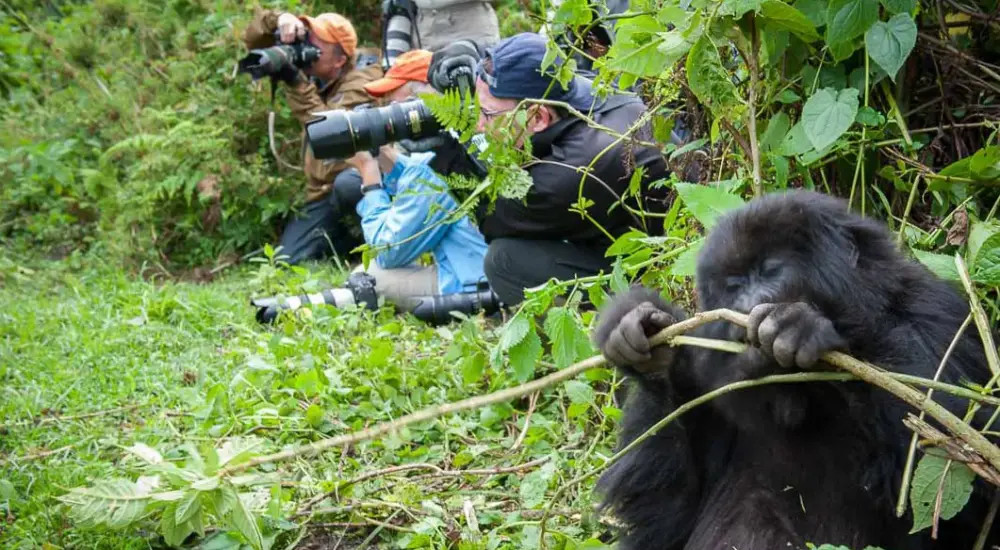
During gorilla trekking experiences, travelers often encounter gorilla families shaped by decades of social evolution. While it is rare to identify the exact oldest mountain gorilla during a trek, guides often share stories of dominant silverbacks who have led their families for many years.
Observing these families provides insight into generational continuity. Young gorillas represent the future, while older individuals represent memory, leadership, and stability.
Each trekking experience becomes part of a much larger conservation narrative that includes decades of research, protection, and survival.
Why the Oldest Gorillas Matter for Conservation Understanding
Studying the oldest mountain gorilla populations helps conservationists understand long-term survival patterns. These individuals reveal how gorillas adapt to environmental change, maintain social bonds, and pass knowledge across generations.
Their lives demonstrate the importance of protecting not just populations, but entire social systems. When older gorillas are lost, entire families can lose valuable knowledge and stability.
This is why conservation programs focus on protecting full gorilla groups rather than individual animals alone.
Emotional Connection to Long-Lived Gorillas
For many researchers and guides, long-lived gorillas become familiar personalities over the years. Watching a gorilla group age, grow, and evolve creates a deep emotional connection between humans and wildlife.
These relationships highlight the intelligence, emotional depth, and continuity of gorilla societies. The oldest mountain gorilla is not just a biological record but a living symbol of resilience and conservation success.
Explore Gorilla Safaris with Monumental Expeditions and Safaris
Monumental Expeditions and Safaris offers expertly guided gorilla trekking experiences across Uganda, Rwanda, and Congo. Our safaris provide travelers with meaningful encounters that connect wildlife observation with conservation education.
We design immersive journeys that allow visitors to understand gorilla behavior, family structure, and long-term survival stories shaped by decades of conservation work.
Related Posts