How Gorillas Build Nests Each Night
How Gorillas Build Nests Each Night
How Gorillas Build Nests Each Night in the Wild
Every evening in the dense rainforests of Central and East Africa, gorillas prepare for one of the most important parts of their daily routine — building nests for sleep. This remarkable behavior reveals the intelligence, adaptability, and survival instincts of these endangered primates. For travelers planning a gorilla trekking safari, witnessing freshly built gorilla nests along forest trails often becomes one of the most fascinating parts of the experience.
The process of how gorillas build nests each night is more sophisticated than many people realize. Gorillas carefully select safe sleeping locations, gather vegetation, shape comfortable bedding, and protect vulnerable infants within family groups. These nightly nests provide warmth, security, and rest after long days of feeding and moving through thick forests.
Understanding gorilla nesting behavior offers valuable insight into the daily lives of mountain gorillas and lowland gorillas. It also helps researchers track gorilla families and monitor their health in protected conservation areas such as Bwindi Impenetrable National Park, Mgahinga Gorilla National Park, and Volcanoes National Park.
At Monumental Expeditions and Safaris, we believe learning about gorilla behavior enriches every trekking experience. This guide explores the fascinating details behind gorilla nest building, why it matters for survival, and what travelers may observe during gorilla trekking adventures in Uganda, Rwanda, and Congo.
Why Gorillas Build Nests Every Night
Unlike many animals that return to the same den repeatedly, gorillas usually build a fresh nest every evening. This behavior is essential for comfort, hygiene, warmth, and protection from environmental conditions.
A gorilla nest acts as a sleeping platform made from leaves, branches, vines, and vegetation collected from the surrounding forest. These nests help gorillas stay insulated from cold ground temperatures, moisture, insects, and uneven terrain.
Because gorillas consume large quantities of vegetation throughout the day, they spend considerable energy moving across forest habitats. Building a comfortable nest allows them to rest efficiently and recover overnight.
For mountain gorillas living at high altitudes in Uganda and Rwanda, nighttime temperatures can become surprisingly cold. Nest construction helps conserve body heat in these mist-covered forests.
Fresh nest building also reduces the accumulation of parasites and bacteria that could develop if gorillas repeatedly used the same sleeping sites.
How Gorillas Build Nests Each Night
The process of gorilla nest building is both quick and highly organized. Researchers have observed that gorillas can complete a nest within a few minutes, though the exact method depends on age, weather, terrain, and species.
Adult gorillas begin by selecting an appropriate sleeping location. The site must provide stability, safety, and access to nearby vegetation for construction materials.
Mountain gorillas usually build nests on the ground because they are large-bodied animals and live in areas with fewer predators. Younger gorillas, however, often prefer elevated tree nests because of their lighter weight and playful climbing abilities.
Once the location is chosen, gorillas bend branches inward, layer leaves, and weave vegetation into circular sleeping platforms. The structure becomes surprisingly comfortable and stable.
Each gorilla typically builds its own nest, although infants sleep closely with their mothers. Silverbacks often position themselves strategically near the group for protection.
The entire nesting process reflects impressive problem-solving skills and environmental awareness.
Ground Nests vs Tree Nests
One of the most interesting aspects of gorilla nesting behavior is the difference between ground nests and tree nests.
Ground Nests
Mountain gorillas primarily build ground nests due to their size and habitat conditions. Ground nests are usually made from bent stems, branches, leaves, and surrounding vegetation.
These nests are commonly found in dense forests where thick undergrowth provides natural insulation and protection.
Adult silverbacks almost always sleep in ground nests because their massive weight makes tree nesting impractical.
Tree Nests
Young gorillas and many western lowland gorillas often build nests in trees. Tree nests offer protection from insects and sometimes provide additional safety in swampy or wet habitats.
Lowland gorillas are generally smaller and lighter than mountain gorillas, making tree nesting easier for them.
Tourists on gorilla trekking safaris occasionally encounter abandoned tree nests during forest hikes, especially in lowland forest regions.
The Role of Gorilla Families During Nesting
Gorilla families maintain strong social structures even during sleep preparation. Each member of the troop participates in nesting according to age and role within the group.
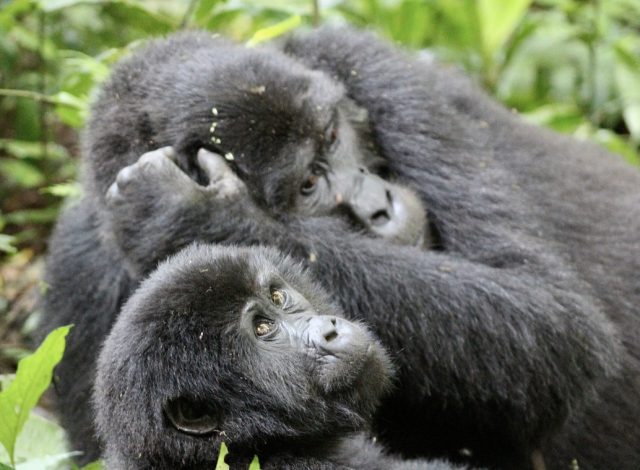
Mothers carefully prepare sleeping areas for infants and young juveniles. Infant gorillas remain physically close to their mothers throughout the night for warmth, safety, and nursing.
Juveniles gradually learn nesting skills by observing adults. Young gorillas often practice building smaller or less organized nests as part of their development.
The dominant silverback usually chooses the general nesting area for the family. His nest position often allows him to monitor potential threats and remain close to vulnerable group members.
This cooperative family behavior demonstrates the intelligence and emotional complexity of gorilla societies.
How Researchers Use Gorilla Nests
Fresh gorilla nests provide critical information for conservation researchers and park trackers. Because gorillas build new nests almost every night, scientists can estimate population sizes and track gorilla movement through forests.
Nest surveys are especially important in remote areas where direct gorilla observation is difficult.
Researchers analyze:
- Nest size
- Nest age
- Vegetation used
- Group size
- Location patterns
- Sleeping preferences
By studying nesting sites, conservation teams better understand gorilla habitat use and family behavior.
Trackers leading gorilla trekking tours in Uganda often identify fresh nests early in the morning while locating habituated gorilla families.
Weather and Seasonal Influence on Nest Building
Weather conditions strongly influence how gorillas build nests.
During rainy periods, gorillas may create thicker nests with extra vegetation to improve insulation and keep dry. In colder high-altitude forests, nests become more compact for warmth retention.
In dry seasons, gorillas may use lighter construction materials and choose more open sleeping areas.
Heavy rainfall can also affect nest location choices. Gorillas naturally avoid flood-prone areas or unstable terrain during wet weather.
These adaptations show how gorillas respond intelligently to environmental conditions in their habitats.
Interesting Facts About Gorilla Sleeping Habits
Gorillas usually begin preparing nests shortly before sunset. Once nesting is complete, family groups settle quietly for the night.
Adult gorillas generally sleep for about 12 hours, though exact durations vary depending on weather and food availability.
Unlike humans, gorillas do not use nests repeatedly over long periods. Most nests are abandoned after a single night.
Fresh nests often remain visible in the forest for several days before decomposing naturally into the environment.
Researchers have discovered that gorillas prefer sleeping near food-rich areas to reduce travel distances the following day.
Gorilla Intelligence and Nest Construction
The ability to build nests demonstrates the remarkable intelligence of gorillas. Nest building requires environmental awareness, material selection, spatial organization, and learned behavior.
Young gorillas improve their nesting abilities over time through observation and practice, much like human children learning practical skills.
Scientists studying primates often compare gorilla nesting behavior to early human shelter-building techniques.
The structural quality of some gorilla nests is surprisingly advanced, with carefully woven vegetation creating stable and cushioned sleeping surfaces.
These behaviors further confirm that gorillas are among humanity’s closest relatives in both genetics and cognitive ability.
What Tourists May See During Gorilla Trekking
During a gorilla trekking safari, visitors may encounter:
- Freshly abandoned gorilla nests
- Tree nests built by juveniles
- Flattened vegetation used as sleeping areas
- Family nesting sites clustered together
- Gorillas resting near nesting locations
Experienced guides explain how to identify recent nesting activity and interpret gorilla movement patterns.
Seeing gorilla nests helps visitors appreciate the daily routines and survival strategies of these endangered animals beyond the actual gorilla encounter itself.
Mountain Gorilla Habitats and Nesting Environments
Bwindi Impenetrable National Park
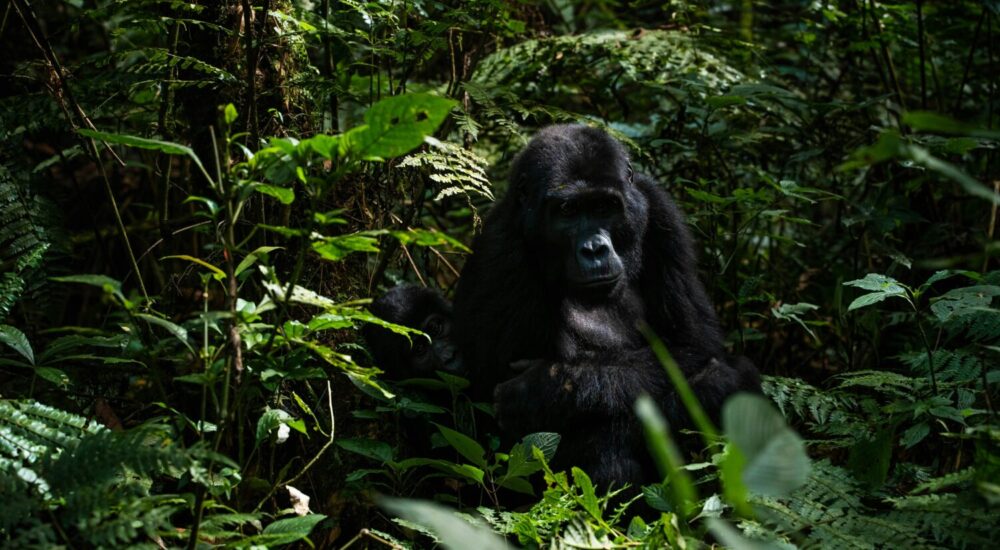
Bwindi’s dense rainforest provides ideal nesting conditions with abundant vegetation and sheltered terrain. Gorillas here often build nests along steep slopes covered in thick undergrowth.
Mgahinga Gorilla National Park
Located within the Virunga Mountain range, Mgahinga offers bamboo forests and montane vegetation commonly used for nest construction.
Volcanoes National Park Rwanda
Rwanda’s mountain gorillas frequently build nests in bamboo zones and high-altitude forest clearings.
Virunga National Park Congo
Virunga’s volcanic landscapes and forested valleys support unique nesting patterns influenced by terrain and seasonal vegetation growth.
How Gorilla Nesting Supports Conservation Tourism
Understanding how gorillas build nests each night enhances eco-tourism experiences and encourages deeper respect for conservation efforts.
Tourists who learn about gorilla behavior often develop stronger appreciation for habitat protection and sustainable tourism practices.
Revenue generated through gorilla trekking permits directly supports:
- National park protection
- Ranger salaries
- Gorilla monitoring programs
- Veterinary interventions
- Community conservation projects
At Monumental Expeditions and Safaris, we promote responsible tourism that contributes to long-term gorilla conservation across East Africa.
The Emotional Connection Between Humans and Gorillas
Watching gorillas interact within family groups often feels deeply familiar to human visitors. Nest building especially highlights similarities between gorillas and humans.
The care mothers show infants, the protective role of silverbacks, and the organized preparation for rest all reflect complex social behavior and emotional intelligence.
Many travelers leave gorilla trekking experiences with renewed respect for wildlife and greater awareness of conservation importance.
Few wildlife encounters create such strong emotional impact as observing gorillas in their natural environment.
Best Time to Experience Gorilla Trekking
Gorilla trekking is available throughout the year, though dry seasons generally offer easier hiking conditions.
The best months include:
- June to September
- December to February
During rainy periods, forest trails become muddy but the scenery becomes exceptionally lush and beautiful.
Since gorillas remain within their forest habitats year-round, sightings are consistently reliable.
Preparing for Gorilla Trekking
Visitors planning gorilla safaris should prepare properly for forest conditions.
Recommended items include:
- Waterproof hiking boots
- Long-sleeved clothing
- Rain jacket
- Gardening gloves for vegetation
- Drinking water
- Camera without flash
- Moderate fitness preparation
Professional guides and trackers assist visitors throughout the trekking experience.
Why Gorilla Trekking Is a Once-in-a-Lifetime Experience
A gorilla trekking safari offers more than wildlife viewing. It provides an opportunity to observe intelligence, emotion, communication, and survival behaviors in one of the world’s rarest animals.
Seeing fresh gorilla nests, tracking family groups through forests, and spending time near habituated gorillas creates memories that remain unforgettable for travelers from around the world.
Every trek also contributes directly to protecting endangered gorillas and preserving Africa’s remaining rainforests.
Plan Your Gorilla Safari with Monumental Expeditions and Safaris
At Monumental Expeditions and Safaris, we organize expertly guided gorilla trekking experiences in Uganda, Rwanda, and Congo. Our safari packages include luxury and midrange accommodations, experienced local guides, permit arrangements, and customized wildlife adventures.
Whether you want a short gorilla trekking trip or a complete East African safari experience, our team ensures seamless travel planning and unforgettable encounters with Africa’s mountain gorillas.
Conclusion
The process of how gorillas build nests each night reveals the intelligence, adaptability, and social complexity of these remarkable primates. Every evening, gorillas carefully construct sleeping platforms that provide warmth, safety, comfort, and protection in the forests of East and Central Africa.
From ground nests built by powerful silverbacks to tree nests crafted by playful juveniles, nesting behavior demonstrates how gorillas interact with their environment and care for family members.
For travelers embarking on a gorilla trekking safari, understanding these behaviors adds extraordinary depth to the experience. Beyond seeing gorillas themselves, observing traces of their daily routines creates a stronger connection to one of the planet’s most endangered and fascinating species.
Related Posts