Is gorilla trekking cheaper in Uganda or Rwanda? Gorilla trekking is a once-in-a-lifetime experience for…

Can You Volunteer at a Gorilla Research Center?
Can You Volunteer at a Gorilla Research Center?
The idea of working directly with mountain gorillas in the forests of Uganda or Rwanda is one of the most compelling wildlife dreams for many travelers. It raises a natural question: can you volunteer at a gorilla research center? The answer is yes, but not in the casual or flexible way many people imagine.
Gorilla research volunteering exists, but it is highly structured, carefully regulated, and limited to participants who meet strict conservation, academic, or institutional requirements. These are not tourism add-ons or short-term holiday activities. They are real conservation placements embedded within scientific monitoring programs designed to protect one of the world’s most endangered species.
To understand how this works, it helps to look at what gorilla research centers actually are, how they operate, and why access is controlled so tightly.
What a Gorilla Research Center Actually Is
A gorilla research center is not a single building or visitor facility. Instead, it refers to coordinated field research operations based around gorilla habitats in places like Bwindi Impenetrable National Park in Uganda, Volcanoes National Park in Rwanda, and Virunga National Park in the Democratic Republic of Congo.
These research operations are part of long-term conservation programs focused on monitoring gorilla health, behavior, genetics, reproduction, and habitat use. Researchers spend years studying specific gorilla families, following them daily or periodically to collect behavioral data and ensure their protection.
The work is closely integrated with national park authorities such as Uganda Wildlife Authority and Rwanda Development Board, alongside international conservation NGOs and academic institutions. The goal is not tourism, but scientific understanding and species protection.
Because mountain gorillas share more than 98% of their DNA with humans and are highly susceptible to disease, every interaction is controlled with extreme care. This is one of the main reasons why volunteering is not open in a casual sense.
So, Is Gorilla Research Volunteering Really Possible?
Yes, gorilla research volunteering is possible, but it exists in a very narrow and regulated form. It is not something a traveler can simply request upon arrival in Bwindi or Volcanoes National Park.
Participation is usually reserved for individuals who are already connected to conservation institutions, universities, or established research organizations. In most cases, applicants are students or professionals in fields such as biology, zoology, ecology, anthropology, or wildlife conservation.
Even when programs are open to international applicants, they typically require advance applications, background screening, and a commitment period that can range from several weeks to many months. Short-term casual volunteering opportunities are extremely rare, and where they exist, they are highly supervised and structured.
Why Access to Gorilla Research Is So Restricted
The restriction around gorilla research center volunteering is not about exclusivity, but about protection.
Mountain gorillas are critically endangered. Their entire survival depends on strict human management. Even the breath of a visitor can pose a risk because respiratory diseases can easily transfer between humans and gorillas.
This means every person entering a research environment must be carefully vetted. Visitor numbers are controlled, daily contact is limited, and researchers follow strict hygiene and distance protocols at all times.
There is also a scientific reason for the restrictions. Gorillas must behave naturally during observation. Untrained volunteers could unintentionally influence behavior, disrupt feeding patterns, or interfere with data accuracy. Research integrity depends on consistency, neutrality, and long-term monitoring standards.
For these reasons, access is limited to trained personnel or officially approved participants.
What Gorilla Research Volunteers Actually Do
When someone is accepted into a gorilla research volunteering program, the experience is far more structured than most travelers expect. It is not about simply observing gorillas from a scenic viewpoint. It is about contributing to real scientific fieldwork under strict supervision.
Volunteers may join researchers in tracking habituated gorilla groups through dense rainforest, often starting early in the morning and walking for hours in wet, uneven terrain. Once a gorilla family is located, volunteers assist in recording behavioral observations such as feeding habits, social interactions, movement patterns, grooming behavior, and group dynamics.
They may also help document vegetation types, note environmental changes, and support long-term ecological monitoring of the gorilla habitat. In some programs, volunteers contribute to data entry, photo documentation, and conservation reporting.
Beyond fieldwork, some placements include community engagement activities. These may involve conservation education in nearby villages, awareness programs about human-wildlife coexistence, or support for sustainable tourism initiatives that reduce pressure on gorilla habitats.
Everything is done under supervision. Volunteers are never allowed to interact directly with gorillas or make independent decisions in the field.
Where Gorilla Research Volunteering Happens
In Uganda, most gorilla research volunteering opportunities are connected to Bwindi Impenetrable National Park and Mgahinga Gorilla National Park. Bwindi is particularly important because it holds nearly half of the world’s remaining mountain gorillas and hosts multiple habituated groups used for both tourism and research.
In Rwanda, Volcanoes National Park is the primary location for gorilla research activity. The park is part of the larger Virunga conservation ecosystem and is known for its well-organized conservation structure under the Rwanda Development Board.
In the Democratic Republic of Congo, Virunga National Park also hosts active gorilla research, though volunteering opportunities there are more specialized due to security conditions and operational constraints.
Across all three countries, research activities are tightly coordinated with national park authorities and international conservation organizations.
Requirements to Join Gorilla Research Programs
Entry into gorilla research volunteering is selective. Most programs require a background in conservation, biology, zoology, or related fields, although some accept motivated applicants with strong interest in wildlife conservation.
Physical fitness is essential because fieldwork involves trekking through steep, muddy, and dense forest terrain for extended periods. Volunteers must also be comfortable working in remote environments with limited infrastructure.
Commitment is another major factor. Most programs require a minimum stay of several weeks, and many prefer longer placements of one to three months or more. This is because meaningful contribution to research requires continuity and consistency.
In many cases, applicants also go through an interview or screening process to assess suitability, expectations, and ethical understanding of wildlife interaction.
The Reality of Daily Life in Gorilla Research Volunteering
Life as a gorilla research volunteer is demanding and far from a typical safari experience. Days often begin early, sometimes before sunrise, as researchers prepare to locate gorilla groups.
Once in the forest, volunteers may spend hours moving through dense vegetation, following signs such as broken branches, feeding trails, or dung samples. The rainforest environment is often wet, humid, and physically challenging, with steep slopes and limited visibility.
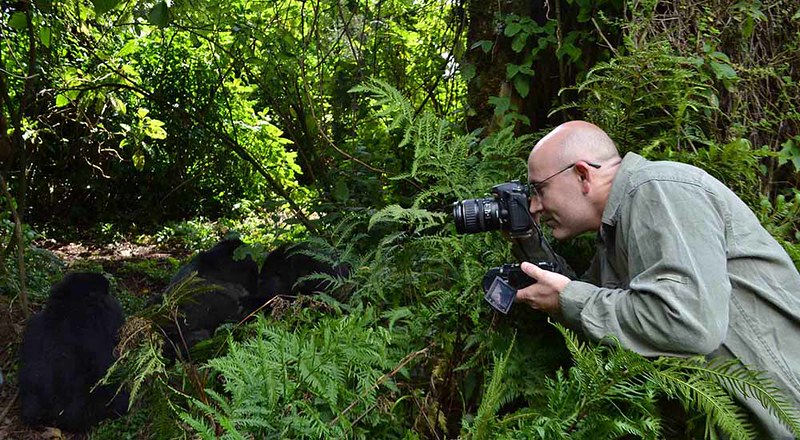
Encounters with gorillas are carefully managed and typically involve observing them quietly from a safe distance while recording data. Even during observation, movement and behavior must remain minimal to avoid disturbance.
Evenings are usually spent reviewing data, participating in briefings, or resting after long field days. Accommodation is often basic and located near park boundaries or research bases rather than luxury lodges.
This immersive experience is what makes gorilla research volunteering meaningful, but also why it is not suitable for casual tourism.
How It Differs from Gorilla Trekking
It is important to understand that gorilla research volunteering is completely different from gorilla trekking.
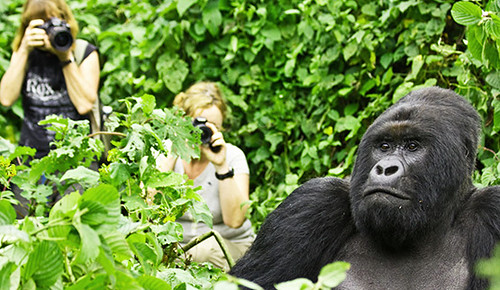
Gorilla trekking is a regulated tourism activity where visitors are guided to a habituated gorilla family for a strictly limited one-hour viewing experience. It is structured, safe, and accessible to most travelers with a valid permit.
Volunteering, on the other hand, is a conservation and research commitment. It involves long-term engagement, scientific contribution, and physical fieldwork rather than observation for leisure.
Both experiences take place in the same forests, but their purpose is entirely different. One supports tourism-based conservation funding, while the other supports scientific research and ecological understanding.
Challenges You Should Expect
Anyone considering gorilla research volunteering should be prepared for significant challenges. The physical demands of trekking through rainforest terrain can be intense, especially during rainy seasons when trails become slippery and vegetation thickens.
Living conditions are often simple, with limited access to internet, electricity, or modern conveniences. Comfort is secondary to fieldwork functionality.
There is also an emotional aspect. Observing endangered species in fragile ecosystems can be deeply impactful, especially when witnessing the realities of conservation pressures and habitat protection efforts.
Despite these challenges, many volunteers describe the experience as transformative and deeply rewarding.
Alternatives for Most Travelers
Because formal gorilla research volunteering is limited, most travelers choose alternative ways to engage with gorilla conservation.
Gorilla trekking in Uganda or Rwanda remains the most accessible and impactful experience. Permit fees directly fund conservation work, including research and protection efforts.
Some travelers also participate in community-based tourism projects around Bwindi or Volcanoes National Park, supporting education, livelihoods, and sustainable development initiatives.
Others choose conservation-focused safaris that combine wildlife viewing with learning experiences about primates, ecosystems, and conservation strategies.
These options still contribute meaningfully to gorilla protection while being more accessible to general travelers.
Why Gorilla Trekking Is the Best Starting Point
For most visitors, gorilla trekking is the gateway into understanding gorilla conservation. It provides a direct encounter with mountain gorillas in their natural habitat while supporting the very research systems that protect them.
Every permit purchased contributes to ranger patrols, scientific monitoring, and community development around protected areas. In this way, tourism and research are deeply connected.
Many future conservation professionals begin their journey with gorilla trekking before moving into academic study or volunteering opportunities later.
Plan Your Gorilla Conservation Experience
At Monumental Expeditions and Safaris, we design gorilla trekking safaris across Uganda and Rwanda that not only deliver unforgettable wildlife encounters but also connect travelers with the deeper conservation story behind them.
While formal gorilla research volunteering opportunities are limited and highly specialized, we help travelers engage with conservation through gorilla trekking in Bwindi Impenetrable National Park, Mgahinga Gorilla National Park, and Volcanoes National Park, alongside chimpanzee tracking and broader wildlife safaris.
Our itineraries are built around responsible tourism, ensuring every journey contributes directly to gorilla protection and community development.
Start planning your gorilla safari today with Monumental Expeditions and Safaris.
Related Posts