How safe is Gorilla Trekking? Gorilla trekking activity is one of the most scaring safaris/tours…

How Gorillas Build Nests Each Night
How Gorillas Build Nests Each Night
Overview
Every evening in the forests of East and Central Africa, one of nature’s most fascinating routines unfolds quietly among gorilla families. As daylight fades, gorillas begin preparing for rest by constructing fresh sleeping nests. This daily ritual, known as nesting behavior, is central to gorilla sleeping behavior and reflects both intelligence and environmental adaptation.
Unlike many animals that reuse sleeping spots, gorillas build a new nest every night. Each individual—except infants who sleep with their mothers—creates its own bed using branches, leaves, and soft vegetation. These nests are not random piles of foliage. They are carefully selected, shaped, and positioned structures designed for comfort, safety, and temperature regulation.
Understanding how gorillas build nests reveals much more than a survival habit. It offers insight into their cognitive abilities, social structure, and connection to the environment. For travelers on gorilla trekking safaris in Uganda, Rwanda, or Congo, observing nesting behavior provides a deeper appreciation of gorilla life beyond daytime feeding and movement.
The Purpose Behind Gorilla Nest Building
Gorillas build nests primarily for rest and safety. After a full day of feeding and traveling through dense forest, they need a secure and comfortable place to sleep. Nesting helps them conserve body heat, avoid ground moisture, and reduce exposure to insects and predators.
In gorilla sleeping behavior, nests serve multiple functions at once. They provide insulation against cold temperatures in high-altitude habitats like Bwindi Impenetrable Forest and Volcanoes National Park. They also create a defined personal space for each individual within the group, reducing disturbance during sleep.
Although gorillas are large and powerful animals, they remain vulnerable while resting. A well-constructed nest elevates comfort and security, allowing them to remain relaxed throughout the night.
How Gorillas Choose Nesting Sites
The process of nest building begins long before sunset. As evening approaches, gorilla groups gradually slow their movement and begin searching for suitable resting areas. The silverback usually leads the group to a safe location, often selecting areas with dense vegetation or gentle slopes.
Safety is a key factor in gorilla sleeping behavior. Gorillas prefer locations that offer good visibility of surrounding areas while still providing cover. They avoid exposed ridges or open spaces where they may feel vulnerable.
In forested regions, gorillas often choose areas with abundant foliage such as bamboo zones, thick undergrowth, or leafy tree clusters. These environments provide natural materials for nest construction while also offering protection from wind and rain.
Environmental conditions also influence nesting decisions. During wet seasons, gorillas may prefer slightly elevated areas to avoid water accumulation. In cooler regions, they often select dense vegetation that provides better insulation.
The Materials Used in Nest Construction
Gorillas are highly selective when gathering materials for their nests. They primarily use leaves, branches, twigs, vines, and soft vegetation found within their immediate surroundings. The choice of materials depends on availability, comfort, and weather conditions.
In gorilla sleeping behavior, leaves play a particularly important role. Broad, soft leaves are often used as the base layer of the nest to create cushioning. Stronger branches are bent or woven into circular shapes to form the structure of the bed.
Gorillas instinctively avoid thorny or rough vegetation when selecting materials. Instead, they prioritize flexibility and softness, ensuring the nest provides maximum comfort.
Interestingly, different gorilla groups sometimes show variations in material preference. Some groups use more tree branches, while others rely heavily on ground vegetation. These subtle differences reflect learned behavior passed through generations.
Step-by-Step Nest Construction Process
As evening settles, gorillas begin constructing their nests in a calm and methodical manner. The process is both instinctive and learned, shaped by observation and experience.
An adult gorilla typically starts by selecting a central spot and gathering surrounding vegetation. Using powerful arms and flexible fingers, it bends branches inward, creating a circular base. Leaves are then layered to form a soft cushion.
In gorilla sleeping behavior, the nest gradually takes shape as the gorilla rotates within it, adjusting materials for balance and comfort. The final structure resembles a shallow bowl made of intertwined vegetation.
Each gorilla builds its own nest, but the spacing between nests within a family group remains close. This arrangement maintains social cohesion while still allowing individual comfort.
Juvenile gorillas often learn nest building by observing adults. They begin experimenting with simple structures at a young age and gradually improve their technique over time.
The Difference Between Ground and Tree Nests
Gorillas are flexible in their nesting choices and may build nests either on the ground or in trees, depending on environmental conditions and species behavior.
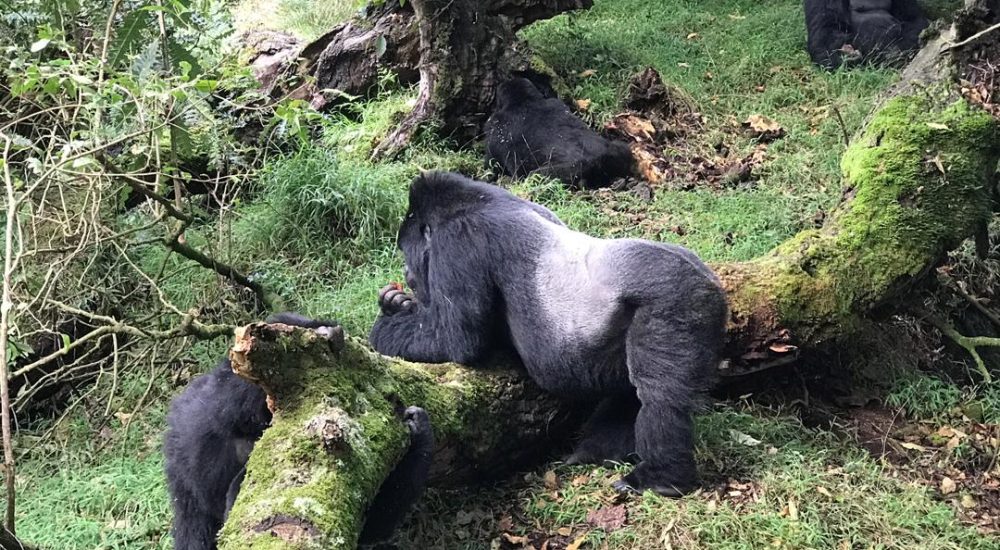
Mountain gorillas, commonly found in Uganda and Rwanda, mostly build ground nests. Their large body size and the structure of their habitats make ground nesting more practical and stable. These nests are often located in dense vegetation that provides natural cushioning and protection.
Western lowland gorillas, on the other hand, are more likely to build tree nests. These elevated nests help them avoid ground moisture, insects, and potential predators. Tree nests require more agility and strength, especially when constructed by juveniles or lighter individuals.
Both forms are important aspects of gorilla sleeping behavior, reflecting adaptability to different ecological conditions.
Infant Gorillas and Shared Sleeping Behavior
Infant gorillas do not build their own nests. Instead, they sleep in the same nest as their mothers. This shared sleeping arrangement plays a critical role in early development.
In gorilla sleeping behavior, maternal nests provide warmth, protection, and emotional security for infants. Young gorillas rely entirely on their mothers during the early stages of life, both for movement and safety.
As they grow older, juveniles gradually begin building their own nests but may still return to their mother’s nest for comfort. This transition marks an important developmental milestone in gorilla independence.
Shared nesting also strengthens family bonds within the gorilla group, reinforcing social structure and cohesion.
Why Gorillas Build a New Nest Every Night
One of the most interesting aspects of gorilla behavior is their habit of building a fresh nest each evening. Unlike many animals that reuse sleeping sites, gorillas construct new nests daily.
This behavior is closely linked to hygiene, safety, and environmental adaptation. Fresh nests reduce the risk of parasites, insects, and moisture buildup. They also allow gorillas to select optimal sleeping locations based on daily movement patterns.
In gorilla sleeping behavior, this daily rebuilding reflects both instinct and intelligence. Gorillas assess their environment continuously and adjust their nesting choices accordingly.
Building new nests also minimizes predator tracking, as there is no permanent sleeping site that could be easily followed.
Social Structure and Nesting Patterns
Gorilla nests are often arranged in close proximity, reflecting the social nature of gorilla families. While each individual has its own nest, the group remains tightly connected during rest periods.
The silverback usually sleeps in a central position or slightly apart from the group to monitor safety. Females and juveniles sleep nearby, maintaining visual and physical closeness.
In gorilla sleeping behavior, this arrangement balances protection with individual comfort. It ensures that the silverback can respond quickly to threats while the rest of the group remains secure.
Over time, nesting patterns within a group become consistent, reflecting learned social habits and group traditions.
Environmental Influence on Nest Design
The environment plays a major role in shaping how gorillas build their nests. Temperature, rainfall, vegetation type, and altitude all influence nesting behavior.
In colder high-altitude regions such as Bwindi and Volcanoes National Park, gorillas often build thicker nests with more insulating vegetation. These nests help retain body heat during cold nights.
In warmer lowland forests, nests tend to be lighter and more open, allowing better airflow and temperature regulation.
During rainy seasons, gorillas may construct slightly elevated nests or choose areas with better drainage to avoid water accumulation.
These environmental adaptations highlight the flexibility of gorilla sleeping behavior across different habitats.
Intelligence Behind Nest Construction
Gorilla nest building is not purely instinctive. It demonstrates a level of problem-solving and environmental awareness that reflects their intelligence.
Gorillas evaluate material strength, comfort, and stability before constructing their nests. They adjust their technique based on terrain and available vegetation.
Young gorillas improve their nesting skills over time by observing adults and practicing independently. This learning process is part of broader social learning within gorilla groups.
In gorilla sleeping behavior, nest construction represents one of the clearest examples of learned behavior in primates outside humans.
Gorilla Sleeping Behavior During the Night
Once nests are complete, gorillas settle into rest. Nighttime is generally calm, with minimal movement unless disturbed by environmental factors.
Gorillas sleep in a curled position within their nests, conserving body heat and maintaining comfort. Infants remain close to their mothers, often resting against their bodies.
Occasional vocalizations or movements may occur during the night, especially if external sounds are detected. However, gorillas generally sleep deeply and peacefully until dawn.
Morning begins with gradual awakening and nest departure. Interestingly, gorillas rarely reuse their nests, reinforcing the daily cycle of gorilla sleeping behavior.
Observing Nesting Behavior During Gorilla Trekking
One of the most fascinating moments during gorilla trekking is observing nesting behavior at dusk or early morning. While most treks focus on daytime encounters, experienced guides sometimes locate freshly built nests, offering insight into gorilla nighttime routines.
Visitors may see flattened vegetation where nests were constructed or partially intact structures depending on timing. These observations provide a glimpse into the unseen life of gorillas beyond active hours.
Understanding nesting behavior enhances the overall trekking experience, allowing travelers to appreciate gorillas not only as daytime animals but as creatures with complex daily rhythms.
Conservation and Habitat Protection
Gorilla nesting behavior depends heavily on intact forest ecosystems. Without sufficient vegetation, gorillas cannot construct safe and comfortable nests.
Deforestation, habitat fragmentation, and human encroachment threaten the availability of nesting materials and suitable sleeping sites. Protecting gorilla habitats is therefore essential for preserving natural gorilla sleeping behavior.
Conservation efforts in Uganda, Rwanda, and Congo focus on protecting forest ecosystems, regulating tourism, and supporting local communities to ensure long-term survival of mountain gorillas.
Responsible tourism plays a direct role in funding these conservation efforts.
Experience Gorilla Life with Monumental Expeditions and Safaris
Monumental Expeditions and Safaris offers immersive gorilla trekking experiences across Uganda, Rwanda, and Congo. Our guided safaris allow travelers to witness gorilla behavior, including feeding, movement, social interaction, and nesting habits within their natural environment.
Exploring gorilla sleeping behavior adds a deeper layer of understanding to these encounters, revealing the full rhythm of gorilla life beyond daytime observation.
Related Posts