Primate walks in Bigodi wetland actuary – Bigodi Swamp walks. Primate walks in Bigodi Wetland…
Differences and Similarities Between Gorillas and Chimpanzees
Differences and Similarities Between Gorillas and Chimpanzees
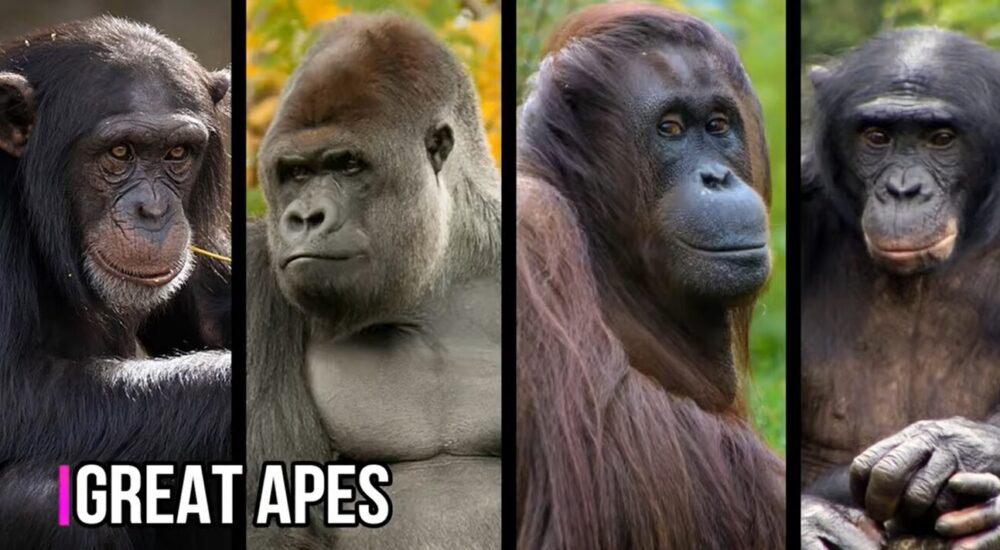
When exploring Africa’s great apes, two species frequently capture our imagination: gorillas and chimpanzees. Both belong to the family Hominidae and share a close evolutionary relationship with humans. However, understanding the differences and similarities between gorillas and chimpanzees is essential for wildlife enthusiasts, researchers, and conservationists alike.
In this article, we dive deep into their physical traits, behavioral patterns, habitats, social structures, and conservation status to paint a comprehensive picture of these iconic primates.
Introduction to Great Apes: Gorillas and Chimpanzees
The terms gorilla and chimpanzee represent two of the largest and most intelligent primates native to Africa. Gorillas are the largest living primates, while chimpanzees are smaller but share about 98.7% of their DNA with humans. Both species belong to the genus Gorilla (gorillas) and Pan (chimpanzees) and are vital for understanding human evolution and primate behavior.
Physical Differences
Size and Weight
- Gorillas are the largest of the great apes. Adult males, known as silverbacks, can weigh up to 430 pounds (195 kg) and stand about 5.5 to 6 feet tall when upright.
- Chimpanzees are significantly smaller, with males averaging 90 to 130 pounds (40–60 kg) and standing around 4 feet tall.
Appearance
- Gorillas have broad chests, large hands and feet, and a pronounced sagittal crest (a bony ridge on the skull) which supports powerful jaw muscles.
- Chimpanzees have slimmer bodies, longer limbs relative to body size, and less pronounced facial features.
Facial Features
- Gorillas have larger nostrils and a flatter nose.
- Chimpanzees have prominent ears, smaller nostrils, and expressive faces that show a wider range of emotions.
Behavioral Differences
Diet
- Gorillas are primarily folivores, eating leaves, stems, and shoots, supplemented by some fruit.
- Chimpanzees are omnivorous and have a more varied diet that includes fruits, leaves, insects, and even small mammals or bird eggs.
Tool Use
- Both gorillas and chimpanzees use tools, but chimpanzees are famous for their sophisticated tool use, such as using sticks to fish for termites, stones to crack nuts, and leaves as sponges.
- Gorillas exhibit simpler tool use, like using sticks to gauge water depth, but are less reliant on tools compared to chimpanzees.
Social Behavior
- Gorillas typically live in stable groups led by a dominant silverback male with multiple females and their offspring.
- Chimpanzees live in large, complex communities (called fission-fusion societies) with shifting group membership and intricate social hierarchies.
Similarities Between Gorillas and Chimpanzees
Intelligence
Both species demonstrate remarkable intelligence, capable of problem-solving, communication, and learning. Studies have shown gorillas and chimpanzees can learn sign language or use symbols to communicate with humans.
Communication
Both use vocalizations, facial expressions, body postures, and gestures to communicate within their groups.
Locomotion
Both gorillas and chimpanzees practice knuckle-walking as their primary mode of terrestrial movement but can also climb trees efficiently.
Habitat and Distribution
Geographic Range
- Gorillas are found in central Africa with two main species: the Eastern gorilla (including mountain gorillas) and Western gorilla.
- Chimpanzees inhabit a wider range, from West Africa through central Africa.
Habitat Preference
- Gorillas prefer dense tropical forests and mountain regions.
- Chimpanzees live in a variety of habitats, including rainforests, woodlands, and savannahs.
Conservation Status
Both gorillas and chimpanzees face threats from habitat destruction, poaching, and diseases. They are listed as endangered or critically endangered by the IUCN Red List.
- Conservation efforts include anti-poaching patrols, habitat preservation, and ecotourism to raise awareness and funds.
- Famous protected areas for gorillas include Bwindi Impenetrable Forest (Uganda) and Volcanoes National Park (Rwanda).
- Chimpanzee trekking is popular in Kibale National Park (Uganda) and Taï National Park (Ivory Coast).
Interesting Facts: Gorillas vs Chimpanzees
| Feature | Gorillas | Chimpanzees |
|---|---|---|
| Largest weight | Up to 430 lbs (195 kg) | Up to 130 lbs (60 kg) |
| Diet | Mostly leaves and shoots | Omnivorous |
| Tool use | Simple tool use | Advanced tool use |
| Social structure | Stable family groups | Fluid, fission-fusion communities |
| Lifespan in the wild | 35-40 years | 33-38 years |
Conclusion
Understanding the differences and similarities between gorillas and chimpanzees helps us appreciate the diversity and complexity of these fascinating great apes. Both species play critical roles in their ecosystems and hold a mirror to our own evolutionary past.
Whether you plan to experience gorilla trekking in Uganda’s Bwindi Forest or chimpanzee tracking in Rwanda’s Nyungwe Forest, knowing their behaviors, habitats, and conservation challenges will enhance your wildlife adventure.
Related Posts