Top African Wildlife: A Complete Guide to Africa’s Most Iconic Animals and Safari Experiences Africa…
5 Fascinating Facts About the Giraffe
5 Fascinating Facts About the Giraffe: Africa’s Towering Giant
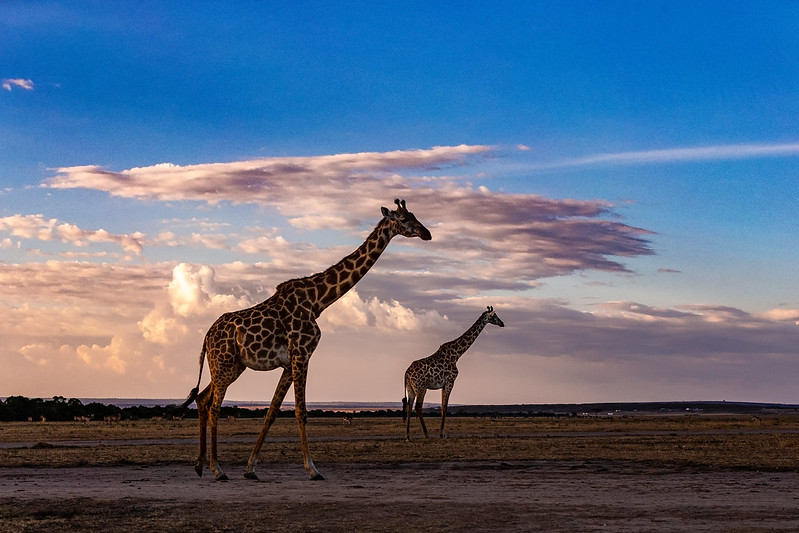
The giraffe, Africa’s iconic tall herbivore, is one of the most instantly recognizable animals on the continent. Known for its elongated neck, long legs, and unique spotted patterns, this gentle giant has fascinated wildlife enthusiasts, scientists, and safari-goers for centuries. Despite their majestic appearance, giraffes are full of fascinating adaptations and behaviors that make them stand out among African wildlife. In this blog, we explore five incredible facts about giraffes that every nature lover should know.
1. Nine Unique Giraffe Subspecies Across Africa
Giraffes are not a single uniform species; instead, they are divided into nine distinct subspecies found across sub-Saharan Africa. These include:
-
Reticulated Giraffe (Giraffa reticulata) – Known for its striking net-like coat pattern, predominantly found in northeastern Kenya and southern Somalia.
-
Masai Giraffe (Giraffa tippelskirchi) – Recognized by its irregular, jagged patches, this subspecies roams Kenya and Tanzania.
-
Rothschild’s Giraffe (Giraffa rothschildi) – Also called the Baringo giraffe, it has paler patches separated by creamy white lines and is native to parts of Uganda and Kenya.
-
South African Giraffe (Giraffa giraffa giraffa) – Found mainly in South Africa, Namibia, and Botswana, with star-shaped brown patches.
-
Angolan Giraffe (Giraffa giraffa angolensis) – Common in Namibia and Botswana, with lighter, irregular blotches.
-
Kordofan Giraffe (Giraffa camelopardalis antiquorum) – Native to central Africa, especially in Cameroon and the Central African Republic.
-
West African Giraffe (Giraffa camelopardalis peralta) – Critically endangered, primarily found in Niger.
-
Thornicroft’s Giraffe (Giraffa camelopardalis thornicrofti) – Exclusive to Zambia’s Luangwa Valley.
-
Reticulated/Hybrid Forms – Occasionally found in areas where subspecies ranges overlap, creating hybrid coat patterns.
Each giraffe subspecies is defined by its unique spot patterns, which serve as camouflage in the African savannah. These patterns are not only visually stunning but also crucial for survival, helping giraffes blend into the trees and avoid predators.
For wildlife travelers, spotting different subspecies on a safari is a bucket-list experience. Popular parks such as Kruger National Park in South Africa, Serengeti National Park in Tanzania, and Murchison Falls National Park in Uganda are excellent locations to observe giraffes in their natural habitat.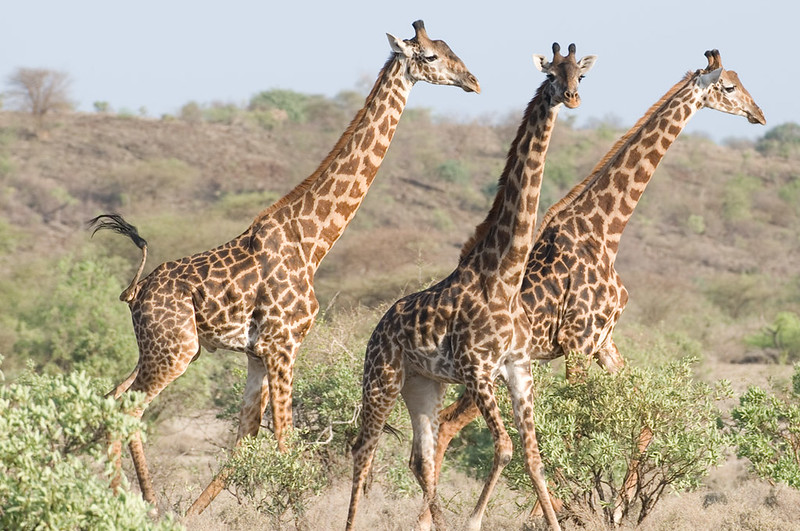
2. The Giraffe’s Massive Heart: Nature’s Pressure Pump
One of the most astonishing facts about giraffes is their heart. Weighing around 11 kilograms, the giraffe’s heart is the largest of any land mammal. Why so big? The giraffe’s elongated neck requires tremendous blood pressure to deliver oxygen all the way to the brain.
Without this specialized heart, giraffes would risk fainting due to insufficient blood flow. The heart generates a pressure nearly double that of humans, ensuring that the brain receives enough oxygen even while the giraffe bends down to drink water.
Additionally, giraffes have uniquely adapted blood vessels and valves that prevent blood from rushing to the head when they bend down. Their tight skin on the lower legs acts like natural compression stockings, reducing strain on blood vessels and preventing pooling of blood in the legs. This combination of a powerful heart and specialized circulatory system is a perfect example of nature’s engineering.
For those interested in learning more about giraffe physiology, check out National Geographic’s Giraffe Facts for in-depth information.
3. Ossicones: The Giraffe’s Unique Horns
Another feature that makes giraffes stand out is their ossicones, or horn-like structures. Unlike the horns of antelopes or buffalo, giraffe ossicones are made of cartilage covered with skin and fur, fused to the skull. Both males and females have ossicones, but males typically have thicker, bald-tipped ones due to frequent combat.
Male giraffes engage in ritualized fights called “necking”, where they swing their long necks and heavy heads against rivals. These battles determine dominance, and the winner often earns mating rights with females in the area. While it might look brutal, giraffe necking is rarely fatal; it is more about displaying strength and securing territory.
Interestingly, young males’ ossicones are smaller and tufted with hair, making it easy for researchers and safari guides to differentiate between juveniles, adult males, and females in the wild.
You can observe giraffes in action during necking battles in Maasai Mara National Reserve in Kenya, especially during the mating season when competition is intense.
4. Unique Walking and Running Patterns
Unlike most animals, giraffes have a distinctive gait. When walking, they move both legs on one side of the body simultaneously, a movement called pacing gait. This side-to-side coordination gives them a smooth stride despite their towering height.
Giraffes are surprisingly fast runners, reaching speeds up to 60 kilometers per hour (37 mph) in short bursts when threatened by predators such as lions or hyenas. To maintain balance while galloping, they rock their heads and necks back and forth, stabilizing their massive upper bodies.
Their long legs also give them an incredible stride length, allowing them to cover large distances with minimal energy expenditure—a crucial adaptation for survival in the vast African savannah.
For travelers, spotting a sprinting giraffe is a breathtaking experience, particularly in open landscapes like Etosha National Park in Namibia or Hwange National Park in Zimbabwe.
5. Giraffe Social Behavior and Communication
Giraffes are social animals, often forming loose herds of varying sizes. Herds are typically fluid, with individuals coming and going, though some family groups, particularly females with calves, stay together longer.
Communication among giraffes is subtle but fascinating. While often perceived as quiet, giraffes can produce low-frequency infrasound, inaudible to human ears, to communicate over long distances. They also communicate through body language, such as neck swings, ear movements, and even licking.
Giraffes have excellent eyesight and height advantages that allow them to spot predators from afar, giving their herd members early warning signals. Their social structures and communication strategies are vital for survival in predator-rich environments.
Wildlife enthusiasts can observe these behaviors up close in reserves like Bwindi Impenetrable Forest in Uganda, where giraffes coexist with other iconic African mammals.
Conservation Status: Protecting Africa’s Tallest Mammal
While giraffes are often overlooked in comparison to elephants or lions, they are currently listed as Vulnerable on the IUCN Red List. Populations have declined by roughly 40% over the last 30 years, primarily due to habitat loss, poaching, and human-wildlife conflict.
Conservation efforts are underway across Africa to protect giraffes and their habitats. Organizations such as the Giraffe Conservation Foundation work tirelessly to monitor populations, secure protected areas, and raise awareness about giraffe preservation.
Safaris also play a crucial role in conservation. By supporting ethical safari operations, tourists contribute to anti-poaching initiatives, habitat restoration, and community conservation programs, helping ensure giraffes thrive for generations to come.
Conclusion: Africa’s Towering Icon
The giraffe is more than just a tall animal with a long neck—it is a marvel of evolution, physiology, and social complexity. From its unique subspecies and striking coat patterns to its powerful heart, ossicones, and unusual gait, the giraffe continues to captivate wildlife enthusiasts around the world.
Whether you are an aspiring photographer hoping to capture a giraffe’s elegant stride, a wildlife researcher studying necking behavior, or a safari traveler eager to spot this gentle giant in the wild, understanding these fascinating facts enhances the experience.
For those planning a giraffe safari, top destinations include:
By learning about giraffes and supporting their conservation, we can ensure that Africa’s tallest mammals continue to roam the savannahs for generations to come.
Related Posts