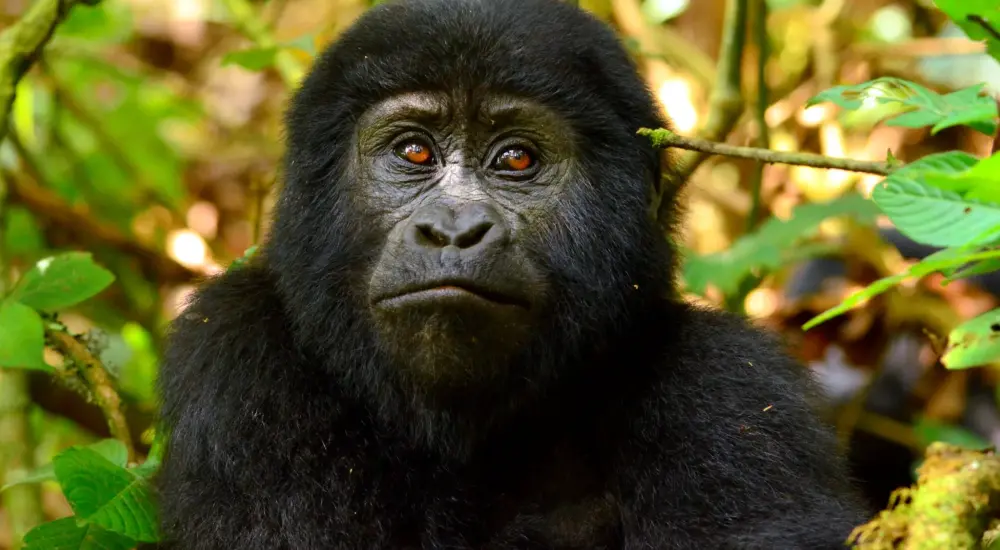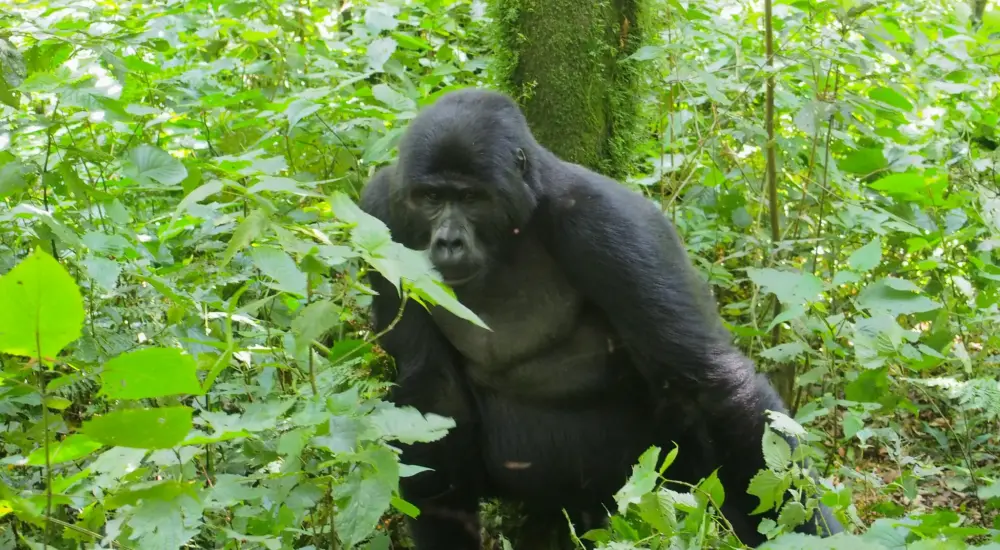
Gorilla Trekking in Uganda, is it really worth it? These Gentle Giants (Mountain Gorillas) can…
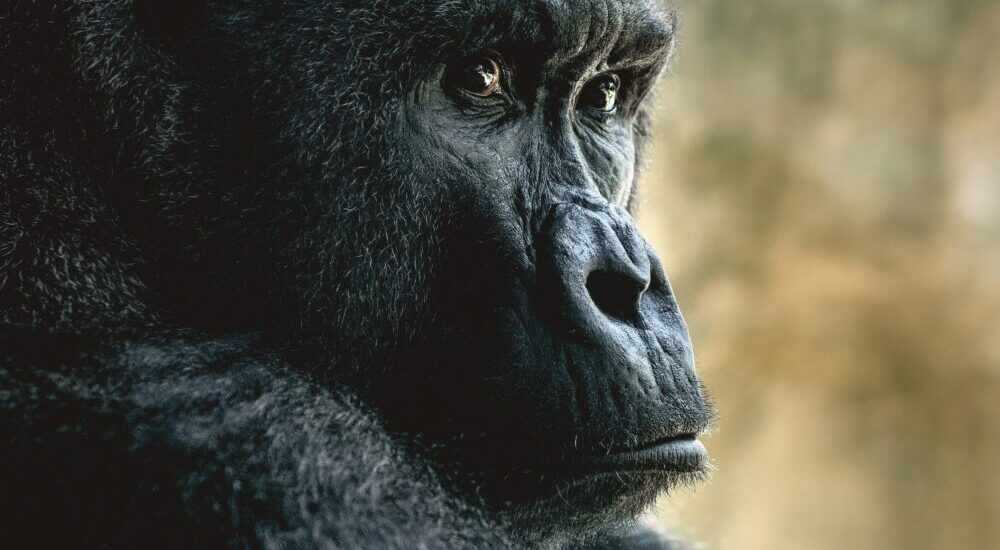
Gorilla Safari Infographic: Key Stats & Facts
Gorilla Safari Infographic: Key Stats & Facts About Mountain Gorilla Trekking in Africa
Mountain gorilla trekking remains one of the most powerful wildlife experiences on Earth, combining adventure, conservation science, and rare primate encounters in the forests of Uganda, Rwanda, and the Democratic Republic of Congo. A well-structured Gorilla Safari Infographic helps simplify the most important statistics and facts about mountain gorillas, their habitat, behavior, conservation status, and tourism patterns into a clear and meaningful overview.
Unlike many safari experiences, gorilla trekking is highly regulated, data-driven, and deeply tied to long-term conservation research. Every permit issued, every gorilla family visited, and every ranger patrol contributes to a growing dataset that shapes how these endangered primates are protected.
Understanding the key facts behind gorilla safaris helps travelers appreciate not only the experience itself but also the scientific and conservation systems that make it possible.
Mountain Gorillas at a Glance
Mountain gorillas are a subspecies of eastern gorillas found only in a small, restricted region of East and Central Africa. They live in high-altitude montane forests that stretch across Uganda’s Bwindi Impenetrable National Park and Mgahinga Gorilla National Park, Rwanda’s Volcanoes National Park, and the Virunga National Park in the Democratic Republic of Congo.
One of the most important gorilla safari facts is their extremely limited distribution. Unlike many African wildlife species that roam vast savannah ecosystems, mountain gorillas exist in isolated forest blocks, making them highly vulnerable to environmental changes and human pressure.
They live in social family groups led by a dominant silverback male, and each group occupies a defined home range within the forest. These groups are the foundation of gorilla trekking tourism, as visitors are permitted to observe habituated families under strict conservation guidelines.
Population Growth and Conservation Success
One of the most encouraging statistics in modern wildlife conservation is the steady increase in mountain gorilla populations over the past few decades.
In the 1980s, mountain gorillas were critically endangered with fewer than 300 individuals remaining in the wild. Today, thanks to intensive conservation efforts, anti-poaching patrols, community involvement, and regulated tourism, their population has grown to over 1,000 individuals.
This makes mountain gorillas one of the only great ape species whose population is increasing.
This success is directly linked to sustainable tourism programs such as gorilla trekking safaris, where revenue from permits supports conservation work and local communities living around protected areas.
The population recovery demonstrates how carefully managed tourism and conservation funding can reverse the decline of endangered species when properly implemented.
Where Mountain Gorillas Live
A key gorilla safari statistic is their extremely narrow habitat range. Mountain gorillas are found only in two main ecosystems:
The Virunga Massif, which spans Rwanda, Uganda, and the Democratic Republic of Congo, and the Bwindi Impenetrable Forest in southwestern Uganda.
These forests are part of the Albertine Rift region, one of the most biodiverse areas in Africa. The terrain is mountainous, volcanic, and densely vegetated, creating ideal conditions for gorillas but making access extremely challenging.
Bwindi alone hosts almost half of the world’s remaining mountain gorillas, making it one of the most important conservation areas on the planet.
Gorilla Trekking Permits and Tourism Regulation
Gorilla trekking is one of the most strictly controlled wildlife tourism activities in Africa. Every visitor must obtain a permit before entering gorilla habitat.
Permit costs vary depending on the country. Uganda and Rwanda have different pricing structures, but both systems are designed to limit visitor numbers and protect gorilla welfare.
Only a limited number of permits are issued per gorilla family per day, typically allowing a small group of visitors to spend one hour observing the animals once they are located.
This controlled approach reduces stress on gorillas while ensuring a high-quality, low-impact tourism experience.
The revenue generated from permits plays a major role in funding conservation programs, ranger salaries, anti-poaching patrols, and community development projects.
Gorilla Group Structure and Social Behavior
Mountain gorillas live in stable social units known as families or troops. Each group is led by a dominant silverback, who is responsible for protecting the group, making movement decisions, and mediating social interactions.
A typical gorilla group may include:
Adult females, juveniles, infants, and one or more silverbacks.
Group sizes vary but usually range between 5 and 30 individuals.
One of the most fascinating gorilla safari facts is the strong family bond within these groups. Gorillas display complex social behaviors such as grooming, play, vocal communication, and cooperative care of young.
Infant mortality rates are relatively low compared to other wild primates, largely due to strong group protection and conservation efforts that reduce external threats.
Daily Movement and Home Ranges
Mountain gorillas do not migrate long distances, but they do move within defined home ranges depending on food availability, season, and group dynamics.
A gorilla family may travel several hundred meters to a few kilometers per day while foraging, feeding, and nesting.
Their diet consists mainly of leaves, stems, bamboo shoots, and fruit depending on seasonal availability.
Home range sizes vary but are carefully mapped by researchers using GPS tracking and field observation data. These movement patterns help conservationists understand habitat use and plan protection strategies.
The study of gorilla movement statistics has become essential in understanding how environmental changes impact their survival.
Conservation Status and Threat Levels
Mountain gorillas are currently classified as endangered, but their status has improved significantly compared to previous decades.
The main threats they face include habitat loss, illegal poaching activities, disease transmission from humans, and pressure from surrounding human populations.
However, intensive conservation programs have greatly reduced these threats.
Ranger patrols, community conservation initiatives, and strict tourism regulations have all contributed to stabilizing gorilla populations.
One of the most important gorilla safari conservation facts is that tourism revenue directly supports protection efforts, creating a financial incentive for conservation at both national and community levels.
Ranger Patrols and Protection Efforts
Gorilla protection depends heavily on daily ranger patrols. Teams of trained rangers enter the forest every day to monitor gorilla groups, remove snares, and prevent illegal activities.
These patrols are supported by GPS tracking systems, radio communication, and conservation data platforms.
Rangers often spend long hours navigating difficult terrain to ensure that gorilla families remain safe and monitored.
Their work is one of the main reasons why mountain gorilla populations have increased over time.
Without these patrol systems, conservation success would not be possible.
Gorilla Trekking Experience Statistics
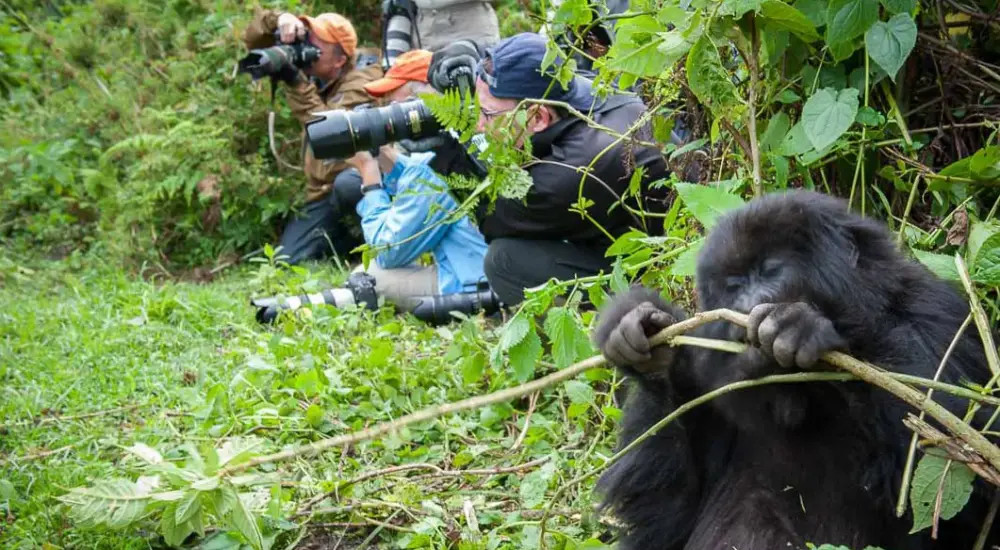
Gorilla trekking is a once-in-a-lifetime experience for most travelers. Each trek involves hiking through dense rainforest terrain to locate a habituated gorilla family.
Treks can last from 30 minutes to several hours depending on gorilla location.
Once found, visitors are allowed to spend a maximum of one hour with the gorillas under strict guidelines.
This limited interaction helps reduce stress on the animals while allowing meaningful observation.
One of the most interesting gorilla safari facts is that trekkers often encounter not just one gorilla but entire family groups engaged in feeding, grooming, or resting behaviors.
Economic Impact of Gorilla Tourism
Gorilla trekking is one of the most valuable tourism activities in East Africa.
Revenue from permits and associated tourism services contributes significantly to national park funding, local employment, and community development projects.
Local communities benefit through revenue-sharing programs that support education, healthcare, and infrastructure development.
This economic impact creates strong incentives for conservation, ensuring that communities living near gorilla habitats actively participate in protecting wildlife.
Gorilla tourism has become a key driver of sustainable development in Uganda and Rwanda.
Health Monitoring and Disease Protection
One of the most critical aspects of gorilla conservation is disease prevention. Mountain gorillas share a high percentage of DNA with humans, making them vulnerable to human-transmitted illnesses.
Strict trekking regulations are enforced, including maintaining safe distances, limiting visitor numbers, and requiring health screening procedures.
Rangers and researchers continuously monitor gorilla health, recording signs of illness or injury during daily observations.
This level of monitoring has significantly reduced disease-related risks in gorilla populations.
Scientific Research and Data Collection
Mountain gorillas are among the most studied wild primates in the world.
Researchers collect extensive data on their behavior, genetics, movement, reproduction, and habitat use.
This information is gathered through GPS mapping, direct observation, camera traps, and long-term field studies.
Scientific research plays a critical role in shaping conservation policies and improving management strategies across protected areas.
The integration of science and tourism makes gorilla conservation one of the most successful wildlife protection models globally.
Best Time for Gorilla Trekking
Gorilla trekking is possible year-round, but certain seasons provide easier hiking conditions.
The dry seasons are generally preferred due to less rainfall and more accessible forest trails.
However, gorillas remain active throughout the year, and each season offers unique experiences in terms of vegetation, scenery, and wildlife activity.
Weather conditions are an important factor in planning gorilla safari experiences, especially for travelers seeking easier trekking conditions.
Experience Gorilla Conservation Firsthand
A gorilla safari is more than a wildlife tour; it is a direct connection to one of the most successful conservation stories in modern history. Every statistic, every ranger patrol, and every gorilla family sighting reflects years of coordinated effort between governments, conservation organizations, researchers, and local communities.
At Monumental Expeditions and Safaris, we specialize in creating immersive gorilla trekking experiences across Uganda and Rwanda. Our safaris are designed to connect travelers with the heart of conservation while delivering safe, well-organized, and unforgettable wildlife encounters.
To explore gorilla trekking packages and tailor-made safari itineraries, visit Monumental Expeditions and safaris and begin planning your journey into Africa’s rainforest wilderness.
Related Posts