What is the Age Limit for Gorilla Trekking? Gorilla trekking is one of the most…
Bonobo vs Gorilla: What Is the Difference?
Bonobo vs Gorilla: What Is the Difference? A Complete Guide to Africa’s Closest Great Apes
When people think about great apes in Africa, two species often come to mind: bonobos and gorillas. Both are highly intelligent, emotionally complex, and closely related to humans, yet they live very different lives in very different environments. Understanding Bonobo vs Gorilla: What Is the Difference? is not just a matter of biology—it is a window into evolution, behavior, conservation, and the diversity of life within Africa’s rainforests.
Although both belong to the great ape family, bonobos and gorillas differ significantly in size, social structure, habitat, behavior, and even temperament. One is often described as peaceful and highly social, the other as powerful and family-oriented. One lives exclusively south of the Congo River, while the other inhabits mountainous forests in East and Central Africa.
These differences make each species unique in its own right and create two very different wildlife experiences for travelers and researchers.
Understanding the Two Great Apes
Bonobos and gorillas are both part of the Hominidae family, which also includes chimpanzees and humans. This means they share a very recent evolutionary ancestor with us, making them among the closest living relatives to humans.
Despite this shared lineage, bonobos and gorillas differences are striking. They diverged millions of years ago and adapted to entirely different ecological environments.
Bonobos are found only in the Democratic Republic of Congo, south of the Congo River. They are often called “pygmy chimpanzees,” although this term is outdated. Gorillas, on the other hand, are spread across Central and East Africa, with mountain gorillas living in Uganda, Rwanda, and Congo.
These geographic separations have shaped their evolution in very different ways.
Size and Physical Appearance Differences
 One of the most noticeable contrasts in the bonobo vs gorilla comparison is body size.
Gorillas are the largest living primates on Earth. Adult silverbacks can weigh between 140 and 220 kilograms, with some even heavier. Their muscular build, broad chest, and powerful arms make them incredibly strong animals adapted for ground-based movement.
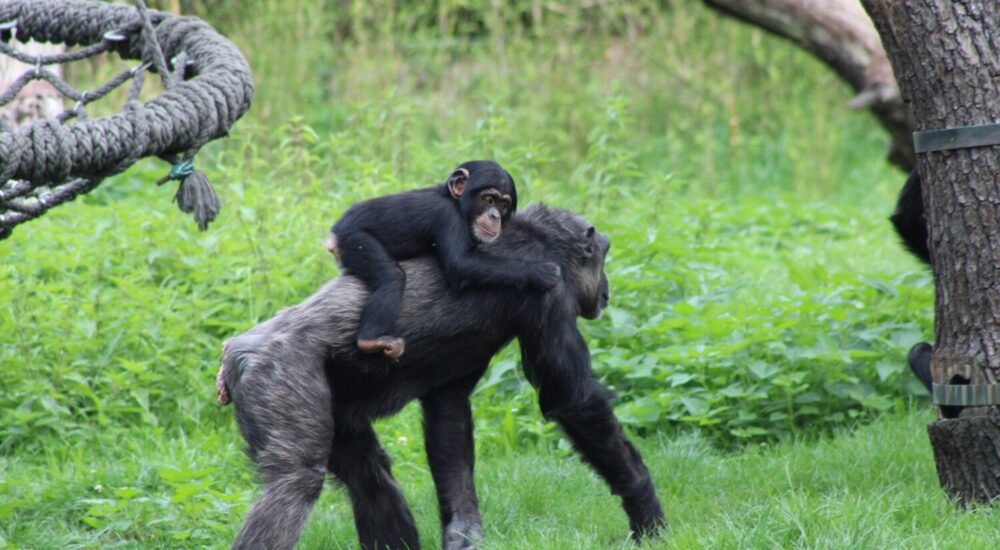
Bonobos are significantly smaller. Adult males typically weigh between 35 and 60 kilograms. They have a slimmer build, longer legs relative to their body size, and a more delicate appearance compared to gorillas.
Facial features also differ. Gorillas have pronounced brow ridges and a more robust facial structure, while bonobos have softer facial expressions and a more human-like appearance.
These physical differences reflect their lifestyles: gorillas are primarily terrestrial and rely on strength, while bonobos are more agile and arboreal.
Habitat and Geographic Distribution
Another key difference in bonobo vs gorilla ecology is where they live.
Bonobos are restricted to the lowland rainforests of the Democratic Republic of Congo, specifically south of the Congo River. This geographic barrier has played a major role in their isolation and evolution.
Gorillas are found in multiple regions across Central and East Africa. Mountain gorillas live in high-altitude forests such as Bwindi Impenetrable National Park and Volcanoes National Park, while lowland gorillas occupy forested regions in Congo and parts of Gabon.
This difference in habitat also influences their behavior and diet. Gorillas often inhabit mountainous or dense forest environments with cooler climates, while bonobos live in warmer, lowland tropical forests.
Social Structure and Group Dynamics
Perhaps one of the most fascinating differences between bonobos and gorillas lies in their social systems.
Gorillas live in stable family groups led by a dominant silverback male. This silverback is responsible for protecting the group, making movement decisions, and maintaining social order. Groups are typically composed of females, offspring, and sometimes subordinate males.
Bonobos, however, live in much more fluid and female-centered societies. Female bonobos often hold strong social influence, and their groups are less strictly structured around a single dominant male.
Bonobo societies are known for cooperation, reduced aggression, and complex social bonding. They use social interaction, grooming, and affiliative behaviors to maintain group harmony.
In contrast, gorilla societies are more hierarchical and centered around protection and leadership.
Behavior and Temperament Differences
One of the most widely discussed aspects of bonobo vs gorilla behavior is temperament.
Bonobos are often described as peaceful, empathetic, and highly social. They use social bonding to resolve conflicts and are known for strong emotional intelligence. Play behavior and social interaction are central to their daily lives.
Gorillas are generally calm and gentle despite their size and strength. However, they are more protective and territorial, especially silverbacks when defending their family groups.
While both species are non-aggressive toward humans when unprovoked, their behavioral styles are shaped by different evolutionary pressures.
Bonobos evolved in environments with abundant food resources, reducing competition. Gorillas evolved in more variable environments where group protection became essential.
Communication and Intelligence
Both bonobos and gorillas demonstrate high levels of intelligence, but they express it differently.
Bonobos use a wide range of vocalizations, facial expressions, and social gestures to communicate. Their communication is closely tied to emotional and social bonding.
Gorillas also use vocalizations, body language, and facial expressions, but their communication is often more focused on group coordination and protection.
Studies have shown that both species are capable of problem-solving, learning, and emotional awareness. In captivity and controlled research environments, bonobos have demonstrated advanced cognitive abilities, while gorillas show strong memory and social understanding.
This makes both species essential to understanding primate intelligence and evolution.
Diet and Feeding Behavior
Diet is another important difference in the bonobo vs gorilla comparison.
Gorillas are primarily herbivores. Their diet consists of leaves, stems, shoots, and occasionally fruit. Mountain gorillas, in particular, rely heavily on vegetation due to their high-altitude habitat.
Bonobos are omnivorous but primarily frugivorous, meaning fruit makes up a large portion of their diet. They also consume leaves, seeds, and occasionally small animals or insects.
Food availability plays a major role in shaping their social behavior. Bonobos live in environments with relatively stable food supplies, while gorillas often travel to find sufficient vegetation.
Reproduction and Family Life
Both species have interesting reproductive and family systems, but they differ in structure.
Gorilla reproduction is closely tied to the silverback’s dominance. He mates with multiple females within his group, and offspring are raised within a tightly bonded family unit.
Bonobo reproduction is more socially integrated and less restricted by dominance hierarchies. Social bonding plays a major role in mating behavior, and female bonobos often form strong alliances.
In both species, mothers play a central role in raising offspring, and young apes learn social behavior through observation and interaction.
Conservation Status and Threats
Both bonobos and gorillas face significant conservation challenges, but their threats differ.
Mountain gorillas have made remarkable conservation progress and are now considered endangered rather than critically endangered, thanks to intensive protection efforts in Uganda and Rwanda.
Bonobos, however, remain endangered due to habitat loss, hunting, and political instability in parts of the Democratic Republic of Congo. Their restricted range makes them particularly vulnerable.
One of the most important bonobo vs gorilla conservation facts is that both species depend heavily on protected forest ecosystems and international conservation support.
Tourism plays a major role in gorilla conservation, while bonobos are less frequently seen in tourism contexts due to their remote habitat.
Tourism and Wildlife Experience Differences
From a travel perspective, encountering gorillas is one of Africa’s most structured and accessible wildlife experiences.
Gorilla trekking safaris in Uganda and Rwanda allow visitors to observe habituated gorilla families under strict guidelines. These experiences are highly regulated and contribute directly to conservation funding.
Bonobo tourism is far more limited due to location and accessibility. Most bonobo research and observation takes place in protected research zones within the Congo Basin.
This makes gorilla trekking one of the most reliable and impactful great ape tourism experiences in Africa.
Evolutionary Significance
Studying bonobos vs gorillas provides critical insights into human evolution.
Bonobos are often studied for their peaceful social systems, while gorillas are studied for their strength, family structure, and protective behavior.
Together, they help scientists understand how different environmental pressures can shape social systems, intelligence, and behavior in primates closely related to humans.
Their differences highlight the diversity of evolutionary pathways within the same primate family.
Why the Comparison Matters for Conservation Awareness
Understanding the difference between bonobos and gorillas is not just academic. It plays a direct role in conservation awareness.
When travelers learn about gorillas during trekking experiences, they often develop a deeper appreciation for rainforest ecosystems and biodiversity.
Awareness of bonobos helps highlight conservation challenges in the Congo Basin, one of the most important but threatened tropical forest regions in the world.
Together, these species represent the importance of protecting Africa’s rainforests as global biodiversity hotspots.
Experience Gorilla Conservation Firsthand
While bonobos remain largely inaccessible to most travelers, gorilla trekking offers one of the most powerful ways to experience great ape conservation in action.
At Monumental Expeditions and Safaris, we design immersive gorilla trekking safaris in Uganda and Rwanda that allow travelers to observe mountain gorillas responsibly while supporting conservation efforts.
Every safari contributes to protecting endangered wildlife, supporting local communities, and sustaining long-term conservation programs.
To plan your gorilla trekking experience, visit Monumental Expeditions and safaris and explore tailor-made safari itineraries across East Africa.
Related Posts