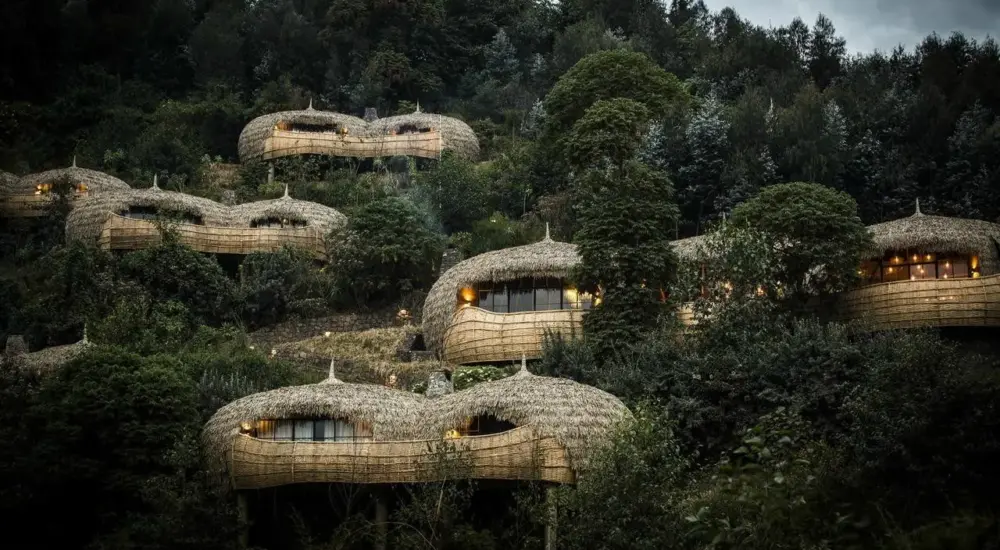
Gorilla Trekking in Volcanoes National park Mountain Gorillas in Rwanda reside in the Volcanoes National…
Gorilla Trekking: A Life-Changing Safari Experience
Gorilla Trekking: A Life-Changing Safari Experience in the Heart of Africa
There are wildlife encounters, and then there is Gorilla Trekking: A Life-Changing Safari Experience. Few journeys on Earth compare to the moment when you step into the misty forests of Uganda or Rwanda and come face to face with a wild mountain gorilla family. The silence of the forest, the broken sunlight filtering through dense canopy, and the deep intelligence in a silverback’s eyes create an experience that stays with travelers long after they leave Africa.
Mountain gorilla trekking is not just a safari activity. It is a rare privilege, a conservation success story, and a deeply emotional encounter with one of humanity’s closest relatives. These endangered primates share more than 98% of human DNA, and observing them in their natural habitat offers a powerful reminder of our connection to the natural world.
This journey takes place in some of Africa’s most dramatic landscapes, including Bwindi Impenetrable National Park and Mgahinga Gorilla National Park in Uganda, Volcanoes National Park in Rwanda, and Virunga National Park in the Democratic Republic of Congo. Each destination offers its own atmosphere, but all share the same extraordinary opportunity: the chance to meet mountain gorillas in the wild.
The Forests That Hold the Last Mountain Gorillas
Mountain gorillas survive only in a small, fragmented region of East and Central Africa. These forests sit at high altitudes, often wrapped in mist, with thick vegetation, steep slopes, and unpredictable weather.
Bwindi Impenetrable National Park alone holds almost half of the world’s remaining population of mountain gorillas, making it one of the most important conservation areas on the planet. Its name reflects its terrain, where dense forest and tangled undergrowth create a natural stronghold for wildlife.
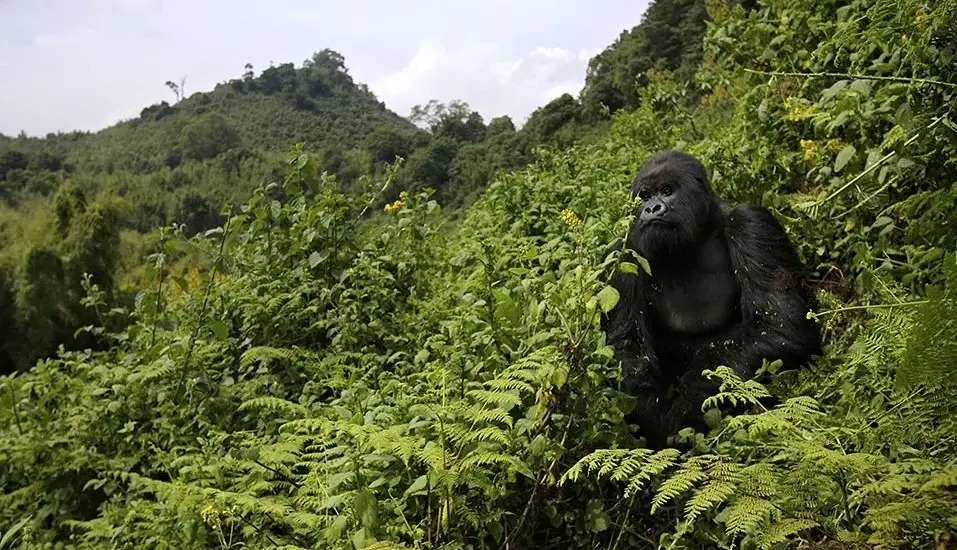
Volcanoes National Park in Rwanda offers a different landscape, shaped by ancient volcanic mountains and bamboo forests. Here, gorilla trekking often involves hiking through open slopes before entering denser vegetation where gorilla families rest and feed.
Virunga National Park adds another layer of wilderness, with dramatic volcanic peaks and rich biodiversity that supports multiple primate species.
These protected areas are not just tourist destinations; they are living ecosystems where conservation, research, and tourism intersect to protect one of the world’s most endangered great apes.
What Makes Gorilla Trekking So Unique
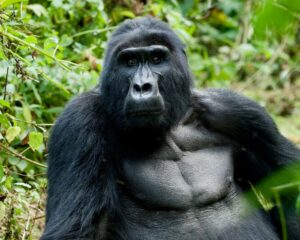 Unlike traditional safaris where animals are seen from vehicles, gorilla trekking safaris require visitors to walk through dense rainforest on foot. There are no roads, no guaranteed paths, and no predictable routes.
Each trek is guided by experienced trackers who enter the forest early in the morning to locate specific gorilla families. Once they find signs such as nests, feeding traces, or fresh movement, they guide visitors toward the group.
The hike itself can take anywhere from one hour to several hours depending on the location of the gorillas. The terrain is often steep, muddy, and physically demanding, but every step builds anticipation for the encounter ahead.
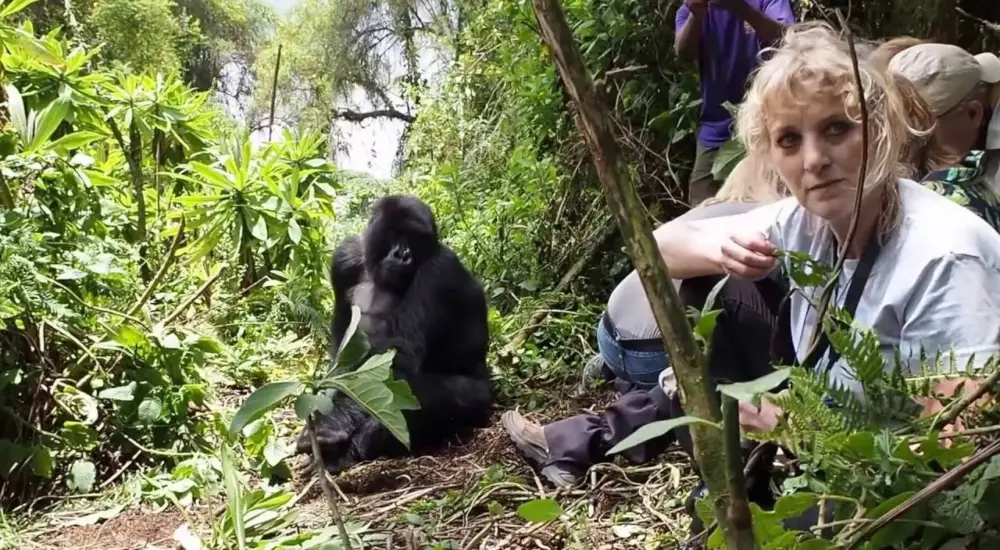
When the gorillas are finally found, everything changes. The forest becomes still. Visitors are allowed to spend one hour with the group, observing their behavior at close range under strict conservation guidelines.
It is this combination of effort, uncertainty, and emotional reward that makes gorilla trekking one of the most life-changing safari experiences in Africa.
The Emotional Impact of Meeting Mountain Gorillas
Many travelers describe gorilla trekking as more than a wildlife encounter. It feels personal and deeply emotional.
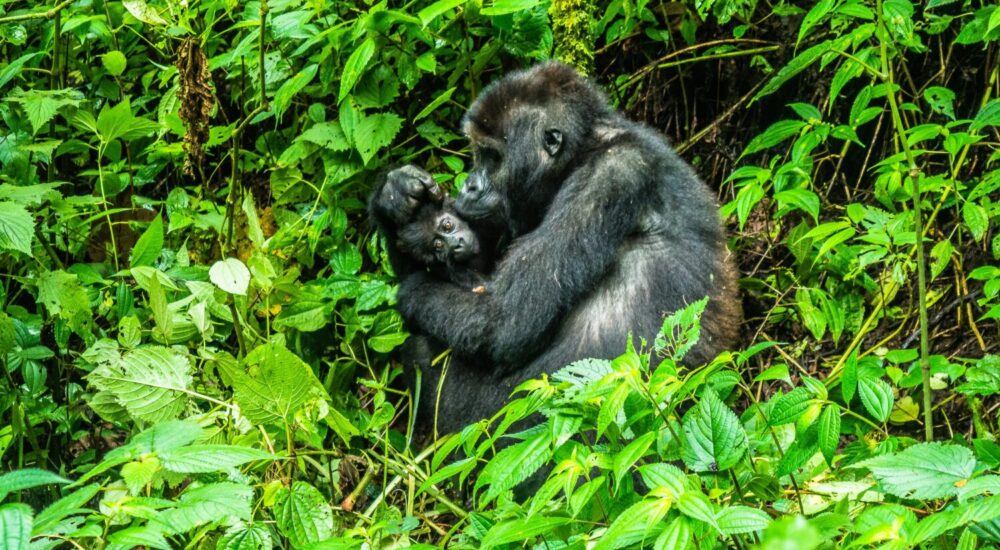
Standing just a few meters away from a silverback gorilla, watching him calmly observe his surroundings or protect his family, creates a sense of respect and connection that is difficult to describe. Juveniles play in the vines, mothers care for infants with gentle precision, and the entire group moves with a calm rhythm that reflects strong social bonds.
This encounter often shifts perspectives. It highlights how closely related humans are to gorillas and how fragile their survival once was. It also reveals how conservation efforts have succeeded in bringing a species back from the brink of extinction.
This emotional depth is why Gorilla Trekking: A Life-Changing Safari Experience is not just a travel phrase but a reality for most visitors.
Gorilla Families and Social Structure
Mountain gorillas live in stable social groups known as families or troops. Each group is led by a dominant silverback male who is responsible for protection, decision-making, and group cohesion.
A typical gorilla family includes females, infants, juveniles, and sometimes multiple silverbacks. Group sizes vary, but they often range between 8 and 25 individuals.
Their social behavior is remarkably complex. Gorillas communicate through vocalizations, facial expressions, and body movements. They groom each other, play, and form strong maternal bonds.
One of the most fascinating aspects of gorilla trekking experiences is observing these interactions in real time. The level of emotional intelligence within gorilla families is often compared to that of humans.
The Role of Conservation in Gorilla Trekking
Gorilla trekking exists today because of decades of intensive conservation work. In the 1980s, mountain gorillas were critically endangered, with fewer than 300 individuals remaining in the wild.
Today, their population has grown to over 1,000 individuals due to coordinated conservation efforts involving governments, researchers, park rangers, and local communities.
Tourism plays a major role in this success story. Every gorilla trekking permit purchased contributes directly to conservation funding. These funds support ranger patrols, habitat protection, veterinary care, and community development projects around national parks.
This makes gorilla trekking conservation impact one of the most successful wildlife tourism models in the world.
Gorilla Trekking Permits and Visitor Experience
Access to mountain gorillas is strictly regulated. Only a limited number of permits are issued each day for each gorilla family.
This ensures that visitor impact remains minimal while maximizing protection for the animals.
Once in the forest, trekkers are guided by trained rangers who interpret gorilla behavior and ensure safe interactions. The one-hour viewing limit is carefully enforced to reduce stress on the animals.
This controlled approach ensures that gorilla trekking remains sustainable while still offering a meaningful and intimate wildlife experience.
Physical Challenge and Adventure in the Forest
A gorilla trek is often described as moderately to highly challenging depending on terrain and gorilla location.
The forests are steep, humid, and unpredictable. Trails may not exist at all, and trekkers often rely on vegetation gaps and ranger guidance to move forward.
However, the physical challenge is part of what makes the experience so rewarding. Every step into the forest builds anticipation, and every obstacle overcome adds to the sense of achievement.
Travelers often describe the trek itself as a journey of discovery, not just of wildlife but of personal endurance and connection to nature.
Photography and Wildlife Observation
Photography is allowed during gorilla trekking, but it must be done respectfully. Flash photography is not permitted because it can disturb the animals.
The best moments often come naturally rather than being staged. A silverback turning slowly to observe the group, a juvenile climbing a tree, or a mother holding her infant can create powerful photographic memories.
However, many travelers find that the emotional experience outweighs photography. The presence of gorillas often draws visitors into the moment rather than through a lens.
Best Time for Gorilla Trekking
Gorilla trekking is available year-round, but certain seasons offer easier hiking conditions.
The dry seasons are generally preferred because trails are less slippery and forest access is more manageable. However, gorillas remain active throughout the year, and each season offers unique scenery.
Rainy seasons bring lush vegetation and fewer tourists, creating a quieter and more immersive experience.
Regardless of timing, the gorillas remain in their natural habitat year-round, making every visit meaningful.
Cultural and Community Connections
Gorilla trekking is closely linked to local communities living around protected areas.
Revenue-sharing programs ensure that tourism benefits extend beyond conservation and into education, healthcare, and infrastructure development.
Local communities also participate in cultural tourism experiences, offering insights into traditional lifestyles, crafts, and storytelling.
This integration of tourism and community development strengthens conservation outcomes while improving livelihoods.
Health and Safety in Gorilla Trekking
Because mountain gorillas share close genetic similarities with humans, strict health guidelines are enforced.
Visitors must maintain a safe distance, avoid trekking when ill, and follow ranger instructions at all times.
These measures protect gorillas from human-transmitted diseases and ensure safe interactions.
Safety is also a priority for trekkers, with trained rangers leading every group and monitoring conditions throughout the journey.
Why Gorilla Trekking Changes Perspectives
Most travelers leave gorilla trekking with a new understanding of wildlife conservation.
The experience highlights how fragile ecosystems can be protected through collaboration, science, and responsible tourism.
It also creates a strong emotional connection to wildlife that often influences future travel choices and conservation awareness.
This is why Gorilla Trekking: A Life-Changing Safari Experience is not just about seeing gorillas, but about understanding them and the world they inhabit.
Plan Your Gorilla Trekking Adventure
A gorilla trekking safari is one of the most powerful wildlife experiences available anywhere in the world. It combines adventure, conservation, and rare wildlife encounters in a way that few other journeys can match.
At Monumental Expeditions and Safaris, we specialize in crafting meaningful gorilla trekking experiences in Uganda and Rwanda. Our safaris are designed to provide seamless logistics, expert guidance, and responsible travel practices that support conservation efforts.
Whether you want to explore Bwindi Impenetrable National Park, hike the volcanic slopes of Rwanda, or combine gorilla trekking with a broader East African safari, we help you design a journey that fits your interests and travel style.
To begin planning your adventure, visit Monumental Expeditions and safaris and discover curated gorilla trekking itineraries across East Africa.
Related Posts