
Do Mountain Gorillas Live in Uganda? Uganda is one of the most remarkable wildlife destinations…
How Long Does Gorilla Habituation Take?
How Long Does Gorilla Habituation Take?
The experience of spending time with mountain gorillas in their natural habitat is one of the most powerful wildlife encounters in Africa. While most travelers are familiar with standard gorilla trekking, a more immersive and less common experience is gorilla habituation, a unique conservation activity that allows visitors to spend extended time with semi-habituated gorilla families.
One of the most frequently asked questions among travelers planning this experience is: How long does gorilla habituation take? The answer is both simple and deeply meaningful, because it goes beyond time measurement and into the heart of wildlife conservation.
Unlike regular gorilla trekking, where visitors are allowed a strict one-hour encounter, gorilla habituation experience in Uganda allows up to four hours with a gorilla group that is still undergoing the process of becoming accustomed to human presence. This extended time provides a rare opportunity to observe gorilla behavior in a more natural, less interrupted setting.
However, the actual duration of the experience—from the moment you begin trekking to when you return—can take much longer depending on gorilla movements, forest conditions, and the location of the group.
Understanding the full timeline of gorilla habituation helps travelers prepare mentally and physically for one of the most immersive wildlife experiences in the world.
Understanding Gorilla Habituation in Uganda
The gorilla habituation experience in Uganda is a controlled conservation activity designed to gradually accustom wild gorilla families to human presence without altering their natural behavior.
Unlike fully habituated gorilla groups used for standard trekking, these gorillas are still in the process of becoming comfortable with researchers and trackers. This process can take up to two years or more before a group is fully ready for tourism.
Uganda is currently one of the only places in the world where tourists can participate in this conservation process, and it is exclusively conducted in Bwindi Impenetrable National Park, particularly in the Rushaga sector.
The primary goal of habituation is not tourism but conservation research. Visitors accompany researchers and trackers as they follow gorilla groups, observe behavior, record data, and gradually help the gorillas become accustomed to human observers.
This makes the experience significantly different from standard gorilla trekking and far more immersive.
So, How Long Does Gorilla Habituation Take in Total?
When discussing how long gorilla habituation takes, it is important to distinguish between three different time components: the trekking time, the observation time, and the overall duration of the activity.
On average, the full gorilla habituation experience can take between 6 to 8 hours or even longer in a single day.
The trek into the forest can last anywhere from 1 to 5 hours each way, depending on where the gorilla family is located that day. Since these groups are not yet fully habituated, they tend to move more frequently and unpredictably compared to regular trekking groups.
Once the gorillas are located, visitors are allowed up to 4 hours of interaction time with them. This is the defining feature of the habituation experience and the main difference from standard gorilla trekking, which allows only one hour.
After the observation period, visitors trek back to the park headquarters, which again may take several hours depending on terrain and gorilla movement.
In total, the experience is a full-day wilderness expedition deep inside one of Africa’s most ancient rainforests.
Why Gorilla Habituation Takes Longer Than Gorilla Trekking
The longer duration of the habituation experience is directly linked to its purpose. Unlike regular trekking, where the goal is to locate a fully habituated gorilla group quickly for observation, habituation is a slow, research-driven process.
Gorillas in habituation groups are still learning to tolerate human presence. They may move deeper into the forest when they sense humans, making tracking more complex and time-consuming.
Researchers and trackers must follow fresh signs such as feeding remains, nests, dung, and vocalizations to locate the group. This process alone can take several hours.
Additionally, because the groups are not fixed in a single territory, their movement patterns are less predictable, which increases the trekking duration.
The longer time spent in the forest is part of what makes the gorilla habituation experience in Bwindi so authentic and immersive.
What Happens During the Four Hours with Gorillas
Once the gorilla group is located, the most rewarding part of the experience begins.
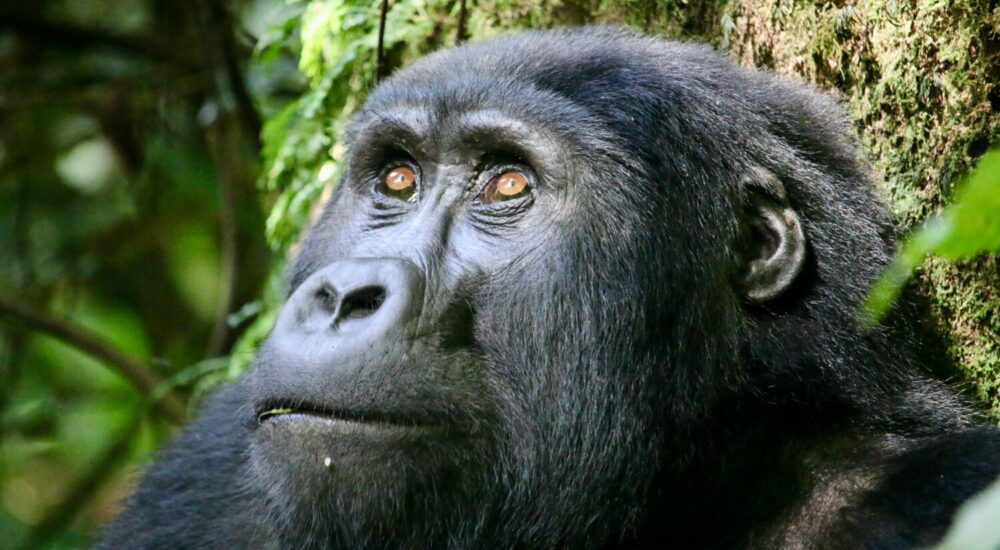
Visitors spend up to four hours observing gorillas as they feed, groom, play, rest, and interact naturally. Unlike standard trekking, where time feels limited, habituation allows for deeper behavioral observation.
During this time, researchers explain gorilla behavior, social structure, communication patterns, and conservation challenges.
You may observe dominant silverbacks monitoring the group, mothers caring for infants, juveniles playing energetically, and young gorillas practicing social behaviors.
Because the gorillas are still in the habituation process, they may occasionally move away or change position, requiring careful and respectful following by the team.
This extended observation period is what makes habituation one of the most rewarding wildlife experiences in Africa.
Where Gorilla Habituation Takes Place in Uganda
The gorilla habituation experience in Uganda is exclusively conducted in Bwindi Impenetrable National Park, one of Africa’s oldest and most biologically diverse rainforests.
Within Bwindi, the activity is mainly carried out in the Rushaga sector in the southern part of the park.
Rushaga offers relatively good access and is home to several semi-habituated gorilla families that are part of ongoing research programs.
Bwindi itself is a UNESCO World Heritage Site and protects nearly half of the world’s remaining mountain gorilla population, making it the most important conservation area for this species.
Difference Between Gorilla Trekking and Gorilla Habituation
While both experiences involve tracking mountain gorillas, they differ significantly in structure, duration, and depth of engagement.
In standard gorilla trekking in Uganda, visitors spend one hour with a fully habituated gorilla family. The trekking process is usually more predictable because these groups are accustomed to human presence.
In contrast, the gorilla habituation experience in Bwindi allows up to four hours with semi-habituated gorillas and involves a longer, more unpredictable trekking process.
Habituation also involves participation alongside researchers and trackers, offering educational insights into conservation work that is not part of regular trekking.
For travelers seeking a deeper, more immersive understanding of gorilla behavior, habituation provides a more comprehensive experience.
Physical Demands and Trekking Duration
Because gorilla habituation involves tracking semi-wild gorillas, the physical demands are higher than standard trekking.
Trekking time varies significantly depending on gorilla movement, but visitors should be prepared for hikes ranging from a few hours to most of the day.
The terrain in Bwindi is steep, dense, and often muddy, requiring moderate to high fitness levels.
Porters are available to assist with carrying bags and supporting trekkers through difficult sections of the forest.
Despite the physical demands, the reward of extended gorilla observation makes the effort worthwhile for most participants.
Best Time for Gorilla Habituation in Uganda
The best time for gorilla habituation in Uganda is during the dry seasons, when forest trails are more manageable and trekking conditions are less challenging.
These periods generally fall between:
- June to September
- December to February
During the wet seasons, trekking becomes more difficult due to heavy rainfall, but the forest is lush and photography conditions can still be excellent.
Gorilla habituation is available year-round, but weather conditions can influence trekking duration and difficulty.
Why Gorilla Habituation Takes Longer But Feels Shorter
Interestingly, many visitors report that although the gorilla habituation experience lasts many hours, it feels much shorter.
This is because the extended time with gorillas allows for deeper emotional and observational engagement.
Instead of a brief encounter, travelers become immersed in the gorillas’ daily life, observing subtle behaviors and social interactions that are often missed in shorter visits.
The slow pace of habituation also encourages patience and mindfulness, making the experience more meaningful.
Conservation Importance of Gorilla Habituation
The gorilla habituation experience in Uganda plays a critical role in conservation efforts.
By gradually exposing gorilla groups to human presence, researchers help prepare them for sustainable tourism while minimizing stress and behavioral disruption.
Revenue generated from habituation permits directly supports conservation programs, anti-poaching efforts, and community development around Bwindi.
Tourists participating in this activity contribute directly to the long-term survival of mountain gorillas.
Uganda remains one of the most successful conservation stories in Africa, and habituation is a key part of this success.
Who Should Choose Gorilla Habituation
Gorilla habituation is ideal for travelers who want a more in-depth wildlife experience compared to standard trekking.
It is especially suitable for:
- Wildlife researchers and enthusiasts
- Photographers seeking extended observation time
- Travelers interested in conservation
- Visitors returning for a deeper gorilla experience
Because of its longer duration and physical demands, it may not be ideal for travelers with limited time or mobility challenges.
Combining Gorilla Habituation with Uganda Safaris
Many travelers combine gorilla habituation with other Uganda safari experiences to create a complete itinerary.
Popular combinations include:
- Chimpanzee tracking in Kibale Forest
- Game drives in Queen Elizabeth National Park
- Boat safaris on the Kazinga Channel
- Wildlife viewing in Lake Mburo National Park
- Fly-in safaris to Kidepo Valley National Park
These combinations allow visitors to experience Uganda’s full ecological diversity, from rainforests to savannahs.
At Monumental Expeditions and Safaris, customized itineraries ensure seamless travel between destinations while maximizing wildlife encounters.
Final Thoughts on Gorilla Habituation Duration
So, how long does gorilla habituation take? The full experience typically lasts between six and eight hours or more, including trekking time, observation time, and return journey.
However, the true value of habituation is not measured in hours but in depth of experience. The four hours spent with gorillas provide one of the most immersive wildlife encounters available anywhere in the world.
It is a journey that combines adventure, science, conservation, and emotional connection with one of humanity’s closest relatives.
For travelers seeking more than just a glimpse of mountain gorillas, habituation offers a profound and unforgettable experience in the heart of Bwindi’s ancient rainforest.
Plan Your Gorilla Habituation Safari
Experience the extraordinary gorilla habituation experience in Bwindi Impenetrable National Park with Monumental Expeditions and Safaris.
Visit Monumental Expeditions and safaris to explore customized Uganda safari packages including gorilla trekking, habituation experiences, chimpanzee tracking, wildlife safaris, and fly-in adventures across Uganda.
Step deeper into the world of mountain gorillas and discover conservation in action.
Related Posts
Conservation-Focused Gorilla Tours in Uganda Uganda’s lush jungles are home to one of the world’s…
Silverback, Juvenile, and Gorilla Family Units: Inside the Powerful Social World of Mountain Gorillas When…