
How Much Does It Cost to See Mountain Gorillas in Congo? Mountain gorilla trekking in…
Best Places to See Wildebeest Migration in Africa
Best Places to See Wildebeest Migration in Africa
The wildebeest migration is one of the most spectacular wildlife events on Earth, drawing travelers from across the globe to East Africa. Often referred to as the Great Migration, this continuous movement of over two million wildebeest, zebras, and gazelles across Tanzania and Kenya creates unmatched opportunities for dramatic wildlife encounters.
Understanding the best places to see wildebeest migration in Africa is essential for planning a successful safari. The migration is not a single event but a year-round cycle, with different regions offering unique experiences at different times. This guide explores where to go, when to visit, and how to plan your safari for the best possible viewing.

Understanding the Wildebeest Migration Cycle
The Great Migration follows a natural, seasonal pattern driven by rainfall and the search for fresh grazing. The herds move in a circular route between Tanzania’s Serengeti National Park and Kenya’s Maasai Mara National Reserve.
At different times of the year, the migration offers distinct highlights, from calving season in the southern Serengeti to dramatic river crossings in the northern Serengeti and Maasai Mara. Knowing this cycle helps travelers identify the best places to see wildebeest migration in Africa based on their travel dates.
This movement is continuous, meaning there is always a location where the herds can be found.
Serengeti National Park, Tanzania
Serengeti National Park is the heart of the migration and one of the most important destinations for witnessing this phenomenon. The park’s vast plains provide a stage for different phases of the migration throughout the year.
Southern Serengeti (December to March)
The southern Serengeti, particularly the Ndutu region, is known for the calving season. During this period, hundreds of thousands of wildebeest give birth within a short timeframe, attracting predators such as lions, cheetahs, and hyenas.
This is one of the most rewarding times to visit, offering dramatic predator-prey interactions and excellent photographic opportunities. It is a key highlight when considering wildebeest migration safari Africa experiences.
Central Serengeti (April to June)
As the rains end, the herds begin moving north through the central Serengeti. This phase involves long columns of animals crossing the plains, often accompanied by predators.
The central Serengeti provides consistent wildlife viewing and fewer crowds compared to peak river crossing periods.
Northern Serengeti (July to October)
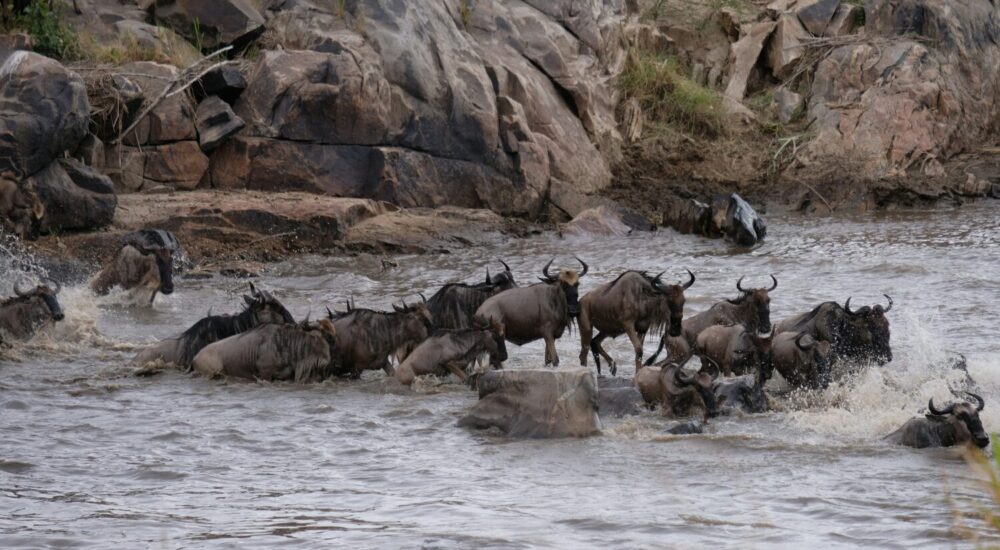
The northern Serengeti is famous for river crossings along the Mara River. These crossings are unpredictable but offer some of the most dramatic scenes in wildlife travel.
Watching thousands of wildebeest plunge into crocodile-filled waters is an unforgettable experience and a major highlight of the best places to see wildebeest migration in Africa.
Maasai Mara National Reserve, Kenya
The Maasai Mara is the northern extension of the migration and one of the most popular safari destinations in Africa. From July to October, the herds cross into Kenya, creating some of the most iconic wildlife scenes.
River crossings in the Maasai Mara are particularly intense, with large concentrations of animals and high predator activity. The open plains also make it easier to spot wildlife, enhancing the overall safari experience.
Private conservancies surrounding the Mara offer more exclusive viewing opportunities, with fewer vehicles and more flexible game drive options.
For travelers seeking peak migration drama, the Maasai Mara is among the best wildebeest migration destinations.

Ndutu Region (Ngorongoro Conservation Area)
The Ndutu region, located in the Ngorongoro Conservation Area, plays a crucial role during the calving season. This area offers a unique safari experience, as off-road driving is permitted, allowing closer access to wildlife.
The landscape is characterized by open plains and seasonal lakes, attracting large concentrations of animals. The presence of newborn calves draws predators, creating constant action and movement.
Ndutu is ideal for travelers interested in photography and those wanting to witness the beginning of the migration cycle.
Grumeti Reserve and Western Corridor
The western corridor of the Serengeti, including the Grumeti Reserve, is often overlooked but offers excellent migration viewing from May to July. During this period, the herds cross the Grumeti River, facing crocodiles and other challenges.
This region provides a more exclusive safari experience with fewer tourists, making it a hidden gem among the best places to see wildebeest migration in Africa.
Luxury lodges in this area offer high-end experiences combined with exceptional wildlife viewing.
When is the Best Time to See Wildebeest Migration?
The best time to see the migration depends on what you want to experience.
Calving season from December to March is ideal for witnessing new life and predator interactions. River crossing season from July to October offers dramatic action and high-intensity moments.
The movement between these periods provides consistent wildlife viewing with fewer crowds. Understanding these seasonal patterns helps you plan your wildebeest migration safari Africa effectively.
Choosing the Right Safari Experience
The quality of your safari depends on how you plan it. Choosing the right lodges, guides, and itinerary ensures you are in the right place at the right time.
Luxury safaris offer prime locations and personalized service, while midrange options provide excellent value with guided experiences. Mobile camps are particularly popular during the migration, as they move with the herds.
Working with experienced operators ensures your safari is tailored to your interests and travel dates.
Combining Migration with Other Safari Experiences
The wildebeest migration can be combined with other iconic African experiences to create a diverse itinerary. Travelers often pair the Serengeti or Maasai Mara with gorilla trekking in Uganda or Rwanda.
Beach extensions to Zanzibar or the Kenyan coast add relaxation after an active safari. These combinations enhance the overall journey and provide a well-rounded African experience.
Multi-destination safaris are increasingly popular for travelers seeking more than just one highlight.
Travel Tips for Wildebeest Migration Safaris
Planning a migration safari requires attention to detail. Booking early is essential, especially for peak seasons, as lodges and camps fill up quickly.
Choosing experienced guides increases your chances of witnessing key moments such as river crossings. Flexibility is also important, as wildlife movements can change based on weather conditions.
Packing appropriately, including cameras and binoculars, enhances your experience and ensures you are prepared for long game drives.
Planning Your Wildebeest Migration Safari
Planning your safari involves aligning your travel dates with the migration cycle, selecting the right locations, and ensuring smooth logistics.
Flights, park access, and accommodation must be coordinated carefully to maximize your time in the field. This is where expert guidance becomes invaluable.
Monumental Expeditions and Safaris specializes in designing tailored migration safaris that place you at the heart of the action.
Plan Your Safari
The wildebeest migration is one of Africa’s greatest natural wonders, offering unforgettable moments at every stage of its journey. From calving season in the southern Serengeti to river crossings in the Maasai Mara, each phase delivers a unique experience.
Let Monumental Expeditions and Safaris create a personalized itinerary that ensures you witness this incredible event at the right place and time. Start planning your wildebeest migration safari today and experience Africa at its most dramatic.
Related Posts

The Best Time for Gorilla Trekking: A Comprehensive Guide Gorilla trekking is one of the…
Driving in Uganda: A Practical Guide for Visitors Driving in Uganda can be both exciting…