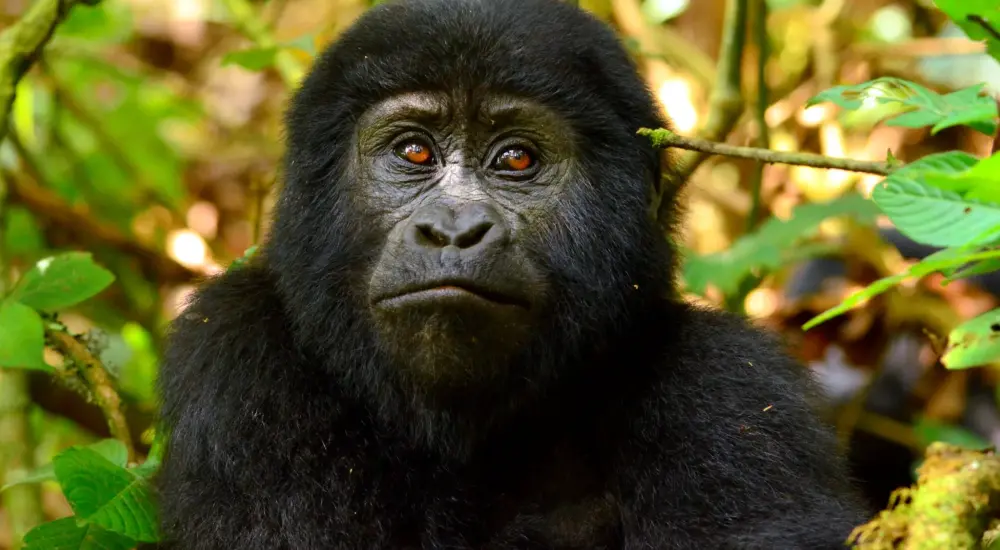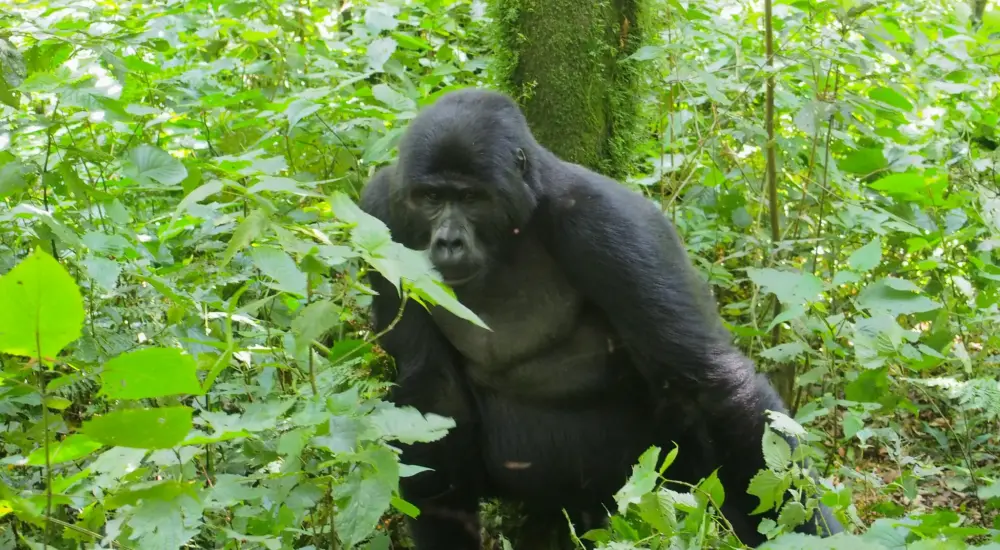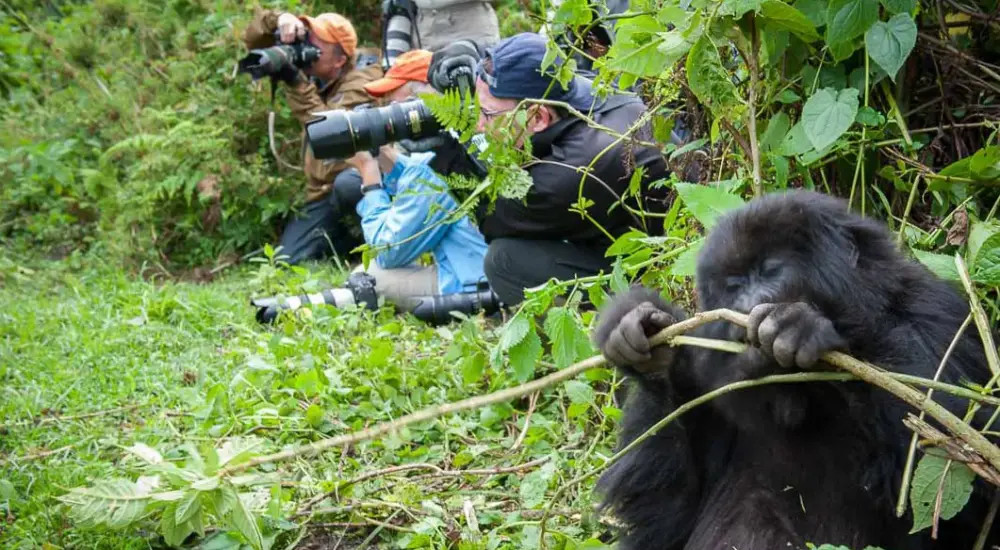
Gorilla Trekking in Uganda, is it really worth it? These Gentle Giants (Mountain Gorillas) can…
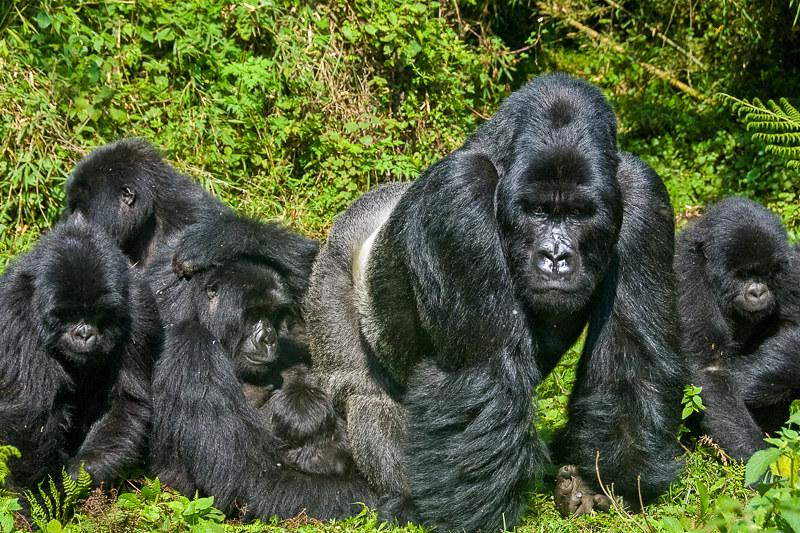
Gorilla Charging – What Makes a Gorilla Beat Its Chest and Charge?
Gorilla Charging – What Makes a Gorilla Beat Its Chest and Charge?
Introduction: Why Do Gorillas Charge?
Seeing a mountain gorilla beat its chest or perform a mock charge is one of the most thrilling moments during gorilla trekking. For many travelers, this behavior looks intimidating—but in reality, chest-beating and charging are natural communication tools used by gorillas to send messages.
Whether you’re trekking in Bwindi Impenetrable National Park, Volcanoes National Park, Mgahinga National Park, or Virunga National Park, understanding these behaviors helps you stay safe and enjoy your experience.
For guided gorilla tours across East and Central Africa, explore options with Monumental Expeditions and Safaris
Understanding Gorilla Body Language
Gorillas are incredibly expressive animals. They communicate through:
-
Facial expressions
-
Chest beating
-
Grunts and hoots
-
Body postures
-
Mock charges
-
Drumming on trees
-
Foot stamping
A gorilla charge rarely means the gorilla wants to attack. It’s almost always a warning, a show of dominance, or a request for more space.
Why Gorillas Beat Their Chests
Chest beating is one of the most iconic behaviors in gorillas, especially among silverbacks, the dominant males.
1. Showing Dominance
The deep, rapid chest-drumming sound echoes through the forest and signals:
-
“I am the leader here.”
-
“This is my family.”
-
“I am strong—don’t provoke me.”
It is a way to establish rank within the group and deter rival males.
2. Warning Intruders
Chest beating is often a warning signal. When a silverback notices unfamiliar animals, humans, or sounds, he may drum his chest to tell intruders that they are entering his territory.
This is common during trekking when visitors first approach the gorilla family.
3. Attracting Females
Chest beating is also used to impress potential mates. The louder and deeper the chest-beating, the more attractive a silverback appears to females.
It’s equivalent to showcasing strength, confidence, and the ability to protect the group.
4. Excitement or Playfulness
Young gorillas, including juveniles and blackbacks, sometimes beat their chests while:
-
Playing
-
Wrestling
-
Running around
-
Showing off to siblings
In these moments, it is playful—not aggressive.
What Causes a Gorilla to Charge?
A gorilla charge is usually a mock charge, not a real attack. It’s a bluff used to scare you into backing off or behaving respectfully.
Here are the main triggers:
1. Feeling Threatened
If a silverback perceives a threat to the group—especially infants—he may charge to push the threat away.
This perceived threat may include:
-
Sudden movements
-
Flash photography
-
Loud noises
-
Approaching too quickly
-
Standing taller than the gorilla
-
Direct eye contact
This is why trekkers are taught to stay calm and composed at all times.
2. Protecting the Family
A gorilla’s number one role is family protection. A silverback is responsible for:
-
Keeping predators away
-
Keeping rival gorillas away
-
Keeping the group united
If he thinks his family is in danger, he may charge to warn you.
3. Displaying Strength
Sometimes a gorilla charges simply to show off. This is common among younger males (blackbacks) who want to look intimidating even when no real threat exists.
These charges are usually dramatic but harmless.
4. Misinterpreting Human Behavior
Gorillas read body language closely. Certain behaviors make them uncomfortable:
-
Touching infants
-
Opening arms wide
-
Stretching toward them
-
Moving too close
-
Running
-
Staring directly at a silverback
Even innocent actions can be misread.
Types of Gorilla Charges
There are two main types of charges:
1. Mock Charge
This is the most common type, especially with habituated gorilla families.
A mock charge includes:
-
Beating chest
-
Running forward
-
Stopping abruptly
-
Throwing leaves
-
Hooting or grunting
-
Slapping the ground
The gorilla stops before reaching you.
It’s simply a warning.
2. Real Charge
This is extremely rare—especially during guided treks.
A real charge may occur when:
-
A gorilla feels cornered
-
A human gets too close to an infant
-
Someone behaves aggressively
-
A tourist breaks trekking rules
However, trained park rangers know how to diffuse the situation instantly.
How Rangers Prevent Gorilla Aggression
Before gorilla trekking begins, visitors receive a briefing from expert rangers who understand gorilla psychology deeply. They teach trekkers how to behave and interpret gorilla signals.
Rangers maintain safety by:
-
Approaching slowly
-
Speaking softly
-
Using “gorilla sounds” to calm silverbacks
-
Positioning trekkers safely
-
Reading body language instantly
-
Intervening if behavior escalates
This is why trekking with an experienced operator like Monumental Expeditions and Safaris ensures a safe and enjoyable experience.
What to Do if a Gorilla Charges
During a chest beat or charge, your reaction determines whether the gorilla calms down or feels more threatened.
Follow these expert guidelines:
1. Stay Still
Do NOT run. Running triggers the gorilla’s instinct to chase.
2. Look Down, Not Into Their Eyes
A lowered head signals submission. Eye contact feels like a challenge.
3. Crouch Slightly
Crouching shows the gorilla you’re not a threat.
4. Stay Close to Your Ranger
Rangers know how to handle every situation.
5. Avoid Sudden Movements
Slow, controlled movement reassures the gorilla that you respect their space.
6. Do Not Scream
A loud sound may be interpreted as aggression.
7. Follow Instructions
If a gorilla reaches out to touch you, don’t resist.
Remaining calm tells the gorilla you mean no harm.
Are Gorilla Charges Dangerous?
Despite dramatic appearances, gorilla charges—especially mock charges—are not dangerous when trekkers follow the rules.
Mountain gorillas are gentle giants. They avoid conflict unless absolutely necessary. Gorillas do not waste energy fighting unless the threat feels real.
Thousands of people trek gorillas each year in:
-
Uganda
-
Rwanda
-
Congo
-
Gabon
Serious incidents are extremely rare.
Why Understanding Gorilla Behavior Makes Trekking Safer
Knowing why gorillas beat their chests and charge helps trekkers:
-
Stay calm
-
Avoid risky behavior
-
Respect gorilla space
-
Capture better photos
-
Enjoy the trek confidently
This understanding also helps conservation staff protect both humans and gorillas.
Where to See Gorilla Chest Beating and Charging in the Wild
You can safely witness these behaviors in the following parks:
Uganda
-
Bwindi Impenetrable National Park
-
Mgahinga Gorilla National Park
Rwanda
-
Volcanoes National Park
Congo
-
Virunga National Park (Eastern DRC)
Gabon
-
Loango National Park
For customized gorilla trekking packages, trusted guides, and expert planning, visit Monumental Expeditions and Safaris
Final Thoughts: What Makes a Gorilla Beat Its Chest and Charge?
A gorilla beats its chest and charges to communicate strength, assert dominance, protect its family, or warn intruders to keep a safe distance. These behaviors are natural and rarely dangerous—especially around habituated gorillas who understand human presence.
Understanding these signals transforms your trek from a simple wildlife encounter to a deep, meaningful connection with one of Earth’s most intelligent creatures.
If you are planning a gorilla trekking experience in Uganda, Rwanda, Congo, or Gabon, partner with experts who know gorilla behavior and guarantee safety and comfort:
Related Posts