Why Gorilla Trek in October Gorilla trekking in October During this time, gorilla permit costs…
What is a Female Gorilla Called?
What Is a Female Gorilla Called? | Roles, Behavior & Importance in Gorilla Society
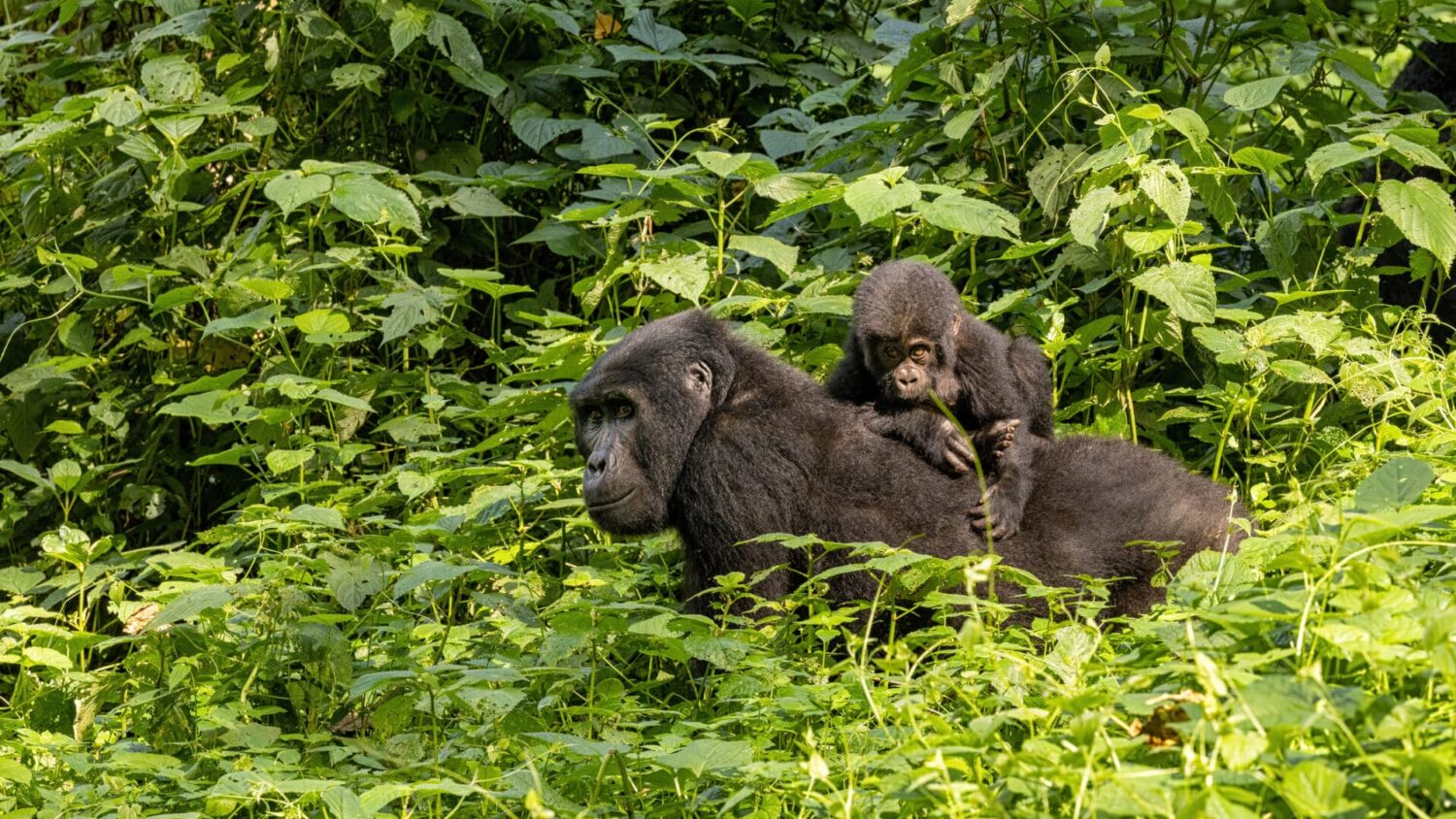
Gorillas are among the most iconic great apes on Earth — known for their immense strength, intelligence, and deeply social family structures. Closely related to humans, these gentle giants share nearly 98% of our DNA. But one interesting question often arises among wildlife enthusiasts: what is a female gorilla called?
Let’s explore the life, role, and importance of female gorillas within their troops, and why protecting them is essential to gorilla conservation across Africa.
What Is a Female Gorilla Called?
The simple answer is that a female gorilla is just called an adult female gorilla. Unlike some animals with gender-specific names, gorillas do not have a distinct term for females.
However, based on age and reproductive stage, gorillas are classified into:
-
Infant gorillas – 0–3 years old
-
Juvenile gorillas – 4–8 years old
-
Adult females – from 10 years old and above
Adult females are essential to gorilla troop structure, reproduction, and the nurturing of future generations.
Learn more about gorilla families and their behavior at Dian Fossey Gorilla Fund.
The Role of Female Gorillas in Their Social Groups
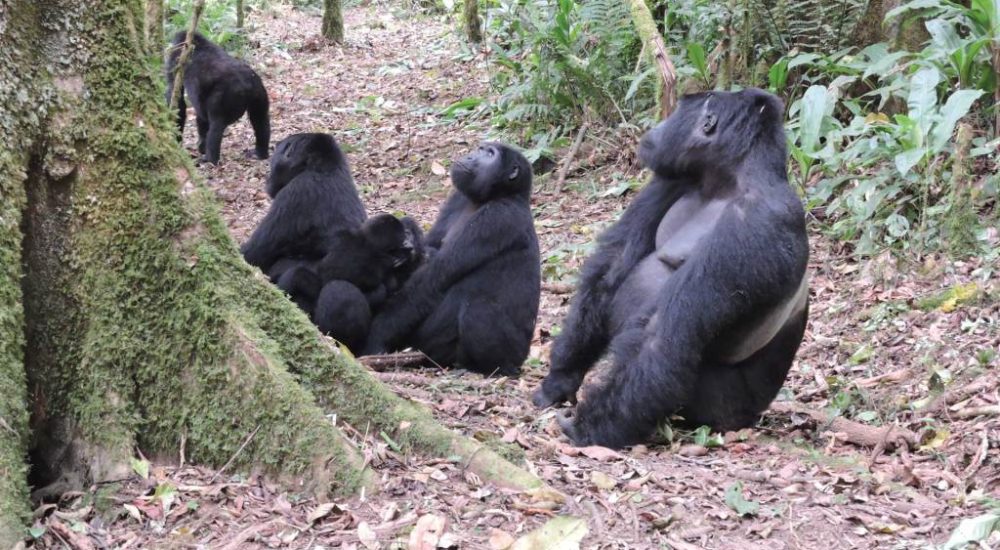
Gorilla families, also known as troops, are led by a dominant silverback male, but female gorillas form the emotional and social core of the group.
Matriarchal Influence and Social Bonds
Although males lead, female gorillas are vital in maintaining group harmony and social balance. They build strong bonds with their offspring and often with other females, ensuring group stability. These social networks help reduce conflict and foster cooperation within the troop.
Motherhood and Offspring Care
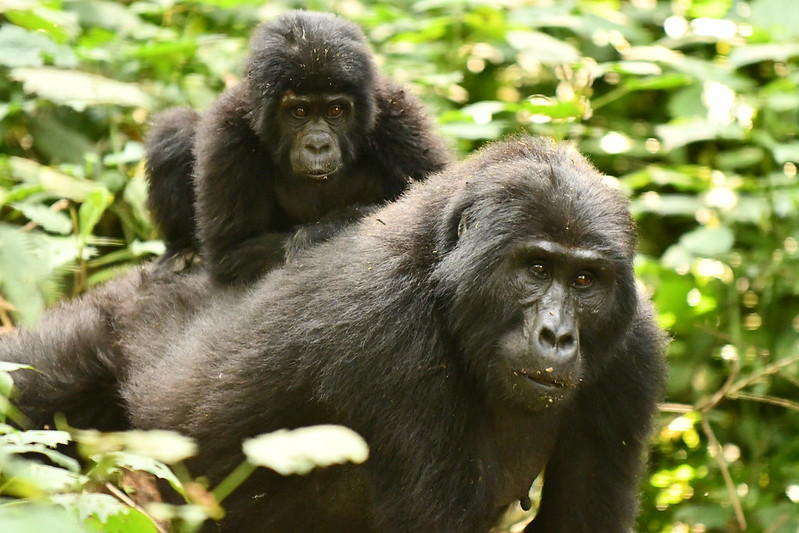
A female gorilla’s bond with her baby is one of the strongest in the animal kingdom. After an 8.5-month gestation period, a female gives birth to one infant and cares for it intensively for 3–4 years. During this time, the baby learns to forage, communicate, and navigate its environment.
Female gorillas are devoted mothers, fiercely protective of their young from predators and other dangers.
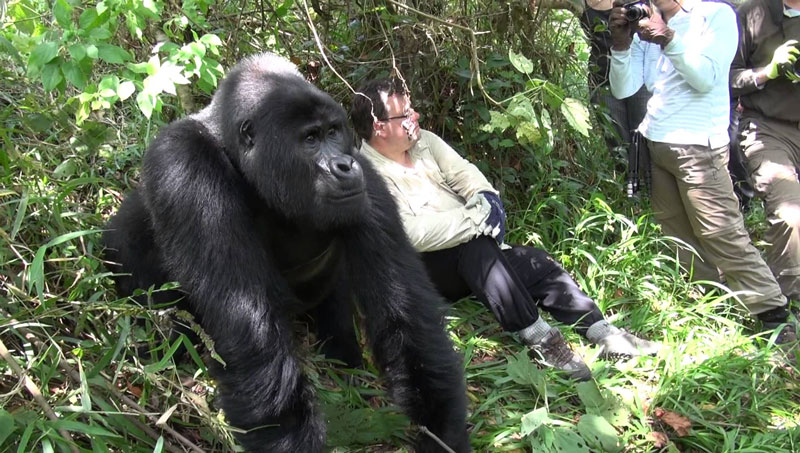
If you’d like to see this nurturing behavior in the wild, consider visiting Volcanoes National Park in Rwanda or Bwindi Impenetrable National Park in Uganda for a gorilla trekking experience.
Physical & Behavioral Differences Between Male and Female Gorillas
Physical Differences
Male and female gorillas have noticeable differences:
-
Males weigh between 135–220 kg (300–485 lbs), while females average 70–115 kg (150–250 lbs).
-
Males develop a distinct silver-gray patch of hair on their backs, earning the name silverback.
-
Females are smaller and more agile — traits that help them protect and care for infants efficiently.
Behavioral Differences
-
Silverbacks lead, defend, and decide troop movements.
-
Females focus on raising young, grooming, and maintaining relationships within the group.
-
Communication is often done through body language, vocalizations, and grooming rituals.
How Female Gorillas Interact Within the Group
Female Bonds
Female gorillas form lifelong friendships, often with maternal relatives. These relationships help in cooperative parenting and protection. It’s common to see females helping one another with infant care or sharing food sources.
Relationship With the Silverback
The silverback acts as the group’s protector and leader, while females maintain close proximity and communicate through grooming and soft vocalizations. Mutual respect ensures harmony in the troop.
Conservation of Female Gorillas
Female gorillas play a pivotal role in the survival of their species, making their protection a priority for conservationists.
Protecting Mothers and Infants
Poaching, disease, and habitat destruction remain the biggest threats. Conservation organizations like the World Wildlife Fund (WWF) and the International Gorilla Conservation Programme (IGCP) work to safeguard mountain and lowland gorillas by promoting eco-tourism, anti-poaching patrols, and habitat restoration.
Through initiatives such as community-based conservation, local people benefit from gorilla tourism, reducing the incentives for poaching and deforestation.
Final Thoughts: The Heart of Gorilla Society
So, what is a female gorilla called? Simply, an adult female gorilla — but she represents far more than just a title. She is:
-
The nurturer of the next generation
-
The social glue of the troop
-
A symbol of strength, intelligence, and compassion in the wild
Protecting female gorillas ensures the continued survival of these incredible primates — and helps preserve the delicate ecosystems of Central and East Africa.
Related Posts