
Uganda Bird Watching
Ugandan birdwatching. More than 1000 bird species can be found in Uganda, making it one of the best places in Africa to go birdwatching. These species can be found in a variety of vegetation areas, such as forests, swamps, national park grasslands, mountains, farmlands, rivers, and lakes, among others.
The shoebill stork, which is restricted to certain regions, is one of the most important birds to watch in Uganda. Additionally, Uganda is located in the Albertine region, which is traversed by the Equator and home to a variety of Albertine endemics. During certain seasons of the year, Uganda’s excellent weather and climate attract a large number of migratory birds.
Uganda’s top destinations for birdwatching
The botanical gardens of Entebbe
Located almost exactly on the equator on the northern beaches of Lake Victoria are the Entebbe Botanical Gardens, which were founded in 1898. One of the several botanical gardens in the nation, they are known as the National Botanical Gardens.
In addition to a number of shrubs and other plants that have organically regenerated throughout time, the gardens feature a variety of tropical, sub-tropical, and temperate plant species. Numerous species of birds, reptiles, and monkeys call it home as well. Red-chested sunbirds, marabou storks, orange and violet black weavers, hammerkops, African open-billed storks, verreauxowleagles, and black-headed herons are among the many bird species that have been drawn to this safe haven.
Queen Elizabeth National Park
The greatest places to see birds in Uganda are found in Queen Elizabeth National Park. These include the Kyambura and Maramagambo forests, the Mweya peninsula, the Kasenyi plains, and the Kazinga canal, which may be seen from a boat ride along the channel. African Jacana, African green pigeon, Black-headed batis, Long-tailed Cormorant, yellow warbler, Black bee-eater, African Emerald Cuckoo, purple-headed starling, speckled tinker bird, yellow-backed weaver, Pied kingfisher, Wattled plover, and open-billed stork are among the more than 600 bird species found in the park, some of which are migratory and others of which are endemic. Another pastime in Queen Elizabeth National Park for tourists who are interested in birds is birdwatching.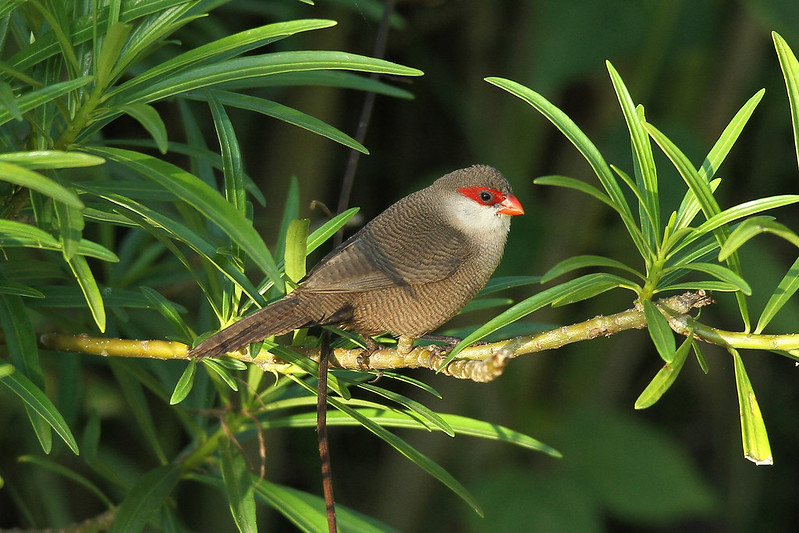
Semuliki National Park
Semuliki is a sanctuary for birds. For those interested in birding in Uganda, Semuliki National Park is renowned as a birder’s paradise, home to numerous bird species. Some of the birds you can see are these ones: Black-collared Lovebird, Yellow-throated Cuckoo, Red-chested Owlet, Woodland Francolin, Nkulengu Rail, Western Bronze-napped Pigeon, Chocolate-backed, White-bellied, and African Dwarf Kingfishers, Spot-breasted Ibis, Hartlaub’s Duck, Chestnut-flanked Goshawk, Red-thighed Sparrowhawk, Long-tailed Hawk, and others Red-billed, Black, and White-crested dwarfs Black-wattled Hornbills and Piping Zenker’s Honeyguides, Spotted, Lyre-tailed, and Red-rumped Tinkerbird Sassi’s Olive, Xavier’s, Swamp, Gabon Woodpecker, Red-sided Broadbill, White-throated Blue Swallow, Green-tailed Bristlebill, African Piculet, Ituri Batis, Lemon-bellied Crombec, Brown-crowned Eremomela, Blue-headed Crested Flycatcher, Red-billed Helmet-Shrike, Red-eyed Puff-back, Black-winged Starling, Maxwell’s Black Weaver, Blue-billed, Crested, and Red-bellied Malimbes, Pale-fronted and Chestnut-breasted Negro finches, Simple and Eastern Bearded Greenbuls, Yellow-throated Nicator, Capuchin Babbler, Northern Bearded Scrub-Robin, and Grant’s Bluebill.
Kibale Forest National Park
With more than 350 bird species, Kibale Forest National Park is one of Uganda’s top birding destinations. Among these are endemic birds of the Albertine Rift, such as the Abyssinian ground thrush, Abyssinian pitta, Crowned eagle, Dusky crimsonwing, Black-capped apalis, Collared apalis, Purple-breasted sunbird, Black bee-eater, Yellow spotted nicator, Little Greenbul, Brown-chested alethe, Yellow-rumped tinker bird, and Blue-breasted kingfisher, among others.
Bunyonyi Lake
With more than 200 bird species, including some migratory ones, Lake Bunyonyi is one of Uganda’s top birding destinations. The gray-crowned crane, white-tailed blue monard, herons, African Harrier Hawk, egrets, slender-billed baglafetch, levillant cuckoo, and cardinal woodpecker are among the bird species found there.Giant Kingfisher, Giant Heron, Shoebill stork, Abyssinian Ground Hornbills, Nightjars, Marabou stork, Black-headed lapwing, Back-bellied Bustard, Swamp Fly Catcher, Secretary Bird, and Gray-crowned Crane (Uganda’s national bird) are a few examples.
Lake Mburo National Park
The location of Lake Mburo National Park is in western Uganda. Stop briefly near the equator before continuing on to Lake Mburo and birding your way to the Nshara Gate entrance. Anticipate the following Common Scimitarbill, species: Greater Blue Eared Starling, Crested Francolin, Green Wood Hoopoe, Lilac-breasted Roller, Spot-Flanked Barbet Northern Black Tit, Trilling Cisticola, Emerald Spotted Wood Dove, Bare-Faced Go-Away Bird, and Brown Parrot. Visit Rwonyo Restaurant for lunch. You may encounter species like as the Coqui Francolin, Black Bellied Bustard, Temmricks Courser, African Wattled Plover, Rufous napped Rufous, Chested Swallow, and Flappet Lark on your late afternoon game drive along the Zebra Track after lunch.
Birdwatching in Bwindi Impenetrable Forest National Park’s Mubwindi Swamp.
Some of the hardest-to-find rift endemics, such as the stunning Regal Sunbird, the Archer’s Robin-Chat, and Grauer’s (African Green) Broadbill, can be found on the 4km walk to Mubwindi Swamp. Dwarf Honeyguide, Stripe-breasted Tit, Ruwenzori Apalis, African Hill Babbler (often considered a distinct species from Ruwenzori Hill Babbler), and the uncommon and local Grauer’s Scrub-Warbler are also found in Mubwindi Swamp. Black Goshawk, Augur Buzzard, Crowned Hawk-Eagle, Handsome Francolin, Olive (Rameron) Pigeon, Bronze-winged Pigeon, Black-billed, Ruwenzori, and Ross’s Turacco, African, Barred Long-tailed, and African Emerald Cuckoos are just a few of the numerous species we may be able to witness here. Red-chested Owlet, Narina and Bar-tailed Trogons, Black and Cinnamon-chested Bee-eaters, Blue-throated Roller, White-headed Woodhoopoe, Gray-throated, Double-toothed, and Yellow-spotted Barbets, Western and Yellow-rumpedTinkerbird, Thick-billed and Dwarf Honeyguides, Rufous-necked Wryneck, Tullberg’s, Speckle-breasted, Elliot’s, and Olive Woodpeckers, African Broadbill, Rock Martin, Black Saw-wing, Gray and Petit’s Cuckoo-Shrike, Ansorge’s, Kakamega and Cabanis’ Greenbuls, White-tailed Ant-Thrush, Kivu Ground-Thrush, Olive and Mountain Thrushes, Red-throated Alethe, Chubb’s Cisticola, Banded Prinia, Ruwenzori, Black-throated, and Black-faced Apalis, Olive-green Camaroptera, Grauer’s Warbler, Cinnamon and Black-faced Bracken-Warblers, Mountain Yellow Warbler, White-browed Crombec, Short-tailed Warbler, Red-faced Woodland-Warbler, White-eyed Slaty- Flycatcher, Yellow-eyed Black-Flycatcher, Sooty Flycatcher, Chapin’s Flycatcher, White-starred Robin, White-bellied and Archer’s Robin-Chats, Ruwenzori Batis, White-tailed, and African Blue-Flycatchers, Stuhlmann’s, Northern Double-collared, Regal Sunbirds, Western Violet-backed, Gray-headed, Blue-headed, Green-throated, Pale-breasted, Mountain, and Gray-chested Illadopses, Ruwenzori Hill Babbler, Black-billed, Strange, and Brown-capped Weavers; Jameson’s and Woodhouse’s Ant-peckers; Velvet-mantled Drongo; Slender-billed, Waller’s, Narrow-tailed, Stuhlmann’s, and Sharpe’s Starlings; Ludher’s, Mackinnon’s, Gray-green, Many-colored, and Lagden’s Bush-shrikes; and Red-faced and Dusky Crimson-winged birds.
Birdwatching at “The Neck” in Buhoma
“The Neck.” Excellent woodland birding is available in the Neck, where the forest narrows. Many of the Albertine Rift Endemics, which we might not have previously observed, are among the important species we will search for there. Red-throated Alethe, Yellow-eyed Black-Flycatcher, Red-faced Woodland Warbler, Short-tailed Warbler, Grauer’s Warbler, Mountain Masked Apalis, Collared Apalis, Stripe-breasted Tit, Rwenzori Batis, Blue-headed Sunbird, Regal Sunbird, DuskyCrimsonwing, Handsome Francolin, Rwenzori Nightjar, Dwarf Honeyguide, African Green Broadbill, African Green Broadbill, Archer’s Robin-Chat, and Red-throated Alethe are a few of these. Ayres’s Hawk-Eagle, Fine-banded and Cardinal Woodpeckers, Willcocks’s Honeyguide, Kakamega Greenbul, Red-tailed Greenbul, Red-tailed Bristlebill, Blue-shouldered Robin-Chat, Mountain Wagtail, Cassin’s Flycatcher, Equatorial Akalat, Black-faced Rufous Warbler, Dusky Tit, Chestnut Wattle-eye, Red-headed Malimbe, Dusky Twinspot, Cape Wagtail, Brown-backed Scrub Robin, Mackinnon’s Fiscal, and Western Citril are some of the other species we might come across in addition.
Birdwatching on Buhoma’s Main Trail
Olive Long-tailed Cuckoo, Bar-tailed Trogon, Dusky Tit, Kivu Ground-Thrush, White-bellied Robin-Chat, Equatorial Akalat, White-tailed Ant-Thrush, Red-throated Alethe, White-bellied Crested-Flycatcher, White-eyed Slaty-Flycatcher, Gray-green Bushshrike, Northern Double-collared Sunbird, Black-billed Weaver, and Magpie Mannikin are among the species on the main trail in the Buhoma sector of Bwindi Impenetrable Forest National Park. The African Goshawk, the stunning Black Bee-eater, the Blue-throated Roller, the Sooty Flycatcher, and forest starlings such as Waller’s, Stuhlmann’s, and Narrow-tailed prefer high, exposed perches in the open forest. The tiny, pitta-like Neumann’s Warbler, a loud but highly secretive bird, is one of Bwindi’s top birders! We also hope to see the attractive Black-faced Rufous-Warbler, Banded Prinia, and exhibiting African Broadbill as understory birds. Elliot’s and Tullberg’s Woodpeckers, Cabanis, Kakamega, and Ansorge’s Greenbuls, the odd Grauer’s Warbler, and White-browed Crombec are all found in the mid-story and canopy. The uncommon Jameson’s Antpecker can also be observed gleaning in the canopy like a warbler or probing beneath moss on dead limbs. Scarce Swifts graze over the forest above. The experience of birdwatching in Buhoma is genuinely enchanting. The enormous Yellow-backed Duiker, Guereza Colobus, L’Hoest’s, Blue, and Red-tailed monkeys, chimpanzees, and many squirrel species, such as the Fire-footed Rope, Carruthers’ Mountain, Ruwenzori Sun, and Red-legged Sun Squirrel, are among the other fauna that we might be lucky enough to see here.
Ugandan Birdwatching with Monumental Expeditions and Safaris
Our goal at Monumental Expeditions and Safaris is to provide unforgettable and influential birding experiences in Uganda, starting as soon as you land in Africa. On all of our trips in Africa, you will have the option to participate in activities that are primarily life-changing and provide hope to the communities while also conserving for future generations. These activities include planting trees, volunteering, and packing for a purpose, among others. Our goal is to change the way that people typically travel through Africa. Your adventure safari is expertly organized and run, from our airport meet and greet services to our individual and group transfers to safari locations. We are really concerned about protecting the environment, thus we try to avoid packing non-recyclable products wherever feasible and bring reusable items like water bottles, among other crucial environmental protection measures.