
Game Drive Safaris in East Africa from USA – The Ultimate 2026 Travel Guide Planning…
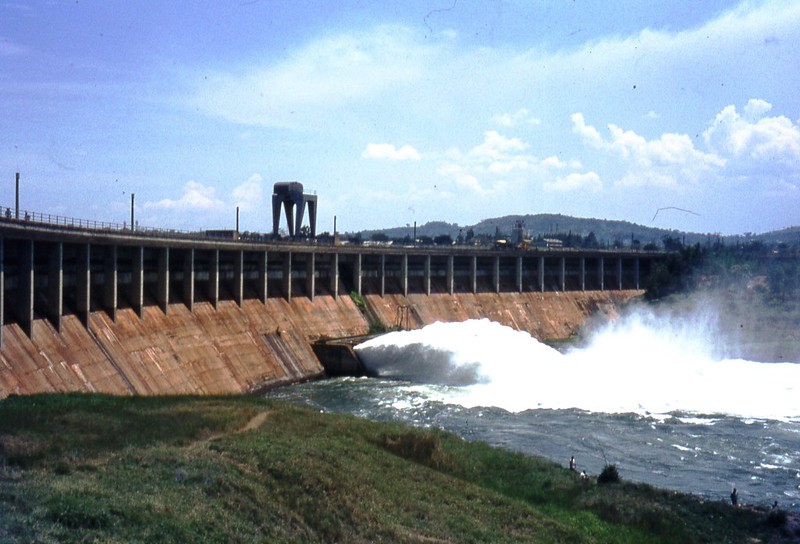
Owen Falls Dam Jinja Uganda
Owen Falls Dam Jinja Uganda – Nalubale Hydroelectric Power Station
Located in Jinja, Uganda, the Owen Falls Dam—now known as the Nalubale Hydroelectric Power Station—is one of the country’s most significant sources of electricity and a cornerstone of Uganda’s hydroelectric history.
This impressive engineering project, completed in 1954, transformed Uganda’s energy landscape and continues to power industries, homes, and cities across the country.
History of Owen Falls Dam
The idea to construct the dam dates back to 1947, when Sir Charles Redvers Westlake, an English engineer, proposed the development of a hydroelectric dam at Owen Falls near Jinja Town. His recommendation to the Colonial Administration of Uganda led to the formation of the Uganda Electricity Board (UEB) and the subsequent construction of the dam.
Before the dam was built, the Owen Falls and nearby Ripon Falls were spectacular cascades along the White Nile River, located about four kilometers downstream from the outlet of Lake Victoria. However, both falls were submerged after the completion of the dam, creating what is now the Nalubale Dam.
Coordinates: 0°26′37.0″N, 33°11′05.0″E
(View on Google Maps)
Construction and Design of the Nalubale Hydroelectric Power Station
The original Owen Falls Power Station featured a concrete gravity dam paired with an intake powerhouse unit. It regulates the flow of water from Lake Victoria through 10 turbines and 6 dam sluices, providing a combined spill capacity of approximately 1,200 cubic meters per second when fully opened.
When Queen Elizabeth II officially commissioned the plant in 1954, it had a generation capacity of 30 megawatts (MW), powered by two 15 MW units. Over the next decade, the power output increased steadily, and by 1968, all ten units were operational, reaching 150 MW.
Environmental and Regional Significance
The operation of the Nalubale Dam is governed by the Agreed Curve, an arrangement established between the British Colonial Government and Egypt in 1929, and later amended in 1949. This agreement ensures that water discharged from Lake Victoria remains consistent with natural outflow levels that existed before the dam’s construction.
This regulation helps preserve the Nile River ecosystem, ensuring a balance between power generation and environmental sustainability.
Decline and Rehabilitation (1971–1986)
Between 1971 and 1986, due to political instability and neglect, the dam’s generating capacity dropped drastically to 60 MW. Essential maintenance was ignored, leading to major operational inefficiencies.
However, rehabilitation efforts in the 1990s upgraded the turbines from 15 MW to 18 MW each, restoring the plant’s total capacity to 180 MW by 1996.
These efforts were crucial to stabilizing Uganda’s energy supply during a period of growing industrial demand.
Expansion: Kiira Hydroelectric Power Station
In the late 1980s, Acres International (now part of Hatch Ltd, Canada) explored the potential of expanding power generation on the Nile River. This led to the construction of a second powerhouse, about 1 kilometer northeast of the Nalubale Power Station, known as the Kiira Hydroelectric Power Plant.
A canal was excavated to channel water from Lake Victoria to the new plant. Construction was largely completed by 1999, and by 2000, the first two of five turbines were operational. The fifth turbine came online in 2007, bringing Kiira’s total generation capacity to 200 MW, with each turbine producing 40 MW.
Together, Nalubale and Kiira Power Stations play a vital role in Uganda’s national grid, managed under Uganda Electricity Generation Company Limited (UEGCL).
The Legacy of Owen Falls Dam
Today, the Nalubale Hydroelectric Power Station stands as a symbol of Uganda’s industrial progress and energy independence. Its strategic location on the White Nile River continues to provide sustainable power while preserving the country’s historical legacy of innovation.
Visitors to Jinja, often dubbed the Adventure Capital of East Africa, can explore the Nalubale Dam viewpoint, enjoy boat cruises on the Nile, or learn about Uganda’s hydroelectric evolution at the Jinja Source of the Nile.
If you’re planning a trip, you can also combine your visit with thrilling activities like white-water rafting on the Nile or bungee jumping for an unforgettable experience.
Key Facts: Owen Falls / Nalubale Dam
| Feature | Details |
|---|---|
| Location | Jinja, Uganda |
| Coordinates | 0°26′37.0″N, 33°11′05.0″E |
| River | White Nile |
| Commissioned | 1954 by Queen Elizabeth II |
| Initial Capacity | 30 MW |
| Upgraded Capacity | 180 MW (by 1996) |
| Expansion Project | Kiira Hydroelectric Power Station |
| Combined Capacity | Over 380 MW |
| Managed by | Uganda Electricity Generation Company Ltd (UEGCL) |
Conclusion
The Owen Falls Dam, now Nalubale Hydroelectric Power Station, remains one of Uganda’s most iconic engineering achievements. From its historical beginnings in the 1950s to modern-day expansions like the Kiira Power Station, it represents the backbone of Uganda’s electricity supply and a testament to sustainable energy development in East Africa.
Whether you’re a history enthusiast, an engineer, or a traveler exploring Jinja, visiting the Nalubale Dam is a journey into Uganda’s industrial past and its bright, renewable future.
Related Posts