
Mountain Hiking and Trekking
You can explore and trek mountains in East Africa with Mountain Hiking & Trekking in East Africa. Depending on your interests, level of fitness, and intended trip schedule, you can hike any of the many mountains in East Africa.
Our hiking and mountain adventure trips will concentrate on major and prominent mountains such as Mount Kilimanjaro in Tanzania, Mount Kenya in Kenya, Mount Rwenzori and Elgon in Uganda, and Bisoke in Rwanda, among others. East Africa is comprised of six countries: Uganda, Kenya, Tanzania, Rwanda, Burundi, and South Sudan.
One of our main goals at Monumental Expeditions and Safaris is to provide visitors to Africa with a lifetime of mountain hiking and trekking in East Africa. You shouldn’t leave out any of the hiking, mountain climbing, and trekking experiences that East Africa has to offer while planning your trip to Africa.
We provide a range of hiking packages for the mountains listed below, from two days to twelve days and beyond. These packages can also be planned and extended to your itinerary for additional activities, such as primate trekking and wildlife viewing.
East Africa’s top destinations for trekking and mountain hiking
Climbing the Rwenzori Mountains
Mount Stanley is the highest point and the roof of the Rwenzori Mountains, which rise to a height of 5109 meters above sea level in western Uganda along the Uganda-Congo border. Trekking Rwenzori Mountain, which offers the opportunity to climb snow-capped peaks and stroll on tropical glaciers that symbolize the tallest and most fascinating source of the Nile, has established itself as one of Africa’s premier mountaineering experiences.
Stanley, Speke, Baker, Emin, Gessi, and Savioa are the six separate mountains that make up the Rwenzori Mountains. Mount Stanley is situated atop Margherita Peak, Africa’s third-highest point at 5109 meters. The Ugandan portion of Rwenzori Mountain was gazetted as Rwenzori Mountains National Park in 1991 and was designated a World Heritage Site in 1994.
Rwenzori Mountain is divided into two areas, one in the Democratic Republic of the Congo and the other in Uganda, which is mostly accessible through Kasese town following Queen Elizabeth National Park. You will also get the opportunity to witness a variety of mammal and bird species while hiking in the Rwenzori Mountains.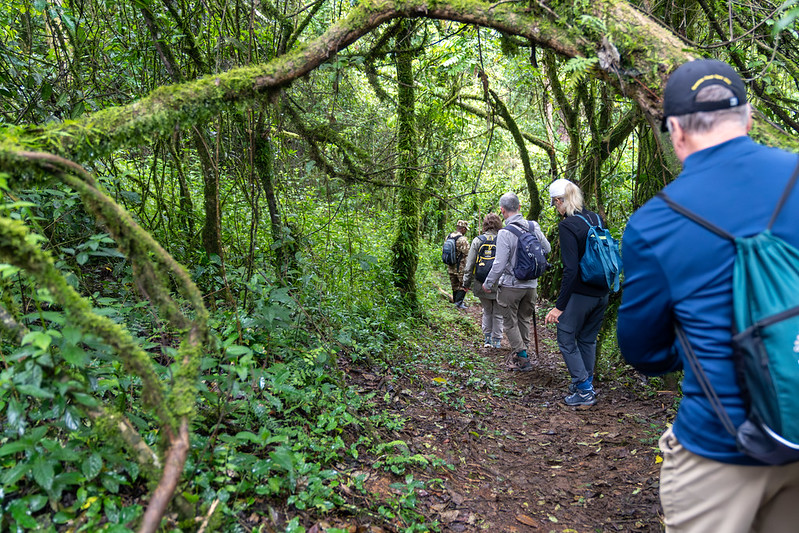
Climbing Mountain Elgons
One of Uganda’s oldest natural features, Mountain Elgon is an extinct volcano that erupted for the first time about 24 million years ago. Once the highest mountain in Africa, Mount Elgon towered over Kilimanjaro, which is currently 5,895 meters high. Due to millennia of erosion, it is now just 4,321 meters high, making it the eighth highest peak on the continent and the fourth tallest in East Africa.
The ultimate goal of climbing Mt. Elgon is not the final ascent to the 4321m Wagagai Peak, but rather the descent into the expansive 40km² caldera. Climbing the mountain’s untouched moorlands reveals a magnificent and pristine wilderness without the summit-oriented approach typical of many mountains.
The disadvantaged Ndorobos are compelled to live deep within the Benet forest, while the Bagisu and Sabiny are the two tribes that call Mount Elgon home. The mountain is referred to as Mount Elgon by the Bagisu, also called the BaMasaba, who saw it as the essence of their founding father Masaba.
Mount Elgon boasts the world’s largest volcanic base, spanning 4,000 km². It is the oldest and largest isolated volcanic peak in East Africa, and it is situated on the boundary between Uganda and Kenya.
Its enormous shape, which is 80 km in diameter, rises almost 3,000 meters over the nearby lowlands. The cooler elevations of the mountain provide relief from the sweltering plains below, while the higher elevations serve as a haven for wildlife and plants.
The ultimate goal of climbing Mt. Elgon is not the final ascent to the 4321m Wagagai Peak, but rather the descent into the expansive 40km² caldera. Climbing the mountain’s untouched moorlands reveals a magnificent and pristine wilderness without the summit-oriented approach typical of many mountains.
Climbing Kilimanjaro Mountain
Climbing peak Kilimanjaro is the highest peak in Africa and the world’s highest free-standing mountain. It is a dormant volcano in Tanzania that rises 5895 meters above sea level. Kibo, Mawenzi, and Shira are its three volcanic summits. The easiest and only path that comes from the north is the Rongai. Other hiking routes for climbing and descending Kilimanjaro Mountain include the Mweka, Machame, Umbwe, Marangu, Shira, and Lemosho. Because the entire trek takes nearly a week due to its step-like terrain, Machame is the most difficult but well-traveled route.
A really unique trip, Kilimanjaro Mountain Climbing offers the opportunity to camp outside all the way to the summit, which is incredibly picturesque with breathtaking views of the surrounding countryside. For every path that will allow you to climb Mount Kilimanjaro, we do offer a variety of packages.
Climbing Mount Kenya
After Mount Kilimanjaro, Mountain Kenya is the tallest mountain in Kenya and the second-highest in Africa. The Batian peak, which is 5119 meters above sea level, the Nelion peak, which is 5188 meters, and the Lenana peak, which is 4985 meters above sea level, are the highest and most difficult of the three main peaks that make up Mountain Kenya.
Reaching the summit of Mountain Kenya offers you a view of the glaciers. Since the Batian peak summit is extremely difficult to achieve and technically complex, any fit hiker can easily reach Lenana, which is 4985 meters high. This hike, which lasts three to five days, passes through stunning scenery, intriguing montane forests, fauna, and the most uncommon views of the tropical snow and glaciers.
Climbing Mount Meru
Situated west of Mount Kilimanjaro, Mountain Meru is a dormant strato volcano that rises 4562 meters above sea level, making it Africa’s fifth highest peak. Because fewer people travel there, it is a nice option for people who dislike crowds. The optimum time to walk Mount Meru is during the dry season, which runs from June to September and December to February all year round. The hike takes about three to four days.
Trekking in the Volcano Ranges of the Virunga
Mount Nyiragongo, Nyamuragira, and Mikeno Volcanoes in the Democratic Republic of the Congo, Mount Karisimbi and Bisoke in Rwanda, and Mount Gahinga, Muhavura, and Sabyinyo Volcanoes in Uganda are the eight volcanoes that make up the Virunga Mountains, a chain of volcanoes in East Africa that runs along the northern border of Rwanda, DR Congo, and Uganda. Mount Karisimbi, which rises 4507 meters above sea level, is the highest point in the Virungas. These mountains are excellent for hiking, offering one of the most exhilarating experiences, and for taking in the scenery.
Trekking Karisimbi Mountain
One of the Virunga Mountains, Mountain Karisimbi, is situated along the Rwanda-DR Congo border. At 4,507 meters above sea level, it is an elevated location. It takes around six hours to trek to the summit of Mount Karisimbi, so it is advisable to begin early in the morning. Given that the trek is worthwhile and offers the chance to observe a variety of monkeys, mountain gorillas, and other exotic animals, depending on the weather, you will need to be in good physical condition.
Trekking up Sabyinyo Peak
The ideal place to go trekking in Uganda is Mount Sabyinyo, which is situated near the border of Rwanda, Uganda, and Congo. It is the oldest volcano, rising 3,645 meters above sea level. It takes around four hours to trek to the top of Mount Sabyinyo, so it is preferable to begin early in the morning. Given that the trip is worthwhile and offers the chance to observe a variety of monkeys, including golden monkeys, and, depending on the day, mountain gorillas and other wild creatures, you will need to be in good physical condition.
Mount Muhavura Hiking
The elevation of Mount Muhabura is 4,127 meters above sea level. It is situated near the Rwandan-Uganda border. Another national park in Uganda where you can trek mountain gorillas is Mgahinga Gorilla National Park, which is made up of three volcanoes, including Mountain Muhavura. Another fantastic adventure is climbing Muhavura Mountain, which rewards you with a view of Crater Lake at the summit.
Trekking up Mount Gahinga
At 3,474 meters above sea level, Mountain Gahinga is the smallest of the Virunga Volcanoes. One should not miss the adventure of hiking up through the bamboo-covered slopes to the lush, swamp-filled crater. Hiking takes about four hours, so it’s better to begin early in the morning. Given that the trip is worthwhile and offers the chance to observe a variety of monkeys, including golden monkeys, and, depending on the day, mountain gorillas and other wild creatures, you will need to be in good physical condition.
Exploring the Bisoke Volcano
Mount Bisoke, which reaches 3,711 meters above sea level, is situated in Volcanoes National Park on the boundary between Rwanda and the Democratic Republic of the Congo. It is preferable to begin the hike early in the morning as it takes about four to five hours. Given that the trip is worthwhile and offers the chance to observe a variety of monkeys, including golden monkeys, and, depending on the day, mountain gorillas and other wild creatures, you will need to be in good physical condition.
Trekking to Tororo Rock
Tororo Rock is around 230 kilometers from Kampala in the eastern region of Uganda. The elevation of this location is 1800 meters above sea level. Numerous historical caverns for storytelling and the values the locals connected to them are among the many tourist attractions at Tororo Rock.
Mount Lesatima Mountain Climbing
The third-highest mountain in Kenya, Mount Lesatima, is situated in the Great Rift Valley’s northern Aberdare region. Numerous hikers have climbed the mountain, and it’s an experience you won’t want to miss. The summit offers a breathtaking panorama.
Mountain Climbing on Longonot Mountain
Situated in the Rift Valley region of Kenya, Mountain Longonot is a dormant volcano that last erupted in the 18th century. There is a well-defined route for mountain climbing, and the walk up this specific peak takes approximately four to five hours. An excellent view of Lake Naivasha and the local fauna and avian life may be seen as you climb the peak. The climb isn’t too hard, and you can simply hire a potter to assist you carry your bags while you take in the scenery for a nominal charge.
Kinangop Mountain Mountain Climbing
Another Kenyan mountain that is excellent for hiking is Mountain Kinangop. The elevation of Mountain Kinangop is 3,909 meters above sea level.
East Africa’s ideal seasons for trekking and mountain hiking
Because the Equator crosses East Africa, the countries here typically experience equatorial weather. The best time to go hiking and mountain climbing in East Africa is during the dry season because the trails are a little bit dry, making the hikes simple and accessible. The roads that lead to these mountains are also fine during this time of year, which runs from June to September and December to February.
Although these mountains are high above sea level, you will still encounter drizzles and slick terrain as you reach the upper reaches. For this reason, we do advise that you pack appropriate hiking gear to ensure a successful trek. In addition to trekking a certain mountain, you can add a variety of other activities to your itinerary before or after the hike in a particular nation. These activities include tracking chimpanzees, golden monkeys, gorillas, and wildlife, among others.
Hiking supplies and packing list.
Clothing
It is advised to bring silk clothing, long-sleeved shirts, and items that wick away moisture and dry quickly. Depending on how many days you have, this protects you from sunburns and how much clothing you need to bring. Generally speaking, you will need to bring clothing that will last you for half of the excursion. Tracksuits and trousers that are lightweight and flexible are essential for tracking. Additionally, it is easier for you to carry when you are carrying less and lighter weight. They ought to be rainproof as well.
Boots for Hiking
These are essential for any hiking excursion; they are designed to be used on hills, stairs, and in wet conditions, which can be difficult to navigate with the incorrect kind of footwear. In addition to being more comfortable in hot weather, hiking boots should be waterproof against rain and damp terrain so that you can easily finish your trek.
Sandals
Wearing new sandals can help your feet feel liberated and give them the air they need after all the trekking and moving you do throughout the day. These are used before going to bed, following a bath and unwinding by a campfire.
A raincoat
It is imperative to have a rain jacket with you on any hiking trip because it is likely to rain while you are trekking in Uganda. It will also protect your photographic equipment and bags. In Uganda, you can purchase one in any town if you don’t already have one.
Stock pairs
Since stockings absorb the moisture that your feet produce, you cannot wear shoes without them. You should have a few of these on hand. Pack as much as you like for this vacation. It gets rather chilly there, so you’ll need to wear comfortable shoes.
Packing a backpack
A backpack is essential for your trip because it will hold everything you need, and because most walks last several days, you will need to carry a lot of stuff. They can be packed full of them and are lightweight.
Tents and sleeping bags
Tents and a sleeping bag for the night are usually advised because most hikes are conducted outdoors, there aren’t many lodging options, and temperatures may get extremely high at times, particularly in the Rwenzori.
Snacks
Given that meals are only served during certain hours, you should pack adequate snacks for the duration of your hike before you begin the hike. When the dinner is not quite ready, these are excellent for increasing your energy levels and keeping you going.
Sunglasses, hat, and sunscreen
These are fundamental protections against heat and sunburn. Given that many people experience skin issues after being exposed to the sun,
A water filter
Since you have a limited amount of water to carry on the trip, you are more likely to drink from the mountain streams, thus you should bring a water purifier and filter before drinking.
Gloves
This is essential for any trekking excursion in order to control your body temperature and prevent cuts and bruises. If you don’t have any, you may purchase them in Uganda prior to the journey.
Headlight
Since there is no electricity in these areas, you will need a lantern or headlamp when you leave your tent at night. Because you have to make up the ground to get to your next objective, it becomes useful for hikes that require you to start early in the evening.
A face towel.
You need this when hiking since you perspire a lot, or when it’s chilly outside and you have a running nose, so you need to blow. Additionally, it’s crucial to always have one with you wherever you go.
A first aid kit
Hiking expeditions frequently result in accidents, and anything can happen at any time, particularly cuts and joint dislocations. Bandages, medicines, a moleskin, pain relievers, and drugs for any issues that may emerge due to the high altitude should all be included in your first aid kit.
Additional memory cards and a camera battery
There is no fee for the camera you bring on your trip, and you can only say that the trip was enjoyable if you have the memories. You are permitted to bring your photography gear, and as there are many picturesque locations along the route, there are plenty of chances to take quality pictures. For this reason, you should bring an extra memory card, and since there isn’t much charging on the mountain, extra batteries will save your trip.
Why use Monumental Expeditions and Safaris for your mountain hiking reservations?
Our goal at Monumental Expeditions and Safaris is to design unforgettable experiences that start as soon as you land in Africa. On all of our trips in Africa, you will have the option to participate in activities that are primarily life-changing and provide hope to the communities while also conserving for future generations. These activities include planting trees, volunteering, and packing for a purpose, among others.
Our goal is to change the way that people typically travel through Africa. Your adventure safari is expertly organized and run, from our airport meet and greet services to our individual and group transfers to safari locations. We are really concerned about protecting the environment, thus we try to avoid packing non-recyclable products wherever feasible and bring reusable items like water bottles, among other crucial environmental protection measures.