
Kenya Great Wildebeest Migration
Every year, more than 1.5 million wildebeests and thousands of zebras migrate from the plains and Ngorongoro crater in the southern Serengeti National Park to the southern Masai Mara National Park in Kenya and back again, a phenomenon known as the Great Wildebeest Migration. The reason it is called the Great Migration is that it is different from other migrations and is particularly difficult. It entails a clockwise movement of zebras and wildebeests over a distance of about 3000-kilometers as they look for new habitats and raise their young during annual seasonal changes.
The Great Migration often takes place during the dry season, when zebras and wildebeests must relocate in quest of water and new grazing vegetation. Many tourists who visit Kenya and Tanzania choose the Great Migration as an amazing safari option since it offers the ultimate African safari experience.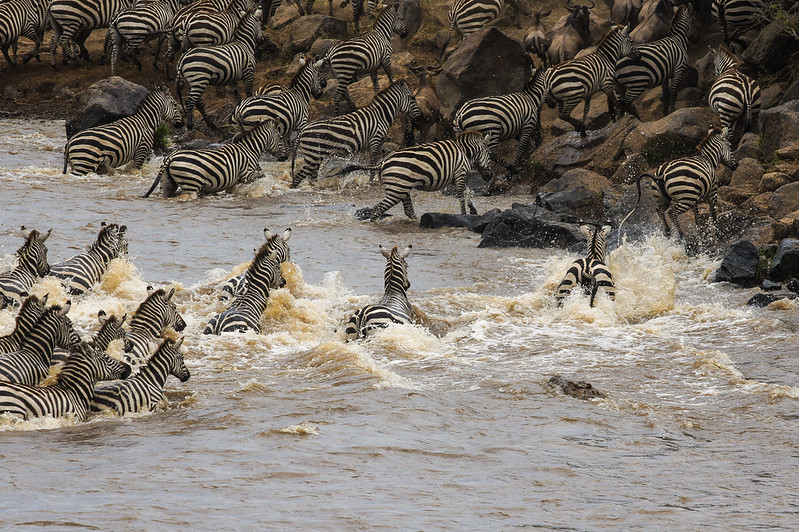
You can choose from our popular tours below that include the Great Migration, which Monumental Expeditions and Safaris arranges for travelers on a budget, mid-range, and luxury trip to Kenya and Tanzania. Please feel free to contact us here, and we will create a Great Migration tour that fits your interests, time, and money. We also think about significantly customizing all of our tours to best meet our clients’ needs.
When is the ideal time to visit Kenya to witness the Great Wildebeest Migration?
During the dry season, which runs from July to early October each year, the Great Wildebeest Migration in Kenya is most visible. Wildebeests and zebras are forced to migrate to the northern plains, which is the southern part of Masai Mara National Park, in search of fresh vegetation and water during this time due to the sparse and dry vegetation in the southern parts of Serengeti National Park and Ngorongoro Crater, as well as dry waterways.
During the migration, zebras and wildebeests raise their young. This is a difficult task because the journey is more than three thousand miles long and exhausting; many of them die from exhaustion, which allows other carnivore animals, such as lions, cheetahs, and hyenas, to more easily find food.
August and September are the best months to witness the Great Migration among the aforementioned dry months because they are also the best times to experience the river crossing during the migration. Late October marks the return of rains in Tanzania, and the herds will begin their journey back to the southern Serengeti National Park and the grassland plain areas of Ngorongoro Crater.