
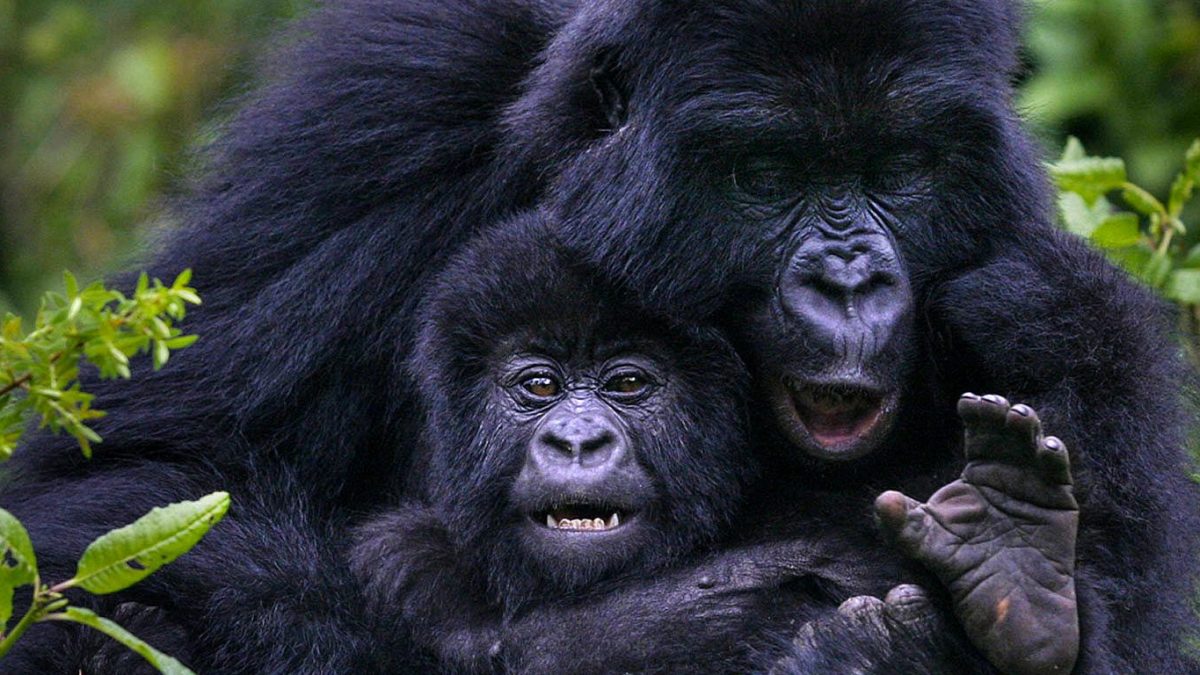
Gorillas in Uganda
If you’re seeking an unforgettable wildlife adventure, Uganda is the place to be. Known as the Primate Capital of the World, this stunning East African gem boasts the highest concentration of mountain gorillas on Earth. Deep within Uganda’s lush rainforests, these gentle giants thrive — offering visitors one of the most magical encounters in all of nature.
Uganda: Africa’s Hidden Gem for Primate Lovers
Uganda’s diverse landscapes are blanketed with dense rainforests, serene mountains, and rich biodiversity. Among its natural treasures lies Bwindi Impenetrable Forest and Mgahinga Gorilla National Park, the two crown jewels for gorilla trekking safaris. These rainforests are not only sanctuaries for mountain gorillas, but also home to an incredible variety of chimpanzees, golden monkeys, and other rare primate species.
Meet the Mountain Gorillas — Nature’s Gentle Giants
Gorillas are the world’s largest primates — powerful yet peaceful creatures that share an astonishing 95–99% of their DNA with humans. They are divided into two main species: Eastern and Western gorillas, with several subspecies under each. Uganda is blessed to host the Eastern mountain gorilla, a rare and critically endangered species found only in a few parts of Africa.
These herbivorous, ground-dwelling apes roam the tropical forests in close-knit family groups led by a dominant male known as a silverback — a symbol of wisdom, strength, and protection. Eastern gorillas are distinguished by their darker fur and slightly larger build compared to their western cousins.
Fascinating Facts About Gorillas
-
Size & Strength: Adult gorillas stand between 1.25 to 1.8 meters tall and can weigh up to 270 kg. Their long, powerful arms can stretch over 2.6 meters.
-
Diet: These gentle giants feed primarily on leaves, fruits, shoots, and stems.
-
Social Life: Gorillas live in groups called troops or families, led by a protective silverback.
-
Lifespan: In the wild, gorillas can live up to 35–40 years. The oldest known gorilla, Fatou, born in 1957, is still alive at over 65 years old!
Why Uganda Should Be on Your Bucket List
A gorilla trekking experience in Uganda isn’t just a safari — it’s a life-changing encounter. Standing face-to-face with a mountain gorilla family in their natural habitat is an emotional and awe-inspiring moment that connects you deeply to nature.
Whether you’re a seasoned traveler, wildlife photographer, or first-time adventurer, Uganda offers:
-
Exceptional gorilla trekking experiences
-
Safe and sustainable tourism practices
-
Breathtaking scenery from rainforests to volcanic peaks
-
Warm and welcoming local communities
Plan Your Uganda Gorilla Safari Today
Don’t just dream it — live it. Visit Uganda and step into the heart of Africa’s wilderness, where you can witness the magic of the mountain gorillas up close. Every trek supports conservation efforts and helps protect these incredible creatures for generations to come.
Book your Uganda gorilla safari today and discover why this destination is truly the Pearl of Africa!
Gorillas at a glance
Gorillas are gentle giants who exhibit a wide range of human-like actions and emotions, including laughing and grief. In reality, gorillas and humans share 98.3% of our genetic code, making them our third closest relatives after chimps and bonobos. Gorillas are the biggest of the great apes, with wide chests and shoulders, enormous, human-like hands, and tiny eyes set into hairless faces.
The two gorilla species are found in equatorial Africa, mostly in the rainforest of Uganda. Each species has a lowland and an upland subspecies. Gorillas reside in family groups of five to ten members, but can range from two to more than fifty, and are commanded by a dominant adult male (silverback) who keeps his position for years.
The relationship between the silverback and his females is the foundation of the gorilla’s social life. Females reach sexual maturity at the age of seven or eight but don’t start breeding for another couple of years. Males mature at a much later age. Once a female begins to breed, she will most likely have one offspring every four to six years and only three or four in her lifespan.
A gorilla’s day is divided into two parts: rest and travel or feeding. Dietary patterns change across and among species. Mountain gorillas mostly consume vegetation, such as leaves, stems, piths, and shoots, with fruit accounting for just a minor portion of their diet.
Mountain gorilla food is broadly distributed, thus neither individuals nor groups face competition. Their home ranges range from 3 to 15 km2 (1.2 to 5.8 sq mi), and their daily travels are limited to 500 m (0.31 mi). Mountain gorillas have versatile diets and may thrive in a range of environments despite consuming only a few species in each habitat.
5 Reasons You Need to See Gorillas in Uganda
Relaxing in a quiet environment for 60 min on the freezing ground of a Ugandan bush may be one of life’s greatest blessings. There are fewer than 900 mountain gorillas left in the wild, and gorilla trekking offers a unique opportunity to study these kinds, of fascinating animals in their natural habitat.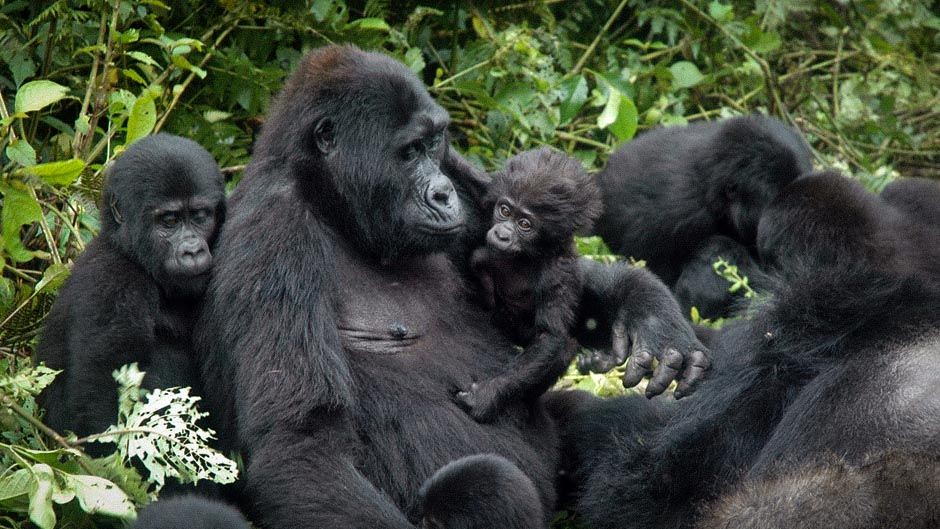
Mountain gorillas can only be found in Uganda’s Bwindi Impenetrable Forest National Park and along the dormant volcanic Virunga mountain range, which stretches across Rwanda’s Volcanoes National Park, Uganda’s Mgahinga Gorilla National Park, and the Democratic Republic of the Congo’s Virunga National Park.
You’ll Be Where Half the World’s Mountain Gorillas Live.
Bwindi Impenetrable Forest National Park and Mgahinga Gorilla National Park are the two gorilla trekking destinations in Uganda. Because gorillas have little regard for political boundaries, populations in the Virungas are relatively variable. Uganda, on the other hand, has an advantage because Bwindi alone is home to half of the world’s mountain gorillas.
Bwindi Impenetrable Forest National Park (also known as “The Place of Darkness” due to its thick treetops) is a 128-square-mile old montane and lowland forest. Because of its tremendous biodiversity and the vast number of endangered species that call it home, the area was designated a UNESCO World Heritage site.
Mgahinga Gorilla National Park covers 13 square kilometers of the broader Virunga ecosystem, which reaches Rwanda and the Democratic Republic of the Congo. Mount Gahinga, Mount Muhabura, and Mount Sabyinyo are three of the eight major Virunga peaks inside the national park.
You’ll Find More Affordable Trekking Permits.
To ensure that gorillas remain healthy and natural, tight controls are in place, beginning with the gorilla trekking permit procedure. Visitors should apply well in advance of their selected dates because daily viewings of each gorilla troop are very limited to only eight persons.
In Uganda, the gorilla permits go for only 800USD (Trekking) and only 1500USD for the habituation experience. Imagine an affordable price but to the world’s best gorilla destination.
The majority of trekking in Uganda takes place in Bwindi, which has various starting places and several gorilla families to track. Park rangers lead tours, and groups of eight are permitted to study the gorillas for one hour in quiet and at a safe distance.
You Can Fight Habitat Destruction by Supporting Community Enrichment.
The primary threat to mountain gorillas is habitat degradation. Residents have typically used property near national park boundaries for cultivation or settlement, and communities around the parks are densely inhabited.
Trekkers are urged to search out ways to give back to the villages they visit, as tourism is now Uganda’s most lucrative sector, and the bulk of visitors come to view the mountain gorillas. Hiring a porter, who is invariably a local and occasionally a reformed poacher is a common choice. The terrain within the parks is unexpected and tough; porters assist trekkers in navigating river crossings and climbing steep, muddy inclines.
Participating in community-led cultural activities is another possibility. The Bwindi Bar in Bwindi village teaches marginalized young adults about hospitality via rigorous classes and job experience. Elders of the Batwa tribe guide guests on a forest trip along the Batwa Trail in the vicinity of Mgahinga, describing how their self-sufficient, forest-dwelling community historically employed medicinal herbs.
You Can Take on Challenging Terrain.
One look at the lush terraced hills and undulating volcanic slopes of southern Uganda reveals that this region of the country is not for the faint of heart. With the high altitude and difficult terrain, gorilla trekking in Uganda promises to be an experience of a century.
It takes a lot of effort to get to the gorillas. It requires climbing and descending through heavy tangles of vines, thorns, and roots. The aptly called Bwindi Impenetrable Forest National Park can only be reached on foot. There are no routes, signs, or directions, and there are rarely any clearings (which is why the park rangers carry machetes). What’s the good news? After all of the effort, the payoff appears to be that much sweeter.
Other Primates Will Inevitably Cross Your Path.
Uganda is a primate lover’s paradise. Mgahinga is home to another endangered species, the golden monkey, in addition to mountain gorillas. These cuddly, amusing monkeys dwell in bamboo woods. Tracking golden monkeys is comparable to tracking gorillas, although the walk is not as difficult.
Bwindi also has L’hoest monkeys, gray-cheeked mangabeys, and blue monkeys. Chimpanzees steal the scene at Kibale Forest National Park. Patas monkeys may be found all across Murchison Falls National Park. Blue and red-tailed monkeys may be seen at Queen Elizabeth National Park (not to forget non-primates, like lions and elephants).
How many gorillas are found in Uganda?
Approximately half of the world’s mountain gorilla population resides in Uganda’s Bwindi and Mgahinga National Parks. According to the 2018 census findings given by Uganda’s Minister of Tourism, Wildlife, and Antiquities, the number of Mountain Gorillas is increasing. The worldwide population of mountain gorillas has risen to about 1,063 from 880 in 2011, spread across three African countries: Uganda, Rwanda, and the Democratic Republic of the Congo.
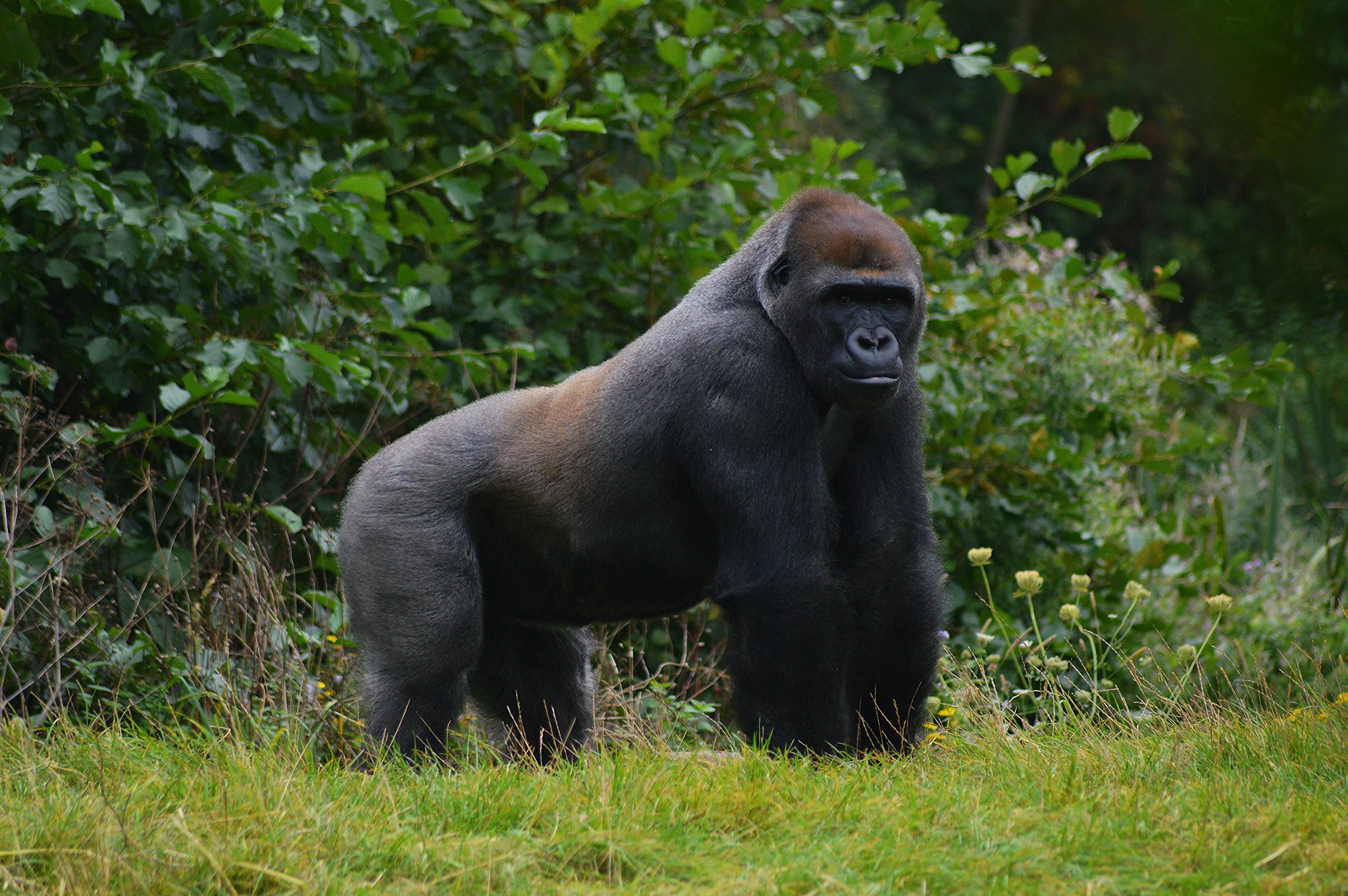
Based on a study done between May and December 2018, there are at least 459 gorillas in Bwindi Impenetrable National Park alone, up from 400 in 2011. There are also over 80 in Mgahiga Gorilla National Park. Because the Bwindi population contains slightly less than half of all mountain gorillas on the planet, its significance for the worldwide survival of these giant apes cannot be understated.
Talking of gorilla families, Uganda hosts over 52 gorilla families but with only 21 fully habituated families making it fit for 168 gorilla visitors each day. What an outstanding destination worldwide.