The Tourism Guide in Uganda 2026: Your Ultimate Safari & Adventure Handbook Uganda — the…
Ankole Cows: Ankole Cattle in Uganda
Ankole Cows in Uganda: The Majestic Long-Horned Cattle of Western Uganda
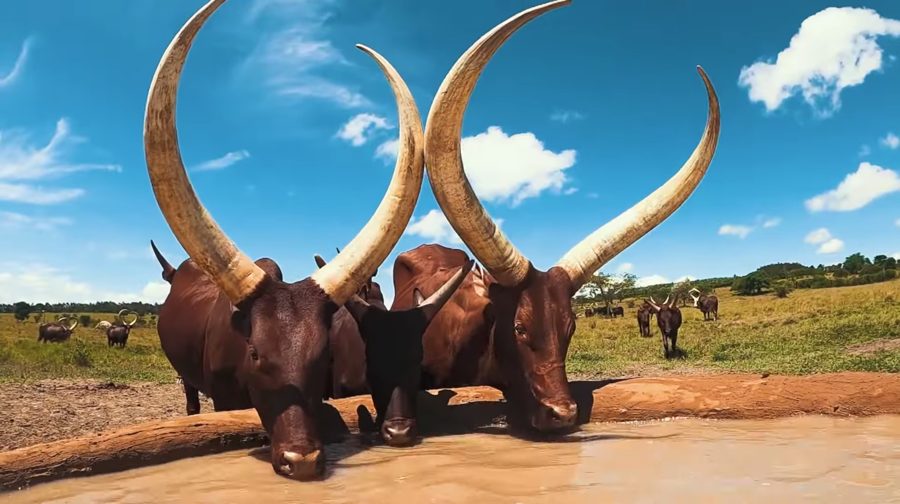
When visiting Uganda, especially the western region, one of the most iconic and unforgettable sights is the Ankole cattle, also known as the Ankole Watusi. These majestic, long-horned cows are not just livestock—they are a symbol of wealth, culture, and tradition in Uganda. Their striking horns, which can reach up to eight feet from tip to tip, and their resilience in harsh conditions make them one of the most remarkable cattle breeds in the world.
If you are planning a Uganda safari or a cultural tour, spotting the Ankole cows grazing in the wide pastures of Mbarara, Bushenyi, Ntungamo, Isingiro, and Kiruhura districts is a must-do experience. Local cowherds are always nearby, guiding and protecting the herd with long sticks, ensuring these living treasures thrive in their natural environment.
History of the Ankole Cattle
The Ankole cows belong to the Sanga cattle family, specifically the Watusi type, and are thought to have been brought to East Africa from Egypt, crossbred with Zebu cattle from India. This mix gave rise to the resilient and highly valued Ankole cattle. They are traditionally raised in Uganda, Rwanda, and Burundi, with some Sanga descendants found in Ghana and along the Zambezi.
The Ankole Watusi are revered by the local communities. Many consider them sacred, while others raise them for milk, meat, and cultural purposes. Their large horns, neck humps, and distinctive sheath and dewlap make them easily recognizable. The horns are said to help defend the cows against predators, adding to their mystical reputation.
In Uganda, these cattle are also called Inyambo, which locals view as a divine creation and a symbol of status. Calves are primarily raised for milk and meat, while the hides are used for traditional drums, stools, sandals, and cultural attire.
Ankole Cattle Breeds and Types
The Ankole cattle are not all the same; there are several distinct breeds, each with unique characteristics:
-
Bahema – Predominantly found in northern Kivu, between Lakes Albert and Edward. They are smaller than other Ankole types and are widely raised in Uganda for milk, meat, ghee, and ceremonial purposes.
-
Tutsi – Mostly raised in Burundi near Lake Tanganyika. Known for their vibrant red coats and the largest horns of all Ankole types.
-
Bashi – Found in southern Kivu near Lake Kivu. Known for their adaptability to hilly terrain.
-
Kigezi – Rare breed located in the mountains of Kigezi, sharing traits with Bahema.
Feeding and Care of Ankole Cattle
Ankole cattle are hardy and low-maintenance. They require minimal protection, and a simple cow shed is sufficient to shelter them during rainy seasons. Their digestive systems are highly efficient, allowing them to survive on sparse food and water. Farmers often supplement their grass diet with protein-rich fodder to ensure optimal growth.
The feeding schedule of Ankole cows even dictates daily life for herders. Morning is called “grazing time,” while evening is “home time,” when cows are brought back to the kraal.
Economic and Cultural Importance of Ankole Cows
Owning Ankole cattle is more than just livestock management—it reflects social status and cultural wealth. Here’s why they are so significant:
-
Milk and Ghee Production: Calves provide nutrient-rich milk used to make ghee and cheese.
-
Blood as a Delicacy: The local practice of collecting cow blood is both ceremonial and nutritional.
-
Wedding Dowries: Ankole cattle play a central role in traditional marriage ceremonies; a groom’s wealth is often measured by the number of cows he offers as dowry.
-
Art and Craft: The horns are highly valued for decoration, while hides are used for clothing, drums, and furniture.
-
Agricultural Use: Dung and urine are used as fertilizer and natural pesticides for crops, particularly in banana farms.
-
Social Bonding: Herding and caring for cattle is a communal activity that strengthens local relationships.
Ankole cows can also be sold for significant profit. A fully grown Ankole Watusi can cost about $1,000 USD (3.5 million Ugandan shillings). The price depends on the cow’s size, age, and horn length. They can be sold locally or through urban markets and online platforms, which are increasingly popular for livestock trade.
Horns of the Ankole Cattle
One of the most remarkable features of the Ankole Watusi is its horns, which can weigh between 9 and 16 kilograms. These horns are not just for defense—they are sold as decorative art pieces and are often wrapped in natural cowhide for protection during transport. Collectors and artisans prize the horns for their aesthetic patterns.
Where to See Ankole Cattle in Uganda
For travelers, the Western Uganda region offers the best opportunities to see these iconic cattle. Mbarara, Bushenyi, Ntungamo, Isingiro, and Kiruhura are famous for their sprawling grazing lands. You can experience guided cultural tours where you interact with herders, learn about traditional practices, and even witness milking and cattle herding rituals.
For travelers looking to combine wildlife with cultural exploration, Uganda’s western region offers safari tours and farm visits, allowing you to see Ankole cattle alongside Uganda’s diverse wildlife. Learn more about planning your Uganda safari at Monumental Expeditions and Safaris.
Why Ankole Cattle Are a Heritage of Uganda
The Ankole Watusi is more than livestock—it represents Uganda’s cultural heritage, agricultural resilience, and social structure. Their adaptability to harsh climates, minimal resource needs, and cultural significance make them a treasure of the African savanna. Whether you are a livestock enthusiast, cultural traveler, or safari adventurer, seeing the Ankole cattle is an experience you won’t forget.
By learning about Ankole cows, their breeds, and their care, you can also explore opportunities for crossbreeding, farming, or conservation. Raising Ankole cattle not only supports local communities but also helps preserve a unique species with deep historical and cultural roots in Uganda.
Related Posts