African Safari River Adventures and Boat Safaris African safaris are often associated with thrilling…
A Day with the Jie/Jiye Tribe of South Sudan
A Day with the Jie/Jiye Tribe of South Sudan, We began the day in Juba, where we took a small plane to Kapoeta airport. You won’t find any staff at this airport; it’s just a dusty runway. As soon as the plane landed, our crew of guides got out to wait for the 90-kilometer ride to the Jie or Jiye tribe villages, which are called Nyere in the local language.
The 90 km trip took us about 5 to 6 hours, and we camped at a place that used to be a Carter Center station. As soon as we got there, cold beers were brought to us and our cameras were set up. Then we went to check out a nearby Jie or Jiye Village.
the Jie or Jiye people of South Sudan
The Jie/jiye people of South Sudan were not bothered by the visitors who came to their village. In fact, they are very friendly and open. The kids are running around naked and looking at guests with great interest. It’s funny, but as soon as you look at them, they tend to run away, while the adults went about their daily lives. There is a strong sense of community, and many things are done with other people.
A typical Jie or Jiye village has between 10,000 and 15,000 people living in it. There are large families living there, with men being the head of the household. A village has a chief, who is assisted by a junior chief. The paramount chief, who is in charge of all the Jie or Tribe communities, is at the top and is in charge of everything. The jie live in very remote places where they can’t link to the outside world at all.
In the Jie/Jiye group, dogs are very important to life. When it comes to shooting and safety, they are their best friends. Raiders from other towns often steal our cows, and our dogs can smell them from a long way away. He says, “This dog will bark at night to wake me up and get ready to fight the raiders.” Lomong White Bull is from the Lopet village in Jie, South Sudan.
The Jie and Jiye people in South Sudan live a simple life.
During the rainy season, women and young girls can be seen farming small amounts of tobacco, millet, sorghum, and maize. This food is used to make beer and is also used as a form of trade. When people are sick, our translator told us that they give some of their maize to traditional healers as an offering to help them get better for both body and spirit.
Women gather food and store it in small huts made of grass, sticks, and cow dung. These huts are called Nyachebe (which means “raised”), Nyakero (which means “a bit raised”), and Nyaluoi (which means “on the ground”). These stores can hold grains for up to two years.
Jie (or Jiye) people love to drink!! Men and young boys can be seen playing traditional chess and drinking their own brews made from sorghum. It is against the rules for kids to stand next to adults while they talk or drink. In this and many other traditional African societies, it’s seen as a sign of ignoring elders, and kids will be pushed away by the adults.
Boys’ men are in charge of the cattle and goats. Boys learn how to take care of cattle at a young age and are often seen with their dads searching for lost animals, grazing, and other things. When boys are about 12 years old, they are sent to cattle camps, which are often very far from the towns and you might have to walk for three days to get there. Millions of animals and highly armed men with AK-47s live in “cattle camps.” These camps are always moving as they look for green pastures and water for the animals. Taking care of animals is hard work that requires moving from place to place and sleeping in the bushes outside.
Women build houses here, which is different from many other places in the world. People who come to help another woman build a house are also given local beers.It is against the law in South Sudan to hunt wild animals and pick fruits, but a lot of people do these things anyway. “The government is very far away in Juba or Kapoeta.
We kill some animals and eat them,” he said, referring to an antelope skin. “Others are left to give birth so that we can have food in the future.” “We won’t finish them,” says a member of the community who doesn’t want to be named.
One person in the community told me that they tend to hunt some of the animals that come through their towns when the great animal migration happens from March to August. This is because there are so many animals. It is important to note that, along with Tanzania and Kenya, South Sudan has one of the biggest animal and wildlife movements in the world. Gazelles and other animals move from Bandigilo National Park to Boma National Park every year in search of water and new grass.
Even though kids don’t go to school, they learn about life skills and gender roles from a very young age. For example, boys are taught how to herd cattle, and girls are taught how to work and take care of the family. Jie or Jiye As a way to honor different events, people love to dance. Animal sacrifices are also common.
In honor of events like the full moon, weddings, and the harvest, they dance, and there is plenty of beer for everyone in the community. The land is owned by everyone in the community, and only the community chief can give permission for it to be used.
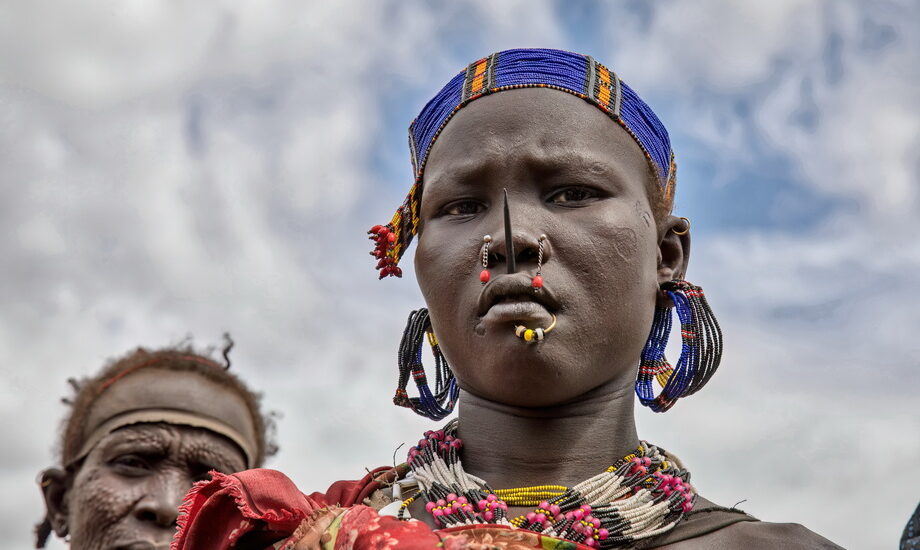
Jie and Jiye people wear a lot of jewelry and body decorations that typically mean something important to them. In Nyere Village, a woman told me that the charm on her head looked like a giraffe, which is her favorite animal. As you walk through the Nyere, you’ll notice that most of the women are very well dressed and wearing lots of jewelry.
The Jie/Jiye people carry Ak47s. When I asked their leader where these guns come from, he said that some come from raids they do in different communities, where former soldiers who aren’t working return to their villages with stolen guns from the government, and others come from Ethiopia, which is right next door. All you have to do is offer one cow to get a gun. Guns are easy to get in Turkana communities in Kenya, Murle communities in Ethiopia, and different communities in South Sudan. They cost about $250 here.
Getting in touch with each other is like it was a thousand years ago!! There is no phone service at all. You’re cut off from the rest of the world, and it’s hard for news to get around. A phone signal can be found in the nearby town of Kapoeta, which is about 87 km away. People who have phones generally have to walk there.
We really liked getting away from everything and relaxing in this way. In small towns, people often get together to talk about what’s going on in other places. That was our day with the Jie or Jiye people in South Sudan.
People see the body marks as a sign of beauty and strength.
How do you keep the law in Jie/Jiye Communities that are not close to the government?
Chiefs are in charge of villages (Nyere), and it is their job to settle any family disputes that haven’t been settled yet. If he fails, the case is sent to the Jiye Paramount Chief, who we are told will always find a way for everyone involved to get along. There is no court, police, or any other sign of the government here.
The most common sins in the Jiye Community and how they are punished
If a man cheats on his wife or sex with another man’s wife, he will be fined 14 cows. If the woman gets pregnant because of the cheating, the man will have to pay 14 cows to the woman’s husband and the child will also go to the husband.
If a boy gets a girl who isn’t married pregnant, he will be fined 7 cows. The boy will then have to pay 14 cows as a wedding price and be forced to marry the girl. It cost $250 to $300 for each cow.
If someone steals someone else’s cow, they have to pay three cows as a fine. If someone steals a goat, they have to pay six goats as a fine.
Related Posts