
How to Get a Ugandan Tourist Visa [2026 Update] Planning a trip to Uganda in…
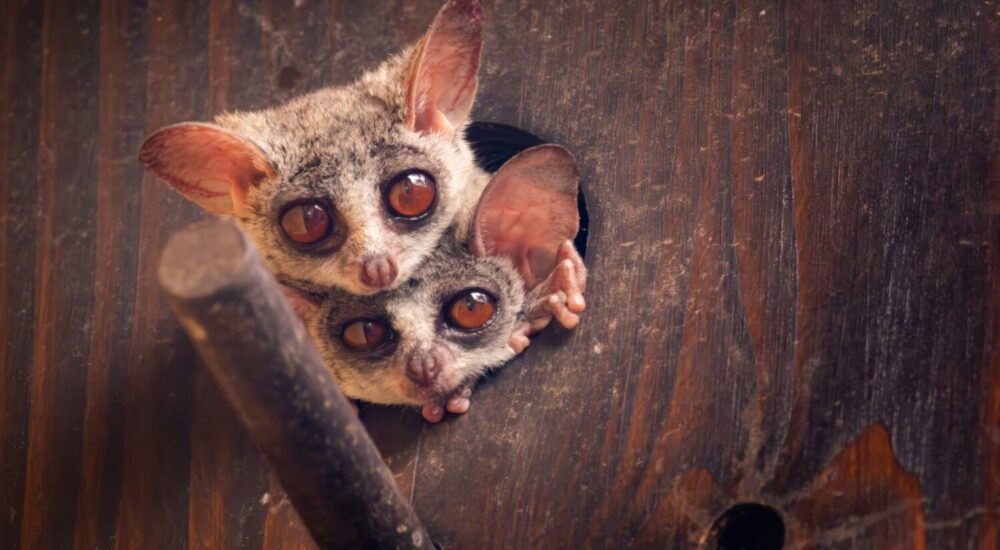
Potto & Bushbaby: Uganda’s Nocturnal Primates
Potto & Bushbaby: Uganda’s Nocturnal Primates
When most travelers think about Uganda’s primates, mountain gorillas and chimpanzees usually dominate the conversation. Yet, as the sun sets over Uganda’s forests and savannah woodlands, a completely different world awakens. Hidden in the canopy and dense vegetation are some of Africa’s most fascinating yet least-seen creatures: the Potto and Bushbaby, Uganda’s nocturnal primates.
These elusive animals are rarely seen during daytime safaris, but they play an important ecological role in Uganda’s ecosystems. Their secretive nature, extraordinary adaptations to night life, and unique behaviors make them a highlight for night game drives and specialized wildlife encounters.
For travelers interested in a deeper understanding of Uganda’s biodiversity, exploring the world of Potto & Bushbaby: Uganda’s Nocturnal Primates reveals a hidden layer of wildlife that many safari visitors never get to experience.
The Hidden World of Uganda’s Nocturnal Primates
Uganda is one of Africa’s most biodiverse countries, supporting over 20 primate species. While diurnal primates such as baboons, colobus monkeys, and chimpanzees are commonly observed during daytime safaris, nocturnal primates remain largely unseen due to their night-active behavior.
The forests, savannah woodlands, and riverine habitats of Uganda provide ideal conditions for these night dwellers. Under the cover of darkness, they emerge to feed, move, communicate, and interact in ways that are rarely witnessed by daytime visitors.
Among the most important nocturnal primates in Uganda are the potto (Perodicticus potto) and several species of bushbabies (galagos). These small, agile mammals represent a crucial part of Uganda’s ecological balance.
Understanding their behavior offers insight into how ecosystems function after dark, when predators, insects, and nocturnal mammals shape a different rhythm of life.
The Potto: Uganda’s Slow and Stealthy Night Primate
The Potto in Uganda is one of the most unusual primates in Africa. Unlike the fast-moving monkeys many travelers are familiar with, the potto is slow, deliberate, and incredibly secretive.
Pottos are medium-sized nocturnal primates with thick fur, short tails, and strong grip hands adapted for life in trees. Their movements are slow and careful, allowing them to remain undetected by predators.
One of their most distinctive features is the reduced second finger, which is adapted for a strong grip while climbing. This anatomical adaptation gives them exceptional stability in the canopy.
Habitat of the Potto in Uganda
Pottos are typically found in tropical rainforests, woodland edges, and dense vegetation zones across Uganda. They are particularly associated with forested areas in western Uganda, including Kibale Forest, Budongo Forest, and parts of Queen Elizabeth National Park.
They prefer dense canopies where they can move slowly and feed without drawing attention. During the day, pottos sleep curled up in trees, often in dense foliage that provides camouflage.
Their secretive nature means that even experienced guides rarely spot them during daylight hours.
Diet and Feeding Behavior
The Potto Uganda primate is primarily an omnivore, feeding on:
- Fruits
- Insects
- Tree gum
- Small invertebrates
- Occasionally small vertebrates
One of their most interesting adaptations is their ability to feed on tree sap and gum. Their strong jaws and specialized teeth allow them to access food sources that many other primates cannot exploit.
This dietary flexibility helps them survive in environments where food availability changes seasonally.
Behavior and Adaptations
Pottos are solitary animals, unlike many other primates that live in large social groups. They communicate through scent marking, vocalizations, and subtle movements.
Their slow movement is not a weakness but a survival strategy. By moving carefully and quietly, they avoid detection by predators such as owls, snakes, and small carnivores.
When threatened, pottos may curl into a defensive position, using their thick fur and strong grip to remain hidden.
Their nocturnal lifestyle makes them one of the most mysterious primates in Uganda.
Bushbabies: The Agile Night Jumpers of Uganda
In contrast to the slow-moving potto, bushbabies in Uganda are fast, agile, and highly energetic nocturnal primates. Also known as galagos, bushbabies are among Africa’s most widespread nocturnal primates.
Their name comes from their distinctive, baby-like cries that echo through the night forests, often surprising visitors hearing them for the first time.
Physical Characteristics of Bushbabies
Bushbabies are small primates with large eyes adapted for night vision, powerful hind legs, and long tails used for balance.
Their most remarkable feature is their ability to leap impressive distances between trees. Some species can jump more than five meters in a single bound.
Their large eyes reflect light, giving them excellent vision in low-light conditions. This adaptation is essential for navigating dense forests at night.
Species of Bushbabies in Uganda
Uganda is home to several bushbaby species, including:
- Senegal bushbaby
- Greater bushbaby
- Brown greater galago
- Demidoff’s dwarf galago
Each species has slightly different habitat preferences, but all share similar nocturnal behaviors.
Habitat of Bushbabies in Uganda
Bushbabies are widely distributed across Uganda’s forested and woodland areas. They are commonly found in:
- Kibale Forest National Park
- Budongo Forest Reserve
- Mabira Forest
- Queen Elizabeth National Park
- Lake Mburo woodland areas
Unlike pottos, bushbabies are more adaptable and can survive in both dense forests and fragmented woodland habitats.
They are often seen near forest edges where insect activity is high.
Diet and Feeding Habits
The bushbaby Uganda primate feeds primarily on:
- Insects
- Fruits
- Tree gum
- Small invertebrates
Their excellent hearing allows them to detect insects moving in the dark. They use their sharp claws and quick reflexes to catch prey.
Bushbabies play an important role in controlling insect populations and dispersing seeds through fruit consumption.
Social Behavior
Bushbabies are more social than pottos. They often live in small groups or family units, especially during feeding and nesting periods.
They communicate using a wide range of vocalizations, including calls that help group members stay in contact during nighttime movement.
Their loud calls are one of the most distinctive sounds of Uganda’s nighttime forests.
Where to See Potto & Bushbaby in Uganda
Spotting Potto & Bushbaby in Uganda requires patience, expert guidance, and often a specialized night safari experience.
Kibale Forest National Park
Kibale Forest is one of the best locations in Africa for primate diversity, including nocturnal species. Night walks in designated areas provide opportunities to spot bushbabies and occasionally potto species.
Budongo Forest Reserve
Budongo Forest, near Murchison Falls National Park, offers excellent chances of observing bushbabies during guided night walks.
The forest’s tall mahogany trees and dense canopy provide ideal habitat conditions.
Queen Elizabeth National Park
In the Ishasha and Mweya sectors, night game drives sometimes reveal bushbabies along woodland edges.
The park’s mix of savannah and forested areas supports diverse nocturnal wildlife.
Lake Mburo National Park
Lake Mburo is known for night game drives where bushbabies can occasionally be spotted in acacia woodlands.
The park’s open structure improves visibility during nighttime excursions.
Mabira Forest
Located near Kampala, Mabira Forest is one of the most accessible places to observe bushbabies in Uganda.
Guided night walks offer close encounters with these fascinating primates.
Night Safaris: The Best Way to Experience Nocturnal Primates
Unlike gorilla trekking or chimpanzee tracking, observing nocturnal primates requires night-focused activities.
Night safaris and guided forest walks reveal an entirely different ecosystem where sounds, movements, and behaviors shift dramatically after sunset.
During these excursions, visitors may encounter:
- Bushbabies jumping between trees
- Pottos moving slowly through the canopy
- Owls hunting silently
- Night insects and reptiles
- Nocturnal mammals like genets and civets
The experience of exploring Uganda’s forests at night provides a deeper appreciation of its biodiversity.
Ecological Importance of Potto & Bushbaby
Both the Potto and Bushbaby in Uganda play essential ecological roles.
Pottos help regulate insect populations and contribute to seed dispersal through fruit consumption. Their feeding on tree gum also influences tree health and forest dynamics.
Bushbabies contribute to insect control and seed dispersal, helping maintain ecological balance in forest ecosystems.
Together, these nocturnal primates ensure that Uganda’s forests remain healthy and functioning ecosystems even after dark.
Conservation of Uganda’s Nocturnal Primates
Although less studied than diurnal primates, nocturnal species face similar conservation challenges, including habitat loss, deforestation, and human encroachment.
Protected areas such as national parks and forest reserves play a vital role in safeguarding their habitats.
Sustainable tourism, especially guided night walks, helps raise awareness and generate funding for conservation efforts.
Education and community involvement are essential in ensuring long-term protection of these species.
Combining Nocturnal Primate Viewing with Uganda Safaris
Many travelers include nocturnal primate experiences as part of broader Uganda safari itineraries.
A well-planned safari may include:
- Gorilla trekking in Bwindi Impenetrable National Park
- Chimpanzee tracking in Kibale Forest
- Game drives in Queen Elizabeth National Park
- Night walks for bushbaby and potto viewing
- Boat cruises on the Kazinga Channel or Lake Mburo
This combination allows travelers to experience Uganda both by day and by night.
At Monumental Expeditions and Safaris, customized itineraries include nocturnal wildlife experiences alongside Uganda’s most iconic safari adventures.
Why Potto & Bushbaby Matter for Uganda Tourism
Although small and rarely seen, Potto & Bushbaby: Uganda’s Nocturnal Primates add depth and uniqueness to Uganda’s wildlife tourism offering.
They represent the hidden side of African wilderness that many travelers never experience.
For photographers, wildlife enthusiasts, and researchers, these primates provide rare opportunities to observe behavior that is not visible during daytime safaris.
Their presence highlights the importance of protecting entire ecosystems, not just large and charismatic species.
Experience Uganda’s Nighttime Wildlife
Exploring Uganda after dark reveals a world filled with mystery, sound, and movement. The quiet rustle of leaves, distant calls of bushbabies, and careful movements of pottos create an unforgettable safari experience.
For travelers seeking something beyond traditional game drives, nocturnal primate viewing offers a deeper connection to Africa’s wilderness.
Plan Your Uganda Night Safari Experience
Discover the hidden world of Potto & Bushbaby: Uganda’s Nocturnal Primates with Monumental Expeditions and Safaris.
Visit Monumental Expeditions and safaris to explore customized Uganda safari packages that include night walks, forest explorations, gorilla trekking, chimpanzee tracking, and wildlife safaris across Uganda.
Experience Uganda not only by day—but also by night.
Related Posts

Gorilla Trekking in Bwindi: What to Expect If you're dreaming of seeing the majestic mountain…
Top 10 Things to Do in Uganda for First-Time Visitors Uganda is a land of…