
Lake Victoria is the largest lake in Africa and the world's second-largest freshwater lake by…
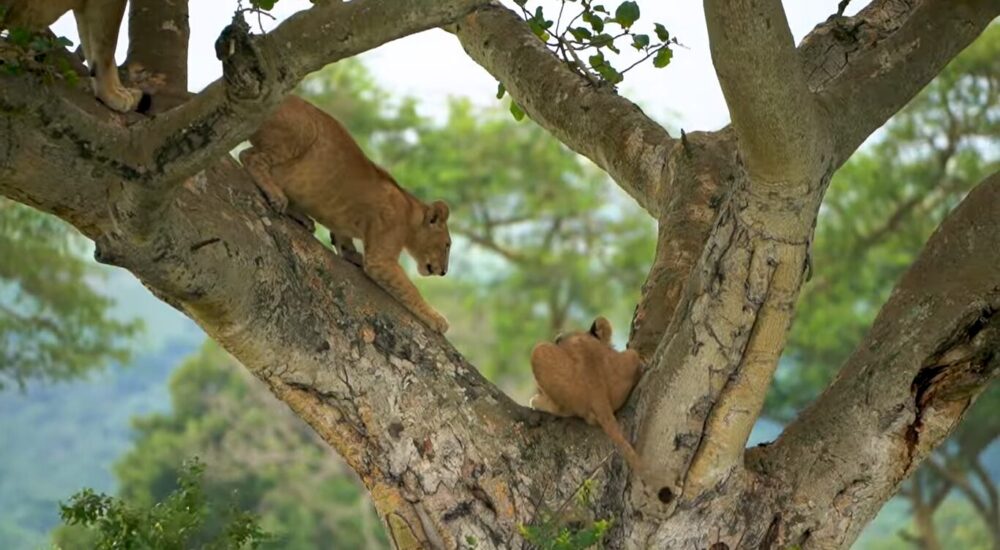
Tree climbing lions
Tree climbing lions
Introduction to Queen Elizabeth National Park
Located in western Uganda, Queen Elizabeth National Park spans over 1,978 square miles (5,500 km²) and is Uganda’s most visited national park. The park boasts an incredible variety of wildlife, including elephants, hippopotamuses, buffaloes, leopards, and of course, the iconic lions. Queen Elizabeth is particularly famous for its tree-climbing lions, which can be found in the park’s southern sector, specifically the Ishasha region.
The park is home to more than 600 species of birds and offers stunning landscapes that range from savannahs to dense forests, wetlands, and the scenic Kazinga Channel. This rich biodiversity and dramatic scenery make it a top destination for safari lovers.
What Are Tree-Climbing Lions?
The tree-climbing lions of Queen Elizabeth National Park are a rare and fascinating subspecies of African lions that exhibit a behavior not commonly seen in lions elsewhere in Africa. Unlike most lions that prefer to remain on the ground, a small population in the Ishasha sector has developed the unique habit of climbing trees.
These lions can often be seen lounging in the branches of fig trees or acacias, high above the ground, creating a striking contrast to the more typical lion behavior. This behavior has become one of the park’s most notable and photographed attractions.
Why Do Lions Climb Trees?
1. Cooling Off in the Heat
One of the primary reasons for tree-climbing is to escape the intense heat of the savannah. The savannah climate in Uganda can be incredibly hot, and climbing trees provides lions with a chance to find shade and cool down. The elevated positions offer cooler air and relief from the harsh midday sun.
2. Avoiding Insects
Lions also climb trees to escape the biting insects that populate the savannah, such as tsetse flies and other pests. These insects can be irritating and potentially harmful, so seeking refuge in the trees helps reduce the lions’ exposure to these nuisances.
3. Strategic Lookouts
Climbing trees also provides lions with an excellent vantage point to spot potential prey or predators. From the treetops, lions have a better view of their surroundings, which can help in both hunting and avoiding threats like hyenas or other lions.
4. Reduced Competition and Stress
Tree-climbing behavior could also be a response to competition. By getting off the ground, lions can escape from other lions and animals, reducing the stress of territorial disputes and food competition.
How Common Is Tree-Climbing Behavior in Lions?
Tree-climbing lions are rare in the wild, and it is not a behavior typically exhibited by most lion populations. While lions in some parts of Africa have been observed climbing trees, the Ishasha sector in Queen Elizabeth National Park is one of the few places where tree-climbing is frequently seen. The strong trees and abundant food sources in the region provide ideal conditions for this unique behavior.
This tree-climbing trait has developed over time due to the specific environmental conditions in the area, such as the availability of large trees and lower lion density, which makes the behavior more likely to evolve.
The Best Time to See Tree-Climbing Lions
If you’re hoping to catch a glimpse of the tree-climbing lions of Queen Elizabeth National Park, the best time to visit is during the dry season, which lasts from June to September. During this period, the lions are more likely to climb trees to seek shade and cool off from the heat of the day.
The early morning and late afternoon are the best times to spot lions in the trees, as they typically climb up to rest and escape the midday heat. These times also offer the best lighting for photography, allowing you to capture stunning images of the lions perched in the branches.
Where to See Tree-Climbing Lions in Queen Elizabeth National Park
The best place to observe the tree-climbing lions is in the Ishasha sector, located in the southern part of the park. This area is famous for its lion population, and the relatively low number of tourists makes it an excellent location for spotting these fascinating creatures. Look for lions lounging in the branches of fig trees and acacia trees as you explore the region.
While you drive through the Ishasha sector, keep an eye out for lions perched on the low branches of trees. The lions here are accustomed to the presence of safari vehicles, which makes it easier for visitors to observe them without disturbing their natural behavior.
Other Wildlife to See in Queen Elizabeth National Park
Aside from the famous tree-climbing lions, Queen Elizabeth National Park is home to a diverse range of wildlife. Other notable animals in the park include:
- Elephants: Large herds of elephants are commonly seen in the park’s open savannah and around the Kazinga Channel.
- Buffaloes: Herds of buffalo are frequently seen grazing and interacting with other herbivores.
- Leopards: Leopards are more elusive but can be spotted in the park’s remote areas, especially in the Kyambura Gorge.
- Chimpanzees: The Kyambura Gorge is a prime location for tracking chimpanzees, adding to the park’s biodiversity.
- Birdlife: With over 600 species of birds, Queen Elizabeth is a paradise for birdwatchers.
Conclusion: Why the Tree-Climbing Lions of Queen Elizabeth National Park Are a Must-See
The tree-climbing lions of Queen Elizabeth National Park are a fascinating and rare phenomenon that adds to the allure of this stunning park. Their unique behavior is just one of the many reasons why Queen Elizabeth National Park is a must-visit destination for wildlife lovers. Whether you’re a safari enthusiast, a wildlife photographer, or simply looking for a truly unique experience, seeing the tree-climbing lions in their natural habitat is something you won’t want to miss.
Related Posts