10 Best-value Luxury Uganda Safari Lodges & Camps. One of Africa's most overlooked safari locations…
Simien Mountains National Park
Simien Mountains at a Glance
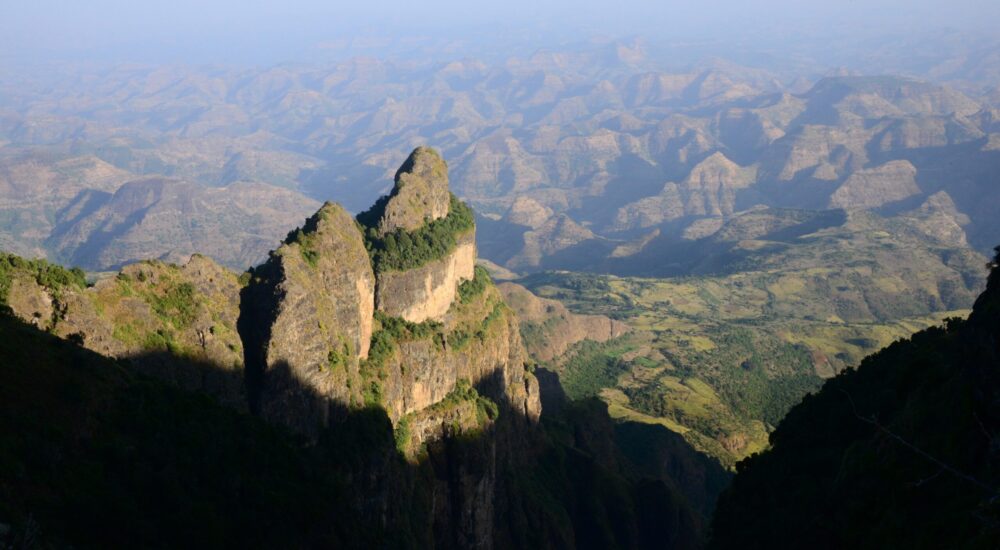
Located just 112 km from the historic town of Gondar, the Simien Mountains National Park is one of Ethiopia’s and Africa’s top natural attractions. The park is home to Ras Dejen, Ethiopia’s highest peak, which stands at 4,620 meters above sea level and is the fourth highest in Africa.
The dramatic landscape of the Simien Mountains was shaped by significant seismic activity about 40 million years ago. This area is a must-visit destination for those who wish to see Ethiopia’s iconic and endemic wildlife. The park also supports a variety of bird species and unique alpine vegetation such as giant lobelias and red hot pokers.
Simien Mountains National Park is especially known for its population of gelada monkeys, estimated at over 7,000. These unique primates, known for their thick fur and heart-shaped red chests, live in groups of 20–30, though it’s possible to see groups of up to 500.
Due to its rich biodiversity and rare species, the park was designated a UNESCO World Heritage Site in 1978. It is also home to traditional nomadic communities who have adapted to the region’s challenging conditions.
With incredible trekking routes, rare wildlife, and quality accommodation, Simien Mountains National Park has become one of Ethiopia’s most visited natural sites.
Top Reasons to Visit the Simien Mountains
The Simien Mountains offer breathtaking natural beauty and unique experiences that make them a must-visit on any Ethiopian itinerary. Whether you are looking for adventure or simply wish to enjoy panoramic views, the Simien Mountains are an ideal destination. Here are some top reasons to visit:
1. Unspoiled Flora and Fauna
The park is rich in endemic plant and animal life. Key species include:
-
Gelada monkeys
-
Ethiopian wolves
-
Walia ibex
You’ll find gelada monkeys in large troops—often over 100 strong. While they may look intimidating, they are used to human presence and are harmless. Observing them groom and interact offers a rare wildlife experience.
While gelada monkeys are not endangered, their numbers are declining due to habitat loss, mainly caused by agriculture. Responsible tourism can help protect their environment while supporting local communities.
The Walia ibex, an endangered wild goat species, is found only in the Simien Mountains, with around 500 individuals remaining. Your visit offers a chance to see them, especially near Chenek Camp.
The Ethiopian wolf, though extremely rare in the Simiens, can occasionally be seen. For a better chance, consider also visiting the Bale Mountains, where they are more commonly found.
The park’s Afro-alpine ecosystem, particularly above 3,700 meters, features rare plant species like Lobelia rhynchopetalum (giant lobelia).
2. Unique Mountain Landscapes
The Simien Mountains offer scenery that is truly unique—volcanic plateaus, jagged cliffs, and high escarpments. After the rainy season, the landscape becomes lush and colorful, with golden-brown rocks, green vegetation, and blooming wildflowers. These attract a variety of birdlife, including hummingbirds.
3. Challenging Trekking Experience
For adventurous trekkers, the Simien Mountains offer a rewarding challenge. Some hikes begin as early as 3:00 AM to avoid the midday heat. Trekkers navigate frosty grasses, muddy trails, and rocky climbs—especially during the final stretch to summits like Ras Dejen.
4. Authentic Cultural Experience
Trekking through the Simien Mountains provides opportunities to engage with local communities living in remote highland villages. You’ll observe daily life, including locals tending their barley fields, brewing traditional beer, and preparing Ethiopian dishes such as injera.
Life in these communities is simple and traditional. Many locals, including children, may accompany you during your hike. You are encouraged to support them by purchasing locally made crafts. Around 80% of the population here depends on farming and livestock for survival.
Enjoy warm Ethiopian hospitality, traditional food, music, and a deeper appreciation for life in the highlands.
5. Scenic Hiking Routes
The park offers several trekking routes, with options to suit various timeframes and fitness levels:
-
Buyit Ras to Chenek
The most popular route, covering 55 km over 4 days. Highlights include Sankaber and Gich camps, Jinbar Waterfall, and the Mount Buahit summit at 4,430 meters. -
Debark to Chenek
Similar to the above, but includes a longer 7-day trek from Debark, adding another 48 km. -
Sankaber to Adi Arkay
A 6-day, 85 km trek from Sankaber to Adi Arkay, covering less-visited zones like Sona, Mekarebya, and Mulit. This route offers stunning views and authentic encounters with Amhara villages. -
Buyit Ras to Adi Arkay
For those with more time, this 11-day route includes summits of Mount Buahit and Ras Dejen, Ethiopia’s highest peak.
How to Get to Simien Mountains National Park
The most convenient way to reach the park is by domestic flight. Ethiopian Airlines offers discounts of up to 60% for travelers who arrive in the country with the airline.
-
Fly to Gondar, then drive 2 hours to the park via Debark, the official entry point.
-
If arriving from Lalibela or Axum, direct flights to Gondar are available.
-
From Bahir Dar, you can hire a car and drive to Debark.
-
If coming from Mekele, connect via Lalibela Airport, then travel on to Gondar and Debark.
Debark is the park’s official gate, where you must obtain trekking permits and be assigned a guide and armed ranger.
How Were the Simien Mountains Formed?
The mountains were formed between 55 and 75 million years ago through extensive volcanic activity. During the Oligocene period (40–25 million years ago), repeated eruptions created layers of lava that cooled into the jagged landscapes seen today. The mountains are part of the Simien Massif, a volcanic plateau with numerous peaks above 4,000 meters.
Best Time to Visit Simien Mountains
The park is open year-round, but the best time to visit is between September and December, when the skies are clear, and the scenery is lush. Hiking during July and August is discouraged due to heavy rains.
Weather Overview
-
Daytime: ~18°C / 64°F
-
Nighttime: ~6°C / 43°F
Dry Season (October – April)
-
Bright, sunny days and cool nights.
-
Best conditions for hiking.
-
October–November: lush scenery after the rains.
-
December–February: dry and dusty.
-
March–April: early rains help refresh the landscape.
Wet Season (May – September)
-
May–June: brief showers.
-
July–August: peak rainfall; hiking not recommended.
-
September: skies clear, wildflowers bloom, scenery at its best.
Monumental Expeditions and Safaris welcomes you to explore the Simien Mountains with expert guides, scenic trekking routes, and opportunities for authentic cultural exchange. Let your Ethiopian adventure begin in one of Africa’s most extraordinary natural landscapes.
Related Posts