Kosten für Gorilla-Trekking in Uganda Ruanda und Kongo, Gorilla-Begegnungen gehören zu den besten Tierbegegnungen auf…
Tribes in Ethiopia
Tribes in Ethiopia: Discover the Rich Culture of the Omo Valley
Ethiopia is a land of incredible cultural diversity, with over 80 distinct ethnic groups and tribes that have preserved their traditions for centuries. For hundreds of years, many of these tribes lived in complete isolation from modern society, relying on ancestral customs and the fertile lands of southern Ethiopia for their survival. Today, progress is slowly connecting these communities through roads and technology, yet much of their rich heritage remains intact.
A journey to Ethiopia’s Omo Valley is a window into the lives of these fascinating tribes, where visitors can witness centuries-old rituals, colorful body art, and unique lifestyles that continue to thrive alongside modern developments.
The Karo Tribe: Masters of Body Art and Creativity
The Karo people reside along the eastern shore of the Omo River and are among the smallest ethnic groups in Ethiopia, numbering between 1,500 and 3,000 people. They are renowned for their stunning body and face painting, created using natural pigments like white chalk, charcoal, and yellow rocks.
Historically, only men wore these designs for protection against evil spirits, but today both men and women display intricate patterns as expressions of beauty and cultural identity. The Karo also participate in the Bula initiation ceremony, a rite of passage similar to the Hamer, where young men demonstrate readiness for adulthood and marriage. Unlike other tribes, the Karo keep this ceremony private, away from tourists and outsiders.
The Hamer Tribe: Bull Jumping and Colorful Attire
The Hamer tribe is one of the most famous Ethiopian tribes, known for their vibrant clothing, elaborate hairstyles, and traditional rituals. Hamer women wear multiple layers of bead necklaces, metal arm bands, and distinctive clay-and-feather wigs. Jewelry also signifies social status, particularly for married women, whose adornments reflect their husband’s wealth.
One of the most iconic cultural rituals of the Hamer is the bull-jumping ceremony, marking the transition of young men into adulthood. Male relatives perform ritual dances, and the initiates jump over a line of bulls to prove their readiness for marriage. This ceremony attracts tourists eager to witness Ethiopia’s rich cultural heritage.
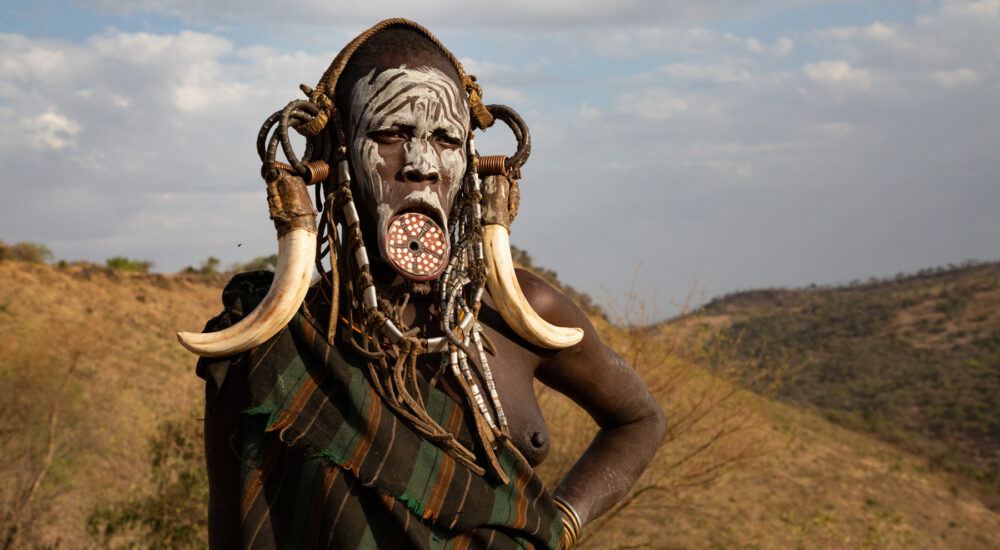
The Mursi Tribe: Lip Plates and Fierce Warriors
The Mursi people, numbering around 10,000, live in southern Omo Valley, near the border with South Sudan. Mursi women are known for wearing lip plates, a traditional rite of passage signifying adulthood. Though some women now choose not to wear them, the practice remains a central aspect of Mursi identity.
Mursi men are renowned for their courage, often participating in stick-fighting battles called dongas to demonstrate strength and bravery. Traditionally held after the harvest in July and August, these ceremonies are now restricted to protect participants and visitors.
The Arbore Tribe: Beadwork and Islamic Traditions
Located near Lake Chew Bahir in southwestern Omo Valley, the Arbore people are herders known for their intricate beadwork, worn extensively by women as part of their cultural identity. While the Arbore largely follow Islam, they maintain many traditional customs, including polygamy, where each wife receives a new name inspired by the husband’s favorite cattle.
The Aari Tribe: Skilled Farmers and Artisans
The Aari people inhabit the lush hills around Jinka and the edges of Mago National Park. They are expert farmers, cultivating crops such as coffee, wheat, barley, and maize. Aari women are particularly skilled in pottery making, crafting functional and decorative items that are central to their culture and daily life.
The Nyangatom Tribe: Feared Warriors and Storytellers
Once considered the fiercest fighters in Ethiopia, the Nyangatom tribe live in semi-desert regions with limited water and grazing land. Today, the Nyangatom are semi-nomadic farmers and herders, growing crops like tobacco, maize, and sorghum while raising livestock. They are also celebrated for their oral traditions, storytelling, and folk music, preserving the history of their people through generations.
The Dorze Tribe: Weaving, Terraced Fields, and Beehive Homes
The Dorze people live in the Guge Mountains near Arba Minch and the Rift Valley. They are skilled cotton weavers and terrace farmers, growing highland cereals, vegetables, fruits, and tobacco. Their beehive-shaped houses, made from enset leaves, can reach up to 10 meters in height, reflecting both artistry and practical design.
Explore Dorze cultural experiences in Ethiopia
The Tsamai Tribe: Riverine Farmers and Distinct Attire
The Tsamai people live near Weyto, about 50 km from Jinka. They speak the same language as the Hamer tribe and farm crops like sorghum, millet, and cotton along fertile riverbanks. Tsamai women wear leather skirts, while men carry short wooden stools, reflecting unique local customs.
The Borana Tribe: Semi-Nomadic Herders and the Gadaa System
The Borana people, Ethiopia’s largest ethnic group, inhabit areas along the Ethiopia-Kenya border. They are semi-nomadic herders, moving frequently in search of water and grazing lands. Borana men use a traditional form of government called Gadaa, where elders gather under a holy fig tree to make communal decisions, passing a talking stick to ensure fair participation.
The Banna Tribe: Honey Collectors and Cultural Preservation
The Banna tribe, living east of the Omo River in the Chari Mountains, have customs and languages similar to the Hamer. With a population of about 45,000, they are known for collecting honey and raising cattle. Banna men craft intricate clay-and-feather wigs, while women wear colorful beads and body paint during dances and ceremonies.
Visiting Ethiopia’s Tribes: A Cultural Adventure
Traveling to Ethiopia’s Omo Valley offers an immersive cultural experience. Tourists can witness traditional ceremonies, explore artisan crafts, and interact with tribal communities that have preserved their unique lifestyles for centuries. Some recommended experiences include:
-
Hamer and Karo bull-jumping ceremonies
-
Mursi lip-plate cultural immersion
-
Dorze weaving and terraced farming tours
-
Arbore beadwork workshops
-
Borana Gadaa system cultural demonstrations
Book a custom Ethiopia cultural tour here
Why Explore Ethiopia’s Tribal Communities?
Ethiopia’s tribes provide a rare glimpse into Africa’s ancient cultural heritage, blending traditional customs with the evolving realities of modern life. From elaborate body art and jewelry to unique rituals, music, and dances, these communities are living testaments to the resilience and creativity of Ethiopia’s people.
A visit to Ethiopia is not only a travel adventure but also a journey through history and human culture, offering experiences that are both educational and deeply transformative.
Related Posts