
Bwindi gorilla families
Families trekking with the Bwindi Gorillas. Parts of the Rukungiri, Kisoro, and Kabale Districts are included in the Bwindi Impenetrable Forest National Park, which is situated in southwest Uganda. It is located in a hilly terrain that serves as a significant water catchment area for numerous rivers, supplying the surrounding region’s agricultural land, along with some remaining lowland forest outside the boundaries. Being one of the few sizable tracts of forest in East Africa where lowland and montane communities coexist, this forest is the most diverse in Uganda in terms of plant species.
The impenetrable forest gets its name from the thick ground cover of herbs, vines, and bushes that blanket the valley bottoms, with very few trees. One of East Africa’s most abundant faunal communities is this one. Approximately half of the world’s endangered mountain gorilla population is found there. Additionally, there are a number of bird species with restricted ranges that are endangered. On April 1, 1993, gorilla tracking in Uganda started in the northern Buhoma area of the Bwindi Impenetrable Forest National Park. Reservations should be made at least three to six months prior to the date of your desired visit.
Families trekking with the Bwindi Gorillas. Buhoma, Ruhija, Rushaga, and Nkuringo are the four gorilla tracking places in Bwindi. As of December 2018, there are roughly 18 families spread over the 4 locations. Prior to tracking, tracking permits must be purchased through a reliable tour operator or directly from the Uganda Wildlife Authority (UWA) Headquarters reservations office. It is possible to pay for permits up to two years in advance.
Sector of Buhoma
Buhoma sector, which is situated in the northern region of Bwindi Impenetrable National Park, was the first to be habituated in 1993, shortly after the park was designated a UNESCO World Heritage Site. The park’s most well-known and frequently visited area is Buhoma, home to the oldest gorilla family, Mubare, as well as the Habinyanja, Rushegura, and Katwe groups.
Concerning the families in the Buhoma area
The Mubare Gorilla Family
When tourism was first introduced to Bwindi in 1993, this group of gorillas—the oldest in the country—became habituated. The renowned Mubare Hills, where the team of trackers initially located the group, are the source of the name Mubare. Following the habituation, Ruhondeza led the gang, which had twelve members. Over the years, raids and bad luck caused the group to shrink to just five members. The gang has grown to include nine members since Ruhondeza passed away at the age of fifty and under the new leadership of Kanyonyi, another silverback.
Family of Habinyanja Gorillas
The group began monitoring in 1999 after becoming acclimated in 1997. The Buhoma sector is also home to the group. The Rukiga term “Nyanja,” which signifies a water site, is where the name habinyanja originated. This was due to the fact that the group was initially spotted in Bwindi near a swamp pond. At that time, Mugurusi was the organization’s leader, and two brothers, Mwirima and Rwansigazi, succeeded him. Whereas Mwirima like to remain in one location, Rwansigazi enjoyed to travel. Rwasigazi went on to form Rushegura. This family, which currently consists of 17 members—9 adults, 5 newborns, and 3 juveniles—is led by the Silverback Makara. It takes 45 minutes to drive from the starting point to the route in Nyamishaba hamlet, making this group one of the simplest to follow.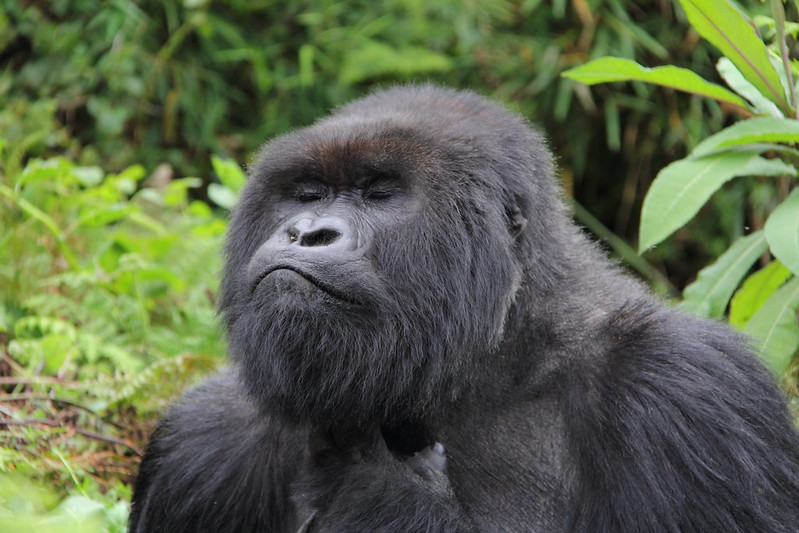
The Rushegura Gorillas.
In 2002, this group broke away from the Habinyanja gorilla family and became available for tracking. After years of power struggles with his brother Rwansigazi, Mwirima, a strong silverback, spearheaded this breakaway and sought to start his own group. By the time he left, he had seven members. He passed away later, and a black back is now in charge of the gang. From the initial eight members, the group has successfully grown to 19 members. Because they reside on the border and frequently cross it, this group is constantly migrating between Uganda and the Democratic Republic of the Congo. With visitors beginning their journey from the park headquarters and walking only 15 minutes to reach the path in Mukono, this is another group that is simple to follow.
Gorilla Group of Katwe.
It took up to three years for this group, which is the newest in the Buhoma district, to become completely acclimated and prepared for visitor tracking. There are two newborns, four females, and one dominant silverback in the group. The precise number of members in this group is unknown because people continually joining and leaving. In an effort to boost the number of gorilla permits available each day and, consequently, the nation’s revenue, this group was established in 2018.
Sector of Ruhija
Families trekking with the Bwindi Gorillas. The Bitukura and Oruzogo gorilla families call the eastern region of Bwindi Impenetrable National Park home, and all of them may be tracked.The Kyaguriro family is another group in the area that is used for study. The location is the coldest in Bwindi, with a height of more than 2350 meters above sea level. For those who enjoy nature treks, the area boasts attractive routes, such as the Rwamunyonyi mountain, and great trekking chances. Mammals in Ruhija include antelopes and elephants, while other primates include monkeys.
Concerning Gorilla Families in the Ruhija Area
Gorilla Family Bitukura.
The group was called after a river in the park because they were initially spotted close to it; the family is from Ruhija, which is on the eastern side of Bwindi. The group began to get habituated in 2007, and in October 2008, it was made available for tracking. It was simple for the rangers to accustom the gorillas because they had already encountered the group during their habituation of the Kyaguriro group and they were never antagonistic. Compared to other gorilla groups, they adapted to human companionship more quickly. In contrast to other gorilla families who are known for having politics, this group is extremely calm. Originally consisting of 24 members, the group has now split up owing to fatalities and flights, leaving 14 members total—four silverbacks, four adult females, three youngsters, and one infant. Ndahura, who is renowned for his ability to lead peacefully, is in charge of the group.
The Oruzogo family
After becoming accustomed, the family had two silverbacks and 25 members when it was initially made available for tracking in 2011. The group currently has 17 members, including two blackbacks, seven females, two young adults, five newborns, and the family’s head, Tibirikwata, a silverback. It has the greatest number of members in the area, and it gets its name from a certain plant that was initially observed close to its home. The group gained notoriety in 2013 after one of its members gave birth to a pair of twins, a girl named Kankonda. This whimsical troop is a delight to observe for tourists who come to gorilla tracking.
The Gorilla Family of Kyaruguriro.
In 1999, the group was habituated and designated as a research group for those interested in habituation and study. Rukina, the group’s lead silverback, was one of the twenty members; he died after being struck by lightning. In 2016, the group was left under the leadership of an immature Mukiza. Then, disputes between Mukiza and Rukara broke out, dividing the group into two groups, Kyaguriro A and Kyaguriro B. A had ten members, while B also had ten. This group is also known as the Mukiza Gorilla Family.
Families trekking with Bwindi Gorillas in the Rushaga sector. With five gorilla families—by far the most of any sector—Rushaga is situated in the south park of Bwindi Impenetrable National Park. Because of the terrain in the area, trekking with these gorilla families is simple. Rushaga is easily accessible from Kisoro, making it a simple destination for travelers departing from Kigali. The Busingye, Bweza, Nshongi, Mishaya, and Kahungye are among the habituated families in this area; they are all accessible to tourists and may be tracked. Two families, Bushaho and Bikyingi, are presently undergoing the Gorilla Habituation experience, which is unique to this area of Bwindi. For individuals interested in cross-cultural interactions, the sector, like the Buhoma and Ruhija sectors, provides an opportunity to visit the Batwa community.
About the Rushaga sector’s gorilla families
Group of Nshongi Gorillas
With more than 36 gorillas in the family, this was formerly the biggest gorilla group in Bwindi. The group has split up twice throughout the years to become the Bweza and Mishaya Gorilla Family. Nshongi, the dominant silverback, leads the group, which currently consists of 25 members. Other members include three sub-silverbacks, four blackbacks, seven adult females, six juveniles, and four newborns. This group is joyful and playful, mostly with children, and its large number of members makes it a sight to behold.
The Mishaya Gorilla Group
This group is a breakaway from the Nshongi Gorilla group. In 2010, there were conflicts and a flight, and Mishaya the silverback split off to form his own group. He took seven members with him. The group is known for its fierceness, and over the years, it has been able to draw in more female members, bringing its total membership to twelve and three infants.
Group of Bweza Gorillas
With eight members, this first split off from the Nshongi Gorilla Family in 2013. Although park officials hoped that this group would make amends with the Nshongi and reunite, it was unable to do so and was made available to the public for tracking. One silverback, two babies, and the remaining females and youngsters make up the group. Visitors find it to be the most fascinating group to observe as it goes about its daily business in the park.
The Gorilla Family of Kahungye
When the group was habituated in 2011 and made available for tracking, it had 27 members. However, misunderstandings caused the group to split up after just a year, giving rise to the Busingye group. The group currently consists of 13 individuals, including the silverback Rumansi and two black backs, Rwigi and Ruhamuka, as well as females and juveniles.
The Gorilla Family of Busingye.
The group was founded in 2012 after breaking away from the Kahungye group, and its name comes from its leader, Busingye, which means “peace.” Ironically, he is not a peaceful gorilla; instead, he is notorious for starting arguments between other groups. With seven members at the beginning, Busingye has now expanded to eight members and is prospering by snatching ladies from other guys, which is a symbol of dominance.
Gorilla Habituation: Visit Rushaga to see gorilla families
Gorilla Habituation is the process of training mountain gorillas to become accustomed to people. It takes several years and involves a group of skilled doctors and rangers who spend daily time with the gorillas to help them become accustomed to seeing people. The Bikyingi and Bushaho gorilla families are the two habituation families who are presently going through the process, which can take up to four hours each day. While the Bushaho family, which is located farther south near Nkuringo sector, consists of eight individuals with one silverback, known as Bahati, one black back, one sub-adult, three adults, one juvenile, and two infants, the Bikyingi family, which consists of 21 members and has one silverback, two sub-adults, nine females, and nine infants, is located in Rushaga. The head, Bahati, was once a member of the Nkuringo Gorilla Family.
Sector of Nkuringo
The sector is situated in the southern region of Bwindi, where the Nkuringo family resides and the Christmas family treks. You can locate the Bushaho gorilla family in any direction because they occasionally cross from Rushaga to Nkuringo Nkuringo area. Because Nkruingo is situated at a higher elevation, trekking is extremely difficult and taxing in this area. For young, active tourists and those who want to hike in addition to gorilla viewing, this area is highly recommended. The Virunga Volcanoes in Rwanda and Uganda are easily visible from this location, which may inspire you to travel there.
Concerning Gorilla Families in the Nkuringo Area
The Gorilla Family of Nkuringo
The habituation process began with this first family in 1997, and the group was made available for tracking in 2004. The group’s name, Nkuringo, which means “Hills,” comes from the locality where it was originally seen. There were nineteen members when the organization first started, but as time went on, that number dropped to just twelve. Rafiki, whose name means “Friend” in Swahili, led the group until his death in 2008. The group is also credited with being the first to give birth to twins in 2004, albeit one of them died subsequently.
Family of Bushaho Gorillas
There are currently nine known members of the Bushaho gorilla family. However, similar to other gorilla families, its size may increase based on the number of newborns and the dominating Silverback’s capacity to supplant other members of other mountain gorillas that are not accustomed to the area. With the opening of the Bushaho Gorilla Family in 2016, there are currently 17 gorilla families spread throughout all four Bwindi districts, making Uganda one of the best places to witness these endangered mountain gorillas in their natural habitat.
The Gorilla Family for Christmas.
Families trekking with the Bwindi Gorillas. The Nkuringo region in southern Bwindi is home to the Christmas gorilla family. There are now three mountain gorilla groups available for gorilla trekking in Nkuringo, as this is the third family to have established a home there. Up to nine people are said to be in the Christmas group, with six of them being the most frequently spotted when traveling with this family. Three females, one infant, one black back, and a dominant silverback named Christmas lead the group. This group can be tracked and is well-known for its propensity to visit nearby settlements in quest of food.
Gorillas in Mgahinga Gorilla National Park
The Nyakagezi group is the only family of habituated gorillas found here. With over 11 members, this group is now available for tracking; however, at least one night prior to tracking, confirmation of the gorillas’ existence must be obtained from the UWA Kisoro office. Families Trekking with Bwindi Gorillas