
Rwanda Gorilla Families
Rwanda Gorilla Families, There are twelve groups of mountain gorillas in Rwanda, and the numbers in families listed below are based on the 2011 gorilla census and may have changed slightly after it was written. Families can reach us here for up-to-date information on Rwanda Gorilla Trekking.
Susa has 28 gorillas.
With around 40 gorillas, this is the second-largest population of mountain gorillas; however, there are only 28 gorillas left. Three silverbacks are on it. It inhabits the slopes of Mount Karisimbi and was first researched by Dian Fossey. Having rare twin gorillas born twice in the same group is the most unusual thing about this bunch. The last incident occurred on May 19, 2004, when Nyabitondore, a 12-year-old girl, gave birth to twins, a girl and a boy. These twins have been successfully raised by her. These twins, who are currently three years old, may be the first to live in mountain gorilla history. It takes three to four hours to walk from the park gate.
The nine gorillas of Sabyinyo
Eight gorillas make up this group, including two females, two juveniles, and one silverback. It was created in 1992 following the passing of the group thirteen’s top silverback. Because of the difficult time during the period of habituation, the group was initially known as Amavubi, which means wasps. Guhonda, Ryango, and Ruhennyi were the only silverbacks that made up the group. Ijisho, Gukunda, Kampanga, and later Safari, together with other females from group eleven, were taken from group thirteen after the death of the group’s top silverback.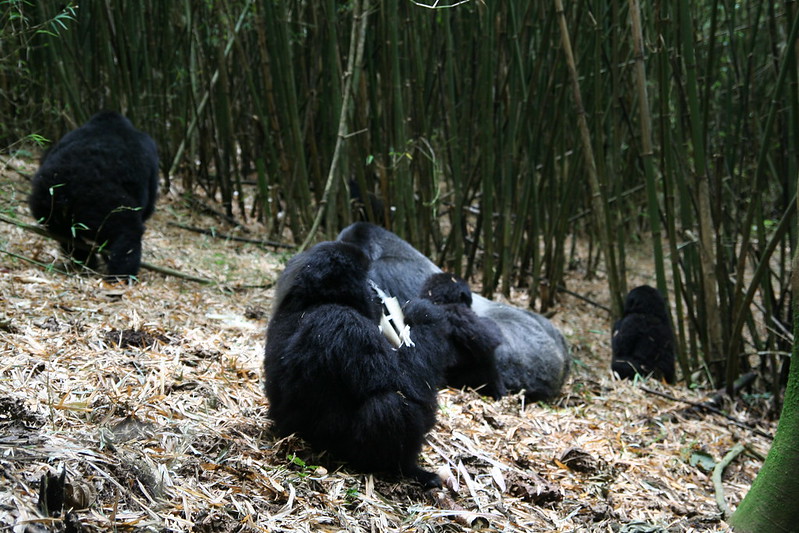
Two silverbacks and four females made up the new group. After then, the group was renamed Sabyinyo. The group was first located on the mountain known as Sabyinyo. New members may join the group, while others may go, as the group’s makeup is always shifting due to the rates of migration, emigration, births, and deaths. In addition to having the largest silverback in the world, this group is unique in its friendliness. This silverback likes to demonstrate his strength by beating his chest. Note: In order to prevent inbreeding or to form their own groups, mountain gorillas split off from their groups. It takes one to one and a half hours to walk from the park gate.
Amahoro: 17 primates
One silverback, two blackbacks, two subadults, five adult females, five newborns, and two juveniles make up this group of seventeen gorillas. In 2000, the Amahoro group became accessible to tourists. In 2000, it became the most recent organization to join the tourism group. Amahoro means peace, and because of the personality, this name was selected as a symbol of peace. This silverback is friendlier and more laid back. Several adolescent gorillas are among the 16 members of the Amahoro Group. It takes one to one and a half hours to walk from the park gate.
Gorillas in groups 13 through 26.
Eleven females, four juveniles, two newborns, and one silverback make up this group of 26 gorillas. There are more than thirteen people in group thirteen, despite what the general public believes. According to the order in which it has been localized, this group is thirteen. Groups might then be named based on the order in which they were contacted. Dian Fossey started the technique. Since this group has never had more than one silverback in its history, all of the adult females were lost to other silverbacks in 1992, creating the Sabyinyo group.
This left Group 13 with just three young males who were unable to lead the group. But Munani, Nyakarima, and Kwirinda remained together until the elder one, Munani, switched to silverback. After that, Nyakarima left the group, and Kwirinda passed away from wounds he sustained when interacting with another group. As a silverback who was determined to establish his group at any costs, Munani interacted with the Sabyinyo group and acquired a female member of Safari who had formerly belonged to Group Eleven.
Gukunda and Cyuzuzo, two more girls, were also acquired by him. Seven members were left when the silverback died naturally in 2002. A blackback and the oldest female, Safari, commanded the group for five months until a new silverback arrived to take over. Three people joined the gang when the new Silverback, Agashya, arrived, bringing the total to 10.
But the blackback he encountered in the group resisted the new silverback’s advances and abandoned the group to live alone. In just three years after assuming authority, Agashya has grown the organization to 21 members, including nine adult females. The name Agashya, which means “something special,” refers to the capacity to guide a large group of twenty-one gorillas. It takes thirty to forty-five minutes to walk from the park gate.
Gorillas: 11 in Umbano.
There are nine gorillas in this group, including one silverback, one male subadult, three females, five juveniles, and one baby. This belonged to the Amahoro group, which subsequently divided into two groups to form Umubano. When the leader of a group of silverbacks passes away, the group is typically taken by the person who was next to him. Charles, the Umubano leader, was an exception. following the passing of the top silverback. Charles left the group with two females to start his own group since he would not bow to the next silverback. Being a youthful silverback with ambition, he has quickly gained more females and maintained his group. The silverback is the strongest and happiest member of this group.
Twelve gorillas in Hirwa.
There are twelve gorillas in this group, including six females, juveniles, and one silverback. One silverback started this new group. Its members were all from previous established and accustomed groups. As of right now, it consists of nine people. Its unique quality is that it is more tranquil.
The 17 gorillas of Kwitonda
Three silverbacks, four females, three blackbacks, and three juveniles make up this group of seventeen gorillas. They’re from the Democratic Republic of the Congo. It was regularly visited by various tourists and had sixteen members when it arrived in 2005. One silverback and two blackbacks, both female and juvenile, make up the group. The dominant silverback is extremely timid.
Group 11 Gorillas in Bwenge
There are eleven members of this family, including one silverback named Bwenge. In the past few years, the group has lost six babies, but the birth of two more has given them comfort. It’s a difficult journey up the steep, slick slopes of roughly 600m to find these gorillas. This particular family was featured in the well-known film “Gorillas in the Mist.”
Gorillas of Ugenda Group-11
Because of their frequent moves, this family is also known as the wandering family. It consists of two silverbacks and eleven people. It takes more patience to trek this group because you have to look for the gorillas, whose whereabouts are uncertain.
The trekking times listed above are merely recommendations; because gorillas cover a lot of ground and move quickly, it may take longer to find them, and trekkers frequently travel farther than is specified above.
Although we make every effort to keep the information on the gorilla group members as current as possible, please check with your guides as certain facts may have changed since printing.