Imbalu Circumcision Ceremony: A Cultural Rite of Passage in Uganda The Imbalu Circumcision Ceremony is…
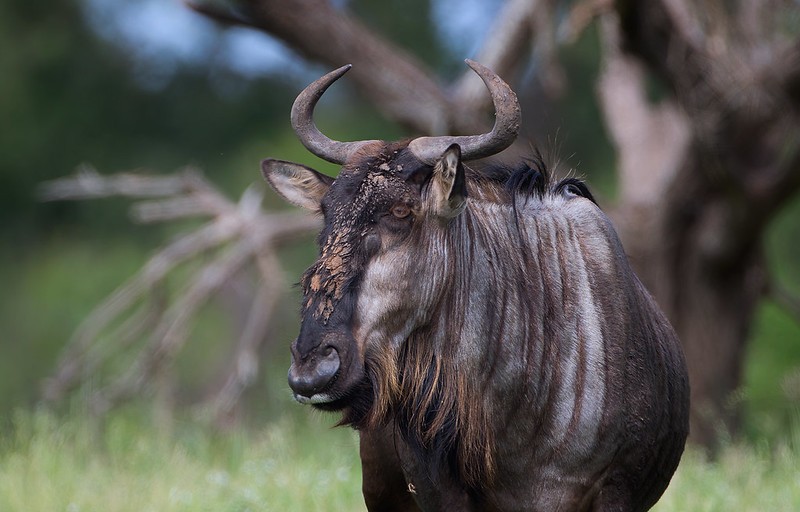
5 Fascinating Facts About the Blue Wildebeest
5 Fascinating Facts About the Blue Wildebeest
When it comes to African wildlife, few animals capture the imagination like the Blue Wildebeest (Connochaetes taurinus). Known for their incredible stamina and their starring role in the Great Migration across the Serengeti and Masai Mara, these powerful grazers are among the most iconic species to witness on an African safari.
Often overshadowed by Africa’s more famous “Big Five,” the Blue Wildebeest deserves recognition for its unique characteristics, fascinating behaviors, and ecological importance. Below are five captivating facts that reveal why this remarkable antelope is such a vital part of Africa’s natural heritage.
1. The Blue Wildebeest: Star of the Great Migration
Every year, over 1.5 million Blue Wildebeest, accompanied by hundreds of thousands of zebra and gazelles, take part in what is often called “The Greatest Show on Earth” — the Great Migration.
This awe-inspiring journey covers nearly 1,800 miles across the Serengeti National Park in Tanzania and the Masai Mara National Reserve in Kenya. The migration follows the seasonal rains and the growth of fresh grasses, ensuring that the wildebeest always have an abundant food supply.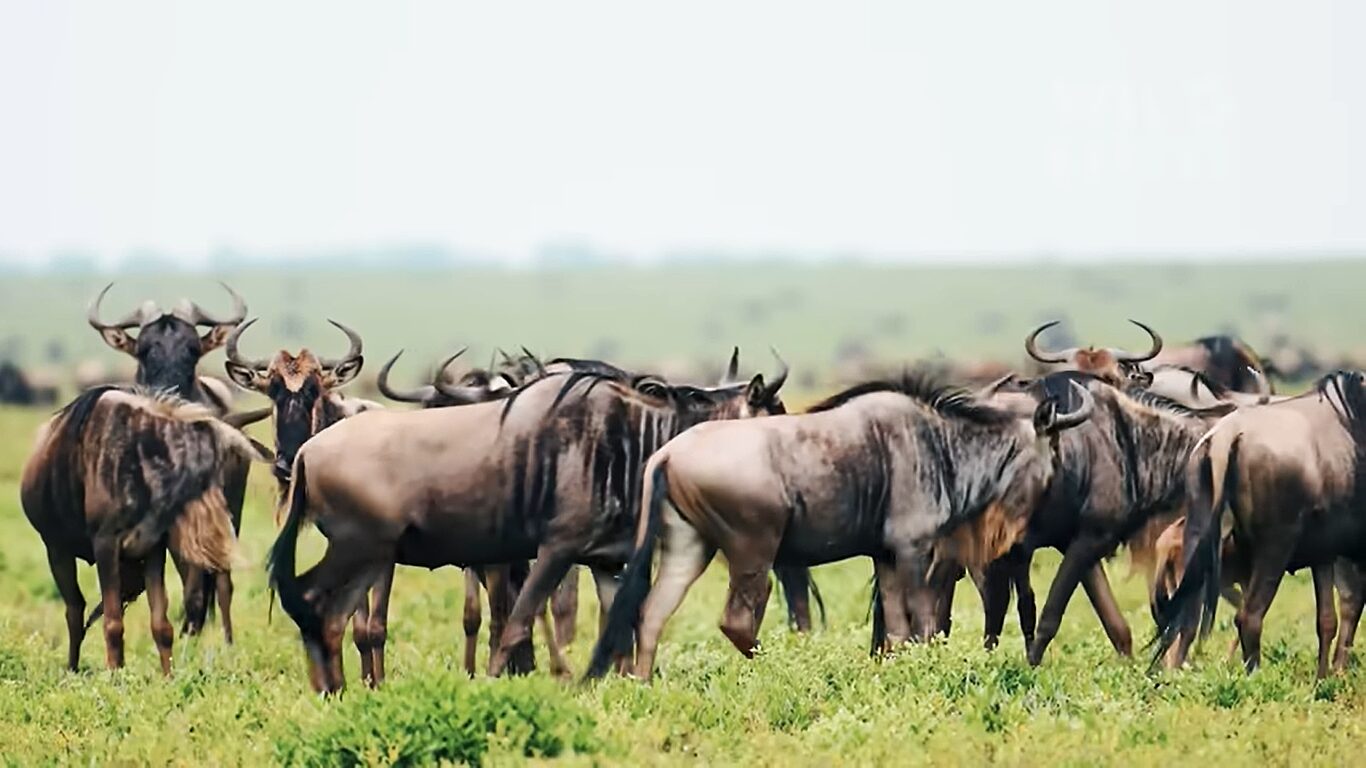
During this massive movement, the wildebeest face daunting challenges — from raging rivers filled with crocodiles to lions, cheetahs, and hyenas waiting in ambush. Despite these dangers, the migration continues year after year, a natural rhythm that has shaped the East African ecosystem for centuries.
If witnessing this spectacle is on your bucket list, plan your trip between July and October, when herds cross the Mara River — one of the most dramatic wildlife events on Earth. Learn more about the Great Migration from Serengeti National Park.
2. The Blue Wildebeest Is Actually an Antelope, Not a Buffalo
At first glance, it’s easy for safari-goers to confuse the Blue Wildebeest with a buffalo. Its dark, robust body, muscular shoulders, and curved horns give it a front-heavy appearance similar to the African buffalo. However, the wildebeest is actually a species of antelope, belonging to the Alcelaphinae subfamily, which also includes topi, blesbok, and hartebeest.
Unlike buffalo, which are more solitary and defensive, wildebeest are highly social herd animals that depend on group dynamics for protection. Their large herds and synchronized movements help reduce the risk of predation, while their keen sense of hearing and smell keeps them alert to approaching threats.
Interestingly, the “blue” in Blue Wildebeest refers not to a literal color but to a bluish-grey sheen on their short, smooth coats — a natural camouflage that helps them blend into the savanna landscape.
3. Subspecies With Subtle Differences Across Africa
There are five recognized subspecies of the Blue Wildebeest, each adapted to its specific region of sub-Saharan Africa. They differ slightly in size, beard color, and body markings.
-
The Common Blue Wildebeest (C. t. taurinus), found in southern Africa, is the largest and features a dark black beard.
-
The Western White-Bearded Wildebeest (C. t. mearnsi), commonly seen in the Serengeti, sports a distinctive white beard and is slightly smaller.
-
Other subspecies include the Cookson’s wildebeest (Zambia), Nyassaland wildebeest (Malawi), and the Eastern white-bearded wildebeest (Kenya and Tanzania).
These subtle variations show how the Blue Wildebeest has evolved to thrive in diverse grassland and savanna ecosystems across Africa.
4. Synchronised Calving: Nature’s Safety in Numbers
One of the most fascinating wildlife events in Africa occurs when the Blue Wildebeest calves are born. Between February and March, nearly 90% of all wildebeest calves are delivered within a two-to-three-week period — a synchronized birthing phenomenon that coincides with the rainy season in the Serengeti.
The timing ensures that fresh, nutrient-rich grass is abundant for nursing mothers to produce milk. This mass calving strategy also overwhelms predators such as lions, hyenas, and cheetahs. With thousands of calves being born each day, predators can only capture a few, leaving the vast majority of newborns safe.
Within minutes of birth, wildebeest calves can stand and run, a vital adaptation for survival in predator-rich landscapes. Watching this incredible event unfold in the Serengeti is a once-in-a-lifetime experience for wildlife lovers and photographers alike.
5. Smart Grazers With Ecological Balance
The Blue Wildebeest may seem like a simple grazer, but their feeding behavior plays a crucial role in maintaining the savanna ecosystem. They often graze alongside plains zebra, yet the two species cleverly avoid competition by eating different parts of the same grass.
Zebras use their strong front teeth to shear off the longer, tougher grasses, while wildebeest, with their wide muzzles, specialize in nibbling the shorter, tender shoots left behind. This natural division of labor ensures that grasslands are evenly grazed and can regenerate quickly — a perfect example of ecological harmony.
Moreover, the wildebeest’s migrations help fertilize the plains, dispersing nutrients through their dung and stimulating new plant growth. In this way, the species contributes to the overall health and balance of the Serengeti-Mara ecosystem.
The Threats Facing Blue Wildebeest
Although Blue Wildebeest populations remain stable across much of East Africa, they have not been immune to human impact. Habitat loss, fencing, and veterinary cordon barriers have disrupted their natural migration routes in places like Botswana’s Kalahari region.
During the severe droughts of the mid-1980s, these barriers prevented herds from reaching water sources, resulting in the death of more than 50,000 wildebeest.
Today, conservation efforts led by organizations such as the African Wildlife Foundation and WWF focus on maintaining wildlife corridors and promoting sustainable coexistence between local communities and migratory species.
Where to See Blue Wildebeest in Africa
For travelers eager to witness the Blue Wildebeest in its natural habitat, several destinations stand out:
-
Serengeti National Park, Tanzania – The heart of the Great Migration and the best place to see massive herds year-round.
-
Masai Mara National Reserve, Kenya – Known for thrilling river crossings during migration season.
-
Etosha National Park, Namibia – Offers excellent opportunities to spot resident wildebeest herds.
-
Kgalagadi Transfrontier Park, Botswana/South Africa – Home to smaller populations adapted to arid conditions.
Each of these parks provides a unique opportunity to observe wildebeest behavior up close, from calving in the Serengeti to dry-season gatherings in southern Africa.
Final Thoughts: The Wildebeest’s Enduring Legacy
The Blue Wildebeest is much more than just a participant in the Great Migration — it is a symbol of Africa’s wild resilience and ecological balance. Its synchronized calving, intelligent grazing habits, and vital role in sustaining other species make it one of nature’s most fascinating creations.
Whether you’re planning a photographic safari in Tanzania or exploring the open plains of Kenya, witnessing the wildebeest in motion is an unforgettable reminder of the raw power and beauty of the African wilderness.
To plan your next wildlife adventure, contact Monumental Expeditions and Safaris — your trusted partner for tailor-made African safari experiences that bring you face-to-face with the wonders of the wild.
Related Posts