Lowland Gorilla Trekking in Kahuzi Biega National Park, Eastern Lowland Gorilla Trekking in Kahuzi-Biega National…

5 Fascinating Facts About the Common Chimpanzee
5 Fascinating Facts About the Common Chimpanzee
When it comes to our closest living relatives in the animal kingdom, few species capture the imagination quite like the Common Chimpanzee (Pan troglodytes). Intelligent, social, and remarkably human-like, chimpanzees offer a window into our own evolutionary history and the complexity of life in Africa’s tropical forests.
These extraordinary great apes share nearly 99% of their DNA with humans, making them one of the most studied and beloved primates in the world. From their advanced communication and tool-making skills to their intricate social structures, every aspect of their behavior reflects an astonishing depth of intelligence.
Below are five fascinating facts about the Common Chimpanzee, showcasing why this endangered species deserves our attention and protection.
1. Our Closest Living Relatives in the Animal Kingdom
Chimpanzees, along with bonobos, are the only great apes native to Africa and are considered humankind’s closest relatives. Genetic research indicates that humans and chimpanzees diverged from a common ancestor roughly five to seven million years ago. Despite millions of years of evolution, the genetic difference between humans and chimps is just 1–1.2% — a striking reminder of how closely connected we are.
Taxonomically, chimpanzees belong to the Hominini tribe, the same scientific grouping that includes humans. There are two living species of chimpanzees:
-
The Common Chimpanzee (Pan troglodytes), found north of the Congo River
-
The Bonobo (Pan paniscus), which lives south of the river, primarily in the Democratic Republic of the Congo
While bonobos are smaller and more peaceful, forming female-led societies, Common Chimpanzees tend to have male-dominated hierarchies and more complex, competitive social dynamics.
You can learn more about these remarkable apes on the Jane Goodall Institute website, a leading authority on chimpanzee research and conservation.
2. The Common Chimpanzee’s African Range and Conservation Status
Once widespread across Africa’s equatorial forests and savannas, chimpanzee populations have drastically declined over the past century due to habitat loss, poaching, and disease. According to the IUCN Red List, both the Common Chimpanzee and the Bonobo are classified as Endangered.
Today, chimpanzees inhabit about 20 African countries, stretching from Senegal in West Africa to Uganda, Rwanda, and Tanzania in the east. While bonobos are found only south of the Congo River, Common Chimpanzees occupy forested regions north of it.
It’s estimated that there are currently between 200,000 and 300,000 Common Chimpanzees remaining in the wild — a sharp contrast to the millions that once roamed Africa’s forests. Conservation organizations such as African Wildlife Foundation and WWF are working tirelessly to protect their remaining habitats and prevent further population declines.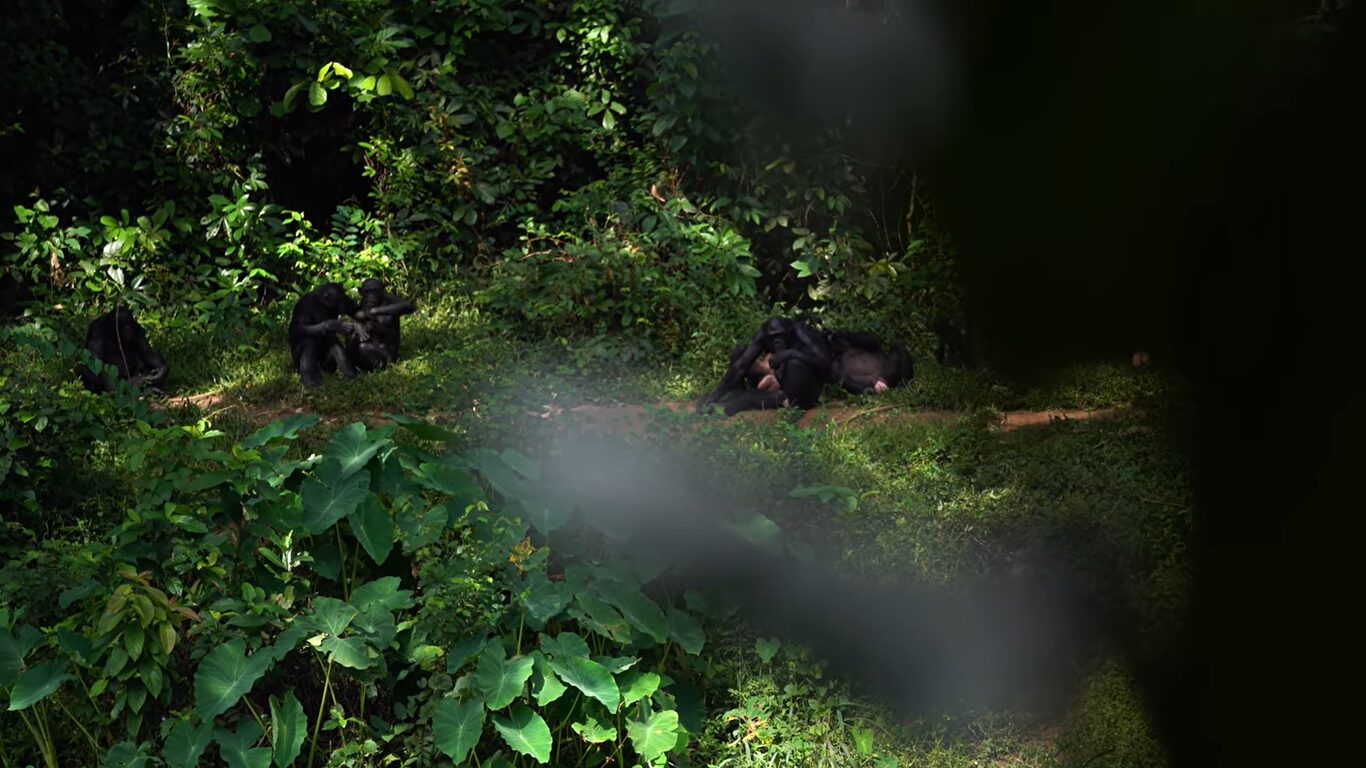
3. Chimpanzees Are Masters of Tool Use and Problem-Solving
One of the most astonishing aspects of chimpanzee behavior is their ability to use and even make tools — a skill once thought to be uniquely human. Chimpanzees have demonstrated remarkable ingenuity in the wild, using objects in a variety of practical ways:
-
Sticks: Used to fish termites or ants out of their mounds, or to extract honey from beehives.
-
Leaves: Used as sponges or scoops to drink water from tree holes.
-
Stones: Used as hammers and anvils to crack hard-shelled nuts.
-
Sharpened sticks: Used as spears to hunt small animals such as bushbabies hiding in tree cavities.
These behaviors show that chimpanzees possess both problem-solving intelligence and a degree of forward planning — traits that mirror early human innovation. In fact, researchers in Tai National Park, Côte d’Ivoire have documented chimpanzees selecting tools ahead of time and carrying them long distances, a clear sign of advanced cognition.
4. Social Intelligence, Communication, and Learning
Chimpanzee societies are incredibly complex and hierarchical, often led by dominant males who maintain power through alliances, displays of strength, and social intelligence. Groups typically consist of 20 to 100 individuals, living in fission-fusion societies — meaning subgroups split and rejoin depending on food availability and social dynamics.
Communication among chimpanzees includes a combination of facial expressions, vocalizations, gestures, and touch. Their ability to convey emotion, warn of danger, or coordinate hunts demonstrates a sophisticated level of social awareness.
One of the most famous examples of chimpanzee communication is the case of Washoe, a female chimp who was the first non-human to learn American Sign Language (ASL). Under the care of researchers Allen and Beatrix Gardner in the 1960s, Washoe learned over 150 signs and even taught some of them to other chimps spontaneously. By the time of her death, she reportedly understood more than 800 signs.
Such research underscores the chimpanzee’s incredible capacity for learning, empathy, and communication, bridging the gap between human and animal intelligence.
5. Surprising Social Behaviors and Culture Among Chimps
Chimpanzees are not only intelligent but also exhibit behaviors that resemble human cultural traditions. Studies across different chimpanzee communities have revealed unique, group-specific customs — such as grooming styles, tool preferences, and social rituals — passed down through generations.
One particularly fascinating finding from Tai National Park revealed that female chimpanzees sometimes trade sex for food — a behavior researchers describe as a form of “social exchange.” Males that share meat with females often gain mating opportunities later on, suggesting an early form of reciprocal cooperation found in human societies.
Chimpanzees are also known for their emotional depth. They express grief, joy, and affection, often comforting distressed members of their troop. Mothers show remarkable care for their young, carrying infants for years and forming lifelong bonds.
Despite their intelligence and empathy, chimpanzees can also display aggression, particularly among males competing for dominance or defending territory. These contrasting traits make them one of the most complex and human-like species in the animal kingdom.
The Human Impact: From Research to Protection
Throughout history, chimpanzees have been both admired and exploited. In the past, they were used extensively in scientific research, entertainment, and even as pets. Thankfully, attitudes have changed.
In 2010, the European Union banned the use of all great apes in laboratory testing. By 2015, the U.S. National Institutes of Health (NIH) officially ended invasive chimpanzee research, declaring it no longer scientifically necessary. However, many retired lab chimps remain in sanctuaries, awaiting permanent homes.
Organizations like the Chimp Haven Sanctuary and the Jane Goodall Institute now focus on giving these apes safe, enriched environments where they can live out their lives in peace.
Conclusion: Protecting Our Primate Cousins
The Common Chimpanzee is far more than just an intelligent animal — it’s a living mirror of ourselves. From its advanced problem-solving abilities to its emotional intelligence and complex societies, the chimp offers profound insight into what it means to be human.
Yet, despite their closeness to us, chimpanzees remain endangered. The destruction of Africa’s rainforests, illegal wildlife trade, and disease continue to threaten their survival. Supporting conservation initiatives and ethical tourism can help ensure these remarkable creatures thrive for generations to come.
To experience chimpanzees in their natural habitat, consider a guided trek in Kibale National Park, Uganda or Gombe Stream National Park, Tanzania — where visitors can observe wild chimps up close and support local conservation efforts.
For expert-guided primate safaris and eco-tourism packages, contact Monumental Expeditions and Safaris — your trusted partner for unforgettable African wildlife adventures.
Related Posts