African Safari River Adventures and Boat Safaris African safaris are often associated with thrilling…
3 Days Ruaha National Park Tour
3 Days Ruaha National Park Tour. Come on an adventure with us in Ruaha National Park, which is home to the largest groups of elephants in Tanzania and home to one-third of the world’s lion population. An absolutely stunning place for real safaris! One of the biggest protected areas in Africa is the Ruaha National Park, which is in the middle of Tanzania. Even though it is Tanzania’s biggest national park, not many people visit, so it feels like the real desert. Ruaha covers an area of about 20,226 square kilometers, but it is part of a much bigger natural system that includes the Rungwa, Kigozo, and Muhezi forests to the north.
3 Days Ruaha National Park Tour Detailed Itinerary
Day 1: Pickup from Dar es Salaam to Ruaha National Park.
Get from where you’re staying to Dar es Salaam Airport in time for your morning trip. Your plane will arrive in Msembe around 9:30am. When the plane lands, you might see a few giraffes walking along the runway. You might also see elephant moms watching over their babies under the shade of baobab trees. Full-day game drive with lunch boxes. After the game drive, you will start the trip to the lodge or camp with another game drive along the way. You will get to your chosen lodge or camp in time for dinner and a night’s stay.
You can feel like you have the whole forest to yourself in Ruaha. The scenery, the wide range of plants and animals, and the amazing big game are all things that make it so beautiful. Located near the best place to see wildlife along the Mwagusi River. Tiger, lion, elephant, and buffalo numbers are high.
Day 2: Full Day Game Drive in Ruaha National Park.
You will go on a full-day game drive in Ruaha National Park after breakfast. Aside from being the biggest national park in Tanzania and East Africa, the park is also a birder’s dream, with over 571 species, some of which come from inside and outside of Africa. Many species from Europe, Asia, the rim of Australia, and Madagascar have come to the park to breed or migrate. People think that Ruaha has more elephants than any other national park in East Africa. Beautiful animals like Kudu (both Greater and Lesser), Sable, and Roan antelopes can also be found in this area.
The park is also a safe place for wild dogs that are in danger of going extinct. The park is home to many kinds of animals, such as lions, leopards, cheetahs, giraffes, zebras, elands, impalas, bat-eared foxes, etc. The park is home to many different kinds of reptiles and amphibians, such as crocodiles, monitor lizards, agama lizards, frogs, and both deadly and non-poisonous snakes. After that, go back to your camp or lodge for dinner and the night.
Day 3: Transfer Back to Dar es Salaam
You will pack your things for the trip to Dar es Salaam after breakfast. As you drive, you will see many neighborhoods and see some of the things that people do to take care of the world. In the afternoon, you will stop in Morogoro for lunch before continuing the trip. We hope to see you on your next tour soon. Your car guide will take you to the airport or your hotel.
More on Ruaha National Park
The main river in the reserve is called the Ruaha. It runs northeast into the Rufiji River and then into the Indian Ocean. Many trails lead along the main river and its seasonal branches, as well as through the Baobab-covered hills and tall miombo trees. All of this can be done in a very small area of Ruaha. Almost all of Africa’s big animals live in Ruaha National Park in Tanzania.
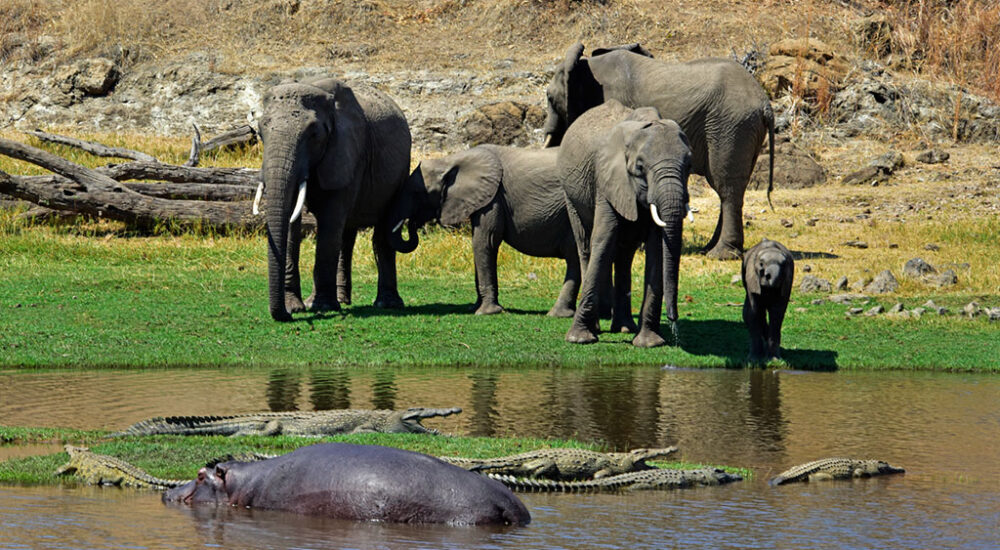
Hippos are everywhere in the Ruaha River. There are lots of big cats and dogs in Ruaha. You can find good numbers of Lion, Leopard, Cheetah, Spotted Hyena, and Wild Dog. The park is also famous for its big groups of elephants and buffalo, as well as its many types of antelope, including the Greater and Lesser Kudu, the Roan, the Sable, and the Eland.
In the northwest open fields, you can see small groups of quick Grant’s gazelles. There are no wildebeest in this part of Tanzania, which is strange. There are lots of Yellow Baboons in the woods, and only a few Black-and-white Colobuses live in the wetland area. Along with the Honey Badger, the African Civet, the Serval, and the Egyptian Mongoose, which are all less dangerous predators, live the black-backed and side-striped Jackals.
Over 500 kinds of birds live in Ruaha, making it a great place for birdwatchers. It is interesting to learn about the Tanzanian Red-billed Hornbill. You can see this hornbill a lot in Ruaha National Park, along with African Grey Hornbills and Von der Decken’s Hornbills. The Ashy Starling, the Nubian Woodpecker, the Bare-faced Go-Away Bird, and the White-headed Grey-capped social weaver, red-faced weaver, and buffalo weaver Other birds that live in savannas and forests are the Crombec, the Swallow-tailed Bee-eater, the Collared Palm-Thrush, and the Crested Barbet.
The Raquet-tailed Roller, the White-breasted Cuckoo Shrike, and the Spotted Creeper are just a few of the animals that live in the Miombo woods. There are a lot of raptors and ducks. The African Skimmer and the White-crowned Lapwing build their nests on the big sandbars in the Ruaha River.
It’s worth your time to see Ruaha National Park in Tanzania.
You should check out Ruaha National Park while you’re in Tanzania. It’s one of those secret gems. In 2008, the Usangu Game Reserve and Ruaha National Park joined together to form Tanzania’s biggest national park, covering more than 20,000 km2. The park is very big, but there are only a few camps in it. Because of this, Ruaha is known as Tanzania’s best-kept game-viewing secret.
Ruaha is different from nearby areas because it has an untamed and unspoiled atmosphere. This makes it a popular choice for people who go on safari in East Africa often. This wild area is very natural and full of plants and animals.
It is home to many different kinds of animals, including Greater and Lesser Kudu, roan and sable antelopes, and others that you don’t often see in other game parks, especially in Northern Tanzania. A lot of people know Ruaha National Park for its elephant and buffalo herds. There are many hippos and alligators living in the Ruaha River, which is an important part of the park’s ecosystem.
The Great Ruaha River is the most popular place for tourists to visit in Tanzania’s Ruaha National Park. It is also the most important river that runs along the eastern edge of the park. A lot of animals come to the river during the dry season. These include elands, impala, leopards, hunting or wild dogs, warthogs, giraffes, and waterbuck. On the fields, you can see ostriches, cheetahs, and Grant’s Gazelles. Over 450 kinds of birds have been seen in the park, so it is always full of them.
In Ruaha National Park, skilled guides lead game drives twice a day. These drives are a great way for both first-time and experienced safari fans to see the wildlife of the area. Keep an eye out for kudu, both big and small, as well as sable antelope and huge groups of elephants. Stand in front of a lion and take a picture with one of Ruaha’s old baobab trees. Spend more time on your morning game drive and bring a picnic. In the evening, enjoy a cool stop for a sundowner while watching the last rays of sunlight dance over the scenery.
In Ruaha National Park, you can go on walking safaris.
A two to three-hour walking tour with a knowledgeable guide is a truly special and unique way to see the park’s interesting residents. It’s also a great way to get to know the park’s smaller animals and stunning variety. You have to see the park’s tall baobab trees, which watch over the land. Their striking appearance makes for great photo opportunities! Another great thing about Ruaha is its sparkling rivers, which are home to a lot of wildlife. A walking tour is the best thing to do in late June.
You can enjoy a great selection of games in this lovely Park. In this area, there are many predators. The lion, leopard, cheetah, wild dog, and hyena would all be happy to meet you. As you walk along, if you are very quiet and sneaky, you might get very close to huge groups of buffalo or elephants.
There are three days of tours in Ruaha National Park. When is the best time to go?
From May to December, when it’s dry, is the best time to see wildlife. Rainy months, like January through April, can make it impossible to use some park paths.
Can I drive my own car in Ruaha National Park?
You can drive through Ruaha National Park by yourself, but a tour will save you money on gas and renting a car. Most trips also include a place to stay, food, and a ride to and from the airport. There aren’t many things to buy in the national park, so bring or buy anything you might need before you go, from extra batteries for your camera to Band-Aids.
How do I find a place to stay during my three-day park tour?
You can book your 3-day tour of Ruaha National Park in Tanzania through our service. Here are some of the hotels and camps we suggest for your stay in the park: Ruaha River Lodge, Kigelia Ruaha Safari Camp, Jabali Ridge Tented Camp, and Jabali Private House.
To sum up, 40% of Tanzania’s lions live in Ruaha, and 10% of all the lions in Africa live there. Watch huge groups of more than thirty golden cats roam the wide farmland, making sure their small, safe area is safe. There is a lot of food that these groups need, and robust buffalo is their favorite dish. Tigers sometimes attack giraffes, kudu, and elephants when the buffalo groups leave.
Related Posts